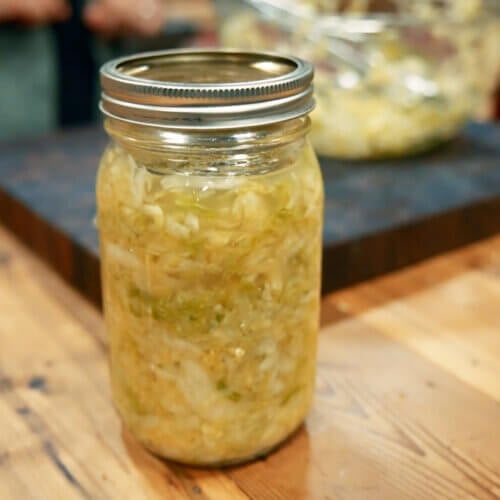
Homemade Sauerkraut Recipe
Learn to take two simple ingredients and turn it into a healthy, probiotic superfood in this homemade lacto-fermented sauerkraut recipe.
Print
Pin
Servings: 16 servings
Calories: 14kcal
Cost: Varies
Equipment
- Large Bowl
- Cabbage Pounder or a heavy wooden spoon
- Quart Mason Jar with Lid
- Fermenting Weight I use these fermentation weights
Ingredients
- 1 Head Cabbage medium-sized
- 2 Tablespoons Sea Salt I recommend using Redmond Real Salt. (Using that link will automatically give you 15% off your order!)
Instructions
- Inspect cabbage, and remove any outer leaves that show signs of decay or bruising. Remove a second leaf, keeping it as whole as possible, and set this leaf aside for later. Half and core the cabbage.
- Finely shred remaining cabbage by cutting against the grain.
- Place shredded cabbage in a large bowl, and sprinkle salt over the cabbage.
- Toss the cabbage with clean hands to incorporate the salt evenly throughout the cabbage.
- After thoroughly combining the cabbage and salt, allow the cabbage to sit for about an hour to allow the salt to extract the liquid from the cabbage. Your final product should have about ⅓ of the volume as when you began.
- With clean hands, transfer the cabbage from the bowl to the quart glass jar, packing with your wooden cabbage pounder to remove any air bubbles.
- Once the cabbage is packed tightly in the jar, you will have leftover juice in the bottom of your bowl. You will use this, but first, tear off the soft part of the reserved cabbage leaf and tuck it into the jar on top of the cabbage (you can alternately use a fermentation weight.) This will help weigh it down so the cabbage remains submerged underneath the surface of the liquid. It is critical that all of the cabbage stays under the surface of the liquid, or it will mold.
- If needed, top off the jar with remaining cabbage juice, leaving about an inch of room at the top. This will avoid any spillage that may happen during any movement caused by the fermentation process.
- Cap your jar loosely with a two-part canning lid, but do not seal tight. This will prevent air from entering that’s needed for the fermentation process.
- Place your jar inside a dish to catch any overflow of the brine while it is fermenting. Leave on the counter at room temperature for about 7-14 days (give or take, depending on how warm or cool your kitchen is). You should notice the fermentation activity (or bubbling), and the smell will change to sour or acidic.
Notes
Storage Instructions:
After your sauerkraut has finished fermenting at room temperature, you can move the jar to long-term cold storage in your refrigerator or root cellar. It has a shelf life of up to a year.
Recipe Tips:
There are a few tips that will help you make this the best homemade sauerkraut recipe, including fermentation conditions, temperature, and customized ingredients. Use this handy chart for reference:
| Parameter | Optimal Condition | Comments |
| Fermentation Temperature | 65-70°F (18-21°C) | Consistent temperature fosters proper fermentation. |
| Fermentation Duration | 3 days to 6 weeks | Varies based on desired flavor intensity. |
| Submersion | Fully submerged under brine | Prevents spoilage and maintains texture. |
| Additional Ingredients | Caraway seeds, juniper, peppers, or shredded carrots | Optional for flavor enhancement, if desired. |
- Feel free to add in any other seasonings such as caraway seeds or whole black peppercorns. Optional ingredient mix-ins are shredded carrots, diced onions, and cilantro. One of my favorite flavor combinations is this sweet and spicy sauerkraut recipe, this garlic dill sauerkraut or this Curtido recipe.
- The flavor of sauerkraut continues to deepen and get better over time. If you find after 3 days that your kraut is too salty, just give it more time and the salty profile will mellow.
Nutrition
Serving: 0.25cup | Calories: 14kcal | Carbohydrates: 3g | Protein: 1g | Fat: 0.1g | Saturated Fat: 0.02g | Polyunsaturated Fat: 0.01g | Monounsaturated Fat: 0.01g | Sodium: 882mg | Potassium: 97mg | Fiber: 1g | Sugar: 2g | Vitamin A: 56IU | Vitamin C: 21mg | Calcium: 23mg | Iron: 0.3mg
Tried this recipe?We want to see! Tag @homesteadingfamily on Instagram.