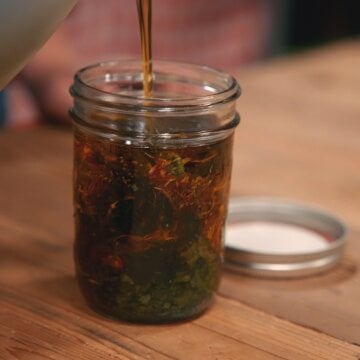
Calendula Oil Recipe
Making a homemade calendula oil infusion is essential for all herbal medicine cabinets. Use this tutorial to make it yourself and enjoy the benefits and many uses.
Print
Pin
Servings: 1 cup
Cost: varies
Ingredients
- ½ cup dried calendula flowers
- ½ cup dried comfrey leaves optional
- 1 cup olive oil or jojoba, almond, etc. (just enough to fully cover the herbs)
Instructions
- Add the dried calendula flowers and optional dried comfrey leaves to a jar.
- Pour olive oil (or oil of choice) over the herbs to fully cover the herbs (it's OK if the jar isn't completely full).
- Cap the jar, and make sure it is sealed tight. Label and date the jar.
- Shake the jar once daily for 4-6 weeks to ensure the herbs stay covered and mold cannot form.
- After 4-6 weeks, the oil will be infused with the calendula and optional comfrey.
- Open the jar and strain out the herbs using a cheesecloth or fine mesh sieve. Store oil in a new clean jar.
- Label and date the jar, then store your infused calendula oil in an airtight container in a cool, dark place until ready to use.
Notes
Ways to Use Calendula Oil:
- Cradle Cap - Gently massage calendula oil onto the cradle cap on baby’s scalp, and use a fine-tooth comb to exfoliate the dried cradle cap from the skin.
- Dandruff - Calendula oil has anti-fungal properties. This will help reduce dandruff. Massage oil into the scalp and allow it to penetrate before washing hair as usual.
- Diaper Rash - Applying calendula oil to diaper rash proves more effective than using aloe. Homesteading Hack: After birth, apply calendula oil to your baby’s bottom before they pass the meconium, which will help keep it from sticking to your baby’s skin.
- Dry Skin - Rub calendula oil on patches of dry skin, or add a few drops to your favorite facial creams or lotions to boost their hydrating properties.
- Eczema - While it has not been scientifically proven, some have found that calendula oil helps with improving eczema.
- Poison Ivy - The anti-inflammatory properties of calendula oil can help calm poison ivy reactions and promote healing.
- Sunburn - The anti-inflammatory properties of calendula oil calm a sunburn and promote healing in this soothing burn salve.
- Scars - Calendula oil increases the blood and oxygen delivered to a wound site, which stimulates the body to produce new tissue. Using it on cuts and scrapes can help reduce the appearance of scars.
- Wound Healing - Dabbing wounds such as abrasions, lacerations, and skin tears with the antibacterial and anti-inflammatory properties of calendula oil promotes healing.
- One of my favorite recipes for using calendula oil is in my homemade antibiotic ointment. Though for that recipe I create an oil with more than just calendula flowers, the premise is the same and easily adaptable.
Tried this recipe?We want to see! Tag @homesteadingfamily on Instagram.