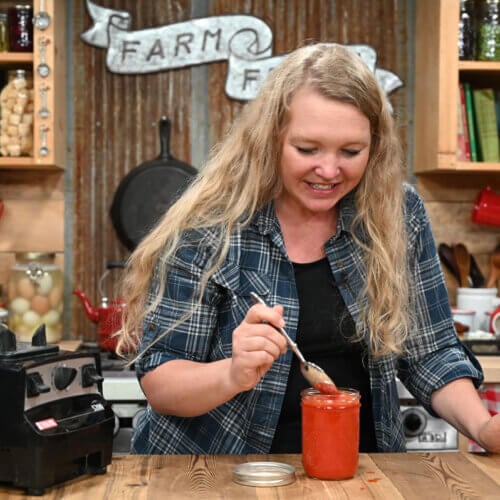
Fermented Pepper Sauce Recipe | Easy, Tangy Homemade Fermented Sauce
Turn fresh peppers into a delicious fermented pepper sauce that's naturally tangy, lightly sweet, and packed with flavor! This beginner-friendly recipe comes together with simple ingredients and is perfect for grilled meats, marinades, dressings, sandwiches, and more. Save this easy homestead recipe for your next pepper harvest!
Print
Pin
Servings: 16 servings
Calories: 8kcal
Cost: Varies
Equipment
- Saucepan
- knife
- cutting board We love these cutting boards from Virginia Boys Kitchens.
- Immersion Blender If you don't have an immersion blender, you can use a standard blender instead.
- Pint Jar
- Fermentation Lid If you don't have a fermentation lid, use a two-part canning lid and burp your jar as needed.
- Fermentation Weight If you don't have a fermentation weight, use a small jelly jar.
Ingredients
- 2 Large Sweet Bell Peppers Chopped (red, orange, or yellow works great).
- ½ Small Onion finely diced
- 1 Clove Garlic minced
- ½ teaspoon Fresh Ginger grated
- ⅛ teaspoon Crushed Red Pepper
- 2 teaspoons Lime Juice
- ½ teaspoon Salt We use Redmond Real Salt. Use that link to automatically get 15% off your order!
- ¼ Cup Apple Cider Vinegar
- 2 Tablespoons Whey Or other live starter such as juice from this fermented sauerkraut recipe or other homemade ferments.
Instructions
- In a saucepan over low heat, stir together the sweet peppers, onion, garlic, ginger, crushed red pepper, lime juice, and salt.
- Cover the pan, cooking and stirring occasionally until all the vegetables have softened enough to be blended.
- Set the cooked vegetables aside to cool for 20-30 minutes.
- After the mixture is completely cooled, add the apple cider vinegar and live starter.
- Using an immersion blender or transferring the mixture to a blender, blend until the sauce is your preferred texture. Some lumps are fine.
- Transfer the sauce to a Mason jar or other sealable container.
- Secure the lid on the jar. Leave the sauce at room temperature out of sunlight for 6-10 hours, then refrigerate until ready to use.
Notes
Tips and Troubleshooting:
Fermentation can feel intimidating at first, especially if you're worried about making a mistake. The good news is that this recipe keeps things simple.
- Use an Active Starter - Your whey or sauerkraut juice should come from a live, unpasteurized source to provide active beneficial bacteria.
- Don't Skip the Cooling Step - Adding the starter while the vegetables are too hot can damage the beneficial bacteria that make fermentation possible.
- Watch the Temperature - Room temperatures between about 68 and 75 degrees Fahrenheit generally produce consistent results.
- Bubbles Are Normal - Small bubbles and a slightly tangy aroma are signs that fermentation is taking place.
- Refrigerate Promptly - Once the fermenting time is complete, move the sauce to the refrigerator to slow fermentation and preserve flavor.
Nutrition
Calories: 8kcal | Carbohydrates: 2g | Protein: 0.2g | Fat: 0.1g | Saturated Fat: 0.01g | Polyunsaturated Fat: 0.03g | Monounsaturated Fat: 0.002g | Sodium: 74mg | Potassium: 53mg | Fiber: 0.5g | Sugar: 1g | Vitamin A: 647IU | Vitamin C: 27mg | Calcium: 3mg | Iron: 0.1mg
Tried this recipe?We want to see! Tag @homesteadingfamily on Instagram.