Pumpkin Leather Recipe | Easy Homemade Fall Snack
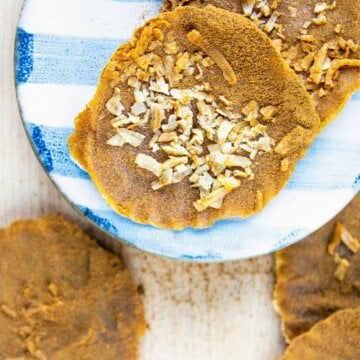
Turn real pumpkin into a chewy, naturally sweet fall snack! This easy pumpkin leather recipe combines pumpkin puree, maple syrup, and cozy pumpkin pie spices, then dries right in your dehydrator. It's a simple way to preserve pumpkin and make a homemade snack the whole family can enjoy. Save this recipe for pumpkin season!
Print
Pin
Servings: 16 servings
Calories: 24kcal
Cost: Varies
Equipment
- Dehydrator or oven set to 175°F
- Fruit Leather Tray Liners or parchment paper
- Mixing Bowl
- Whisk
- measuring cups and spoons
- spatula
Ingredients
- 2 cup pumpkin purée or 1 cup pumpkin and 1 cup applesauce
- ¼ cup maple syrup up to ½ cup, to taste
- 1 teaspoon pumpkin pie spice up to 2 teaspoons, to taste
- unsweetened coconut flakes
- ground cinnamon
Instructions
- Stir pumpkin puree, applesauce (if using), maple syrup (or honey), and pumpkin pie spice together in a bowl with a whisk or a fork until smooth.
- Line dehydrator trays (or your baking sheet) with parchment paper. Drop rounded tablespoonfuls of pumpkin mixture on the parchment paper in ¼” thick round shapes like cookies.
- Sprinkle a little coconut on top, optional.
- Dry in a dehydrator set at 130°F (55°C) until completely dry. The amount of time this takes depends on your dehydrator. It could take 10-12 hours. If using the oven method, bake in a preheated oven at 175°F for 4-5 hours.
- To test for doneness, pick up one piece and bend it. It should be dry and flexible, with no pockets of moisture. Remove the pieces that are dry and let them cool in an open bowl. Continue drying the remaining pieces of fruit leather until they, too, are done. It goes quicker at the end, so check those last few every 15 minutes.
- Dust completely cooled pumpkin leather with cinnamon to keep it from sticking together, and store it in an airtight container.
Notes
Tips and Troubleshooting:
| Problem | Solution |
| How Can I Tell When Pumpkin Leather Is Done? | Properly dried pumpkin leather should be flexible and leathery, with no wet spots. Press the center lightly with your finger. There shouldn't be an indentation left behind. Don't rely entirely on whether the surface feels slightly tacky. Look and feel for actual moisture, particularly in thicker areas. If you're uncertain, give it a little more drying time and check it again. |
| Why Is My Pumpkin Leather Crunchy? | Usually, crunchy pumpkin leather has been overdried. Uneven spreading is often the culprit. Thin edges dry much faster than a thick center. Spread the puree as evenly as possible and start checking before you think it's going to be finished. And remember, good enough is perfect. If you get a few crispy edges on your first batch, you haven't failed. You've simply learned how your dehydrator handles this particular recipe. |
| Why Is My Pumpkin Leather Still Sticky? | A little tackiness doesn't necessarily mean the leather isn't finished. What you're looking for are wet areas or spots that still indent when pressed. If the center feels noticeably wetter than the edges, keep drying. Maple syrup and honey can also make the finished leather somewhat tackier than an unsweetened version. |
| Why Is It Taking So Long? |
Drying time is affected by quite a few things, including:
|
| Can I Make Pumpkin Leather in the Oven? | You can use an oven if it can reliably maintain the low temperature needed for drying. Food-preservation guidance recommends approximately 140°F for fruit and vegetable leathers. If your oven can't maintain a temperature in that range, a dehydrator is the better and more reliable option. |
Serving Suggestions
Pumpkin leather is wonderful just as it is. Cut it into strips and roll them up for an easy grab-and-go snack. Smaller pieces are convenient for lunches, road trips, hikes, or an afternoon snack when everyone starts wandering through the kitchen looking for something to eat. You can also cut the leather into fun shapes once it's finished drying, which is especially nice if you're making it with children or grandchildren. And because it has those maple and pumpkin-pie flavors, it makes such a nice fall snack. There's something pretty wonderful about taking pumpkins from the harvest and turning them into something you can tuck into a lunchbox later. That's the kind of preservation I love. Practical, simple, and actually useful. Storage Instructions: Once your pumpkin leather has completely cooled, package it in an airtight, moisture-resistant container and store it in a cool, dark, dry place. For the safest, most conservative home-storage guidance, plan on up to one month at room temperature. For longer storage, tightly wrap the pumpkin leather and freeze it. Properly wrapped fruit leathers can be frozen for up to one year. If you ever notice condensation inside the container, remove the leather and check it carefully. Moisture means the product either wasn't sufficiently dry before storage or has absorbed moisture afterward. And, of course, discard pumpkin leather if you see mold or other signs of spoilage. This is one place where I don't like to guess. When we're preserving food for our families, knowing what properly dried food looks and feels like gives us confidence that we're doing it the right way.Nutrition
Serving: 1fruit leather | Calories: 24kcal | Carbohydrates: 6g | Protein: 0.3g | Fat: 0.1g | Saturated Fat: 0.1g | Polyunsaturated Fat: 0.01g | Monounsaturated Fat: 0.01g | Sodium: 2mg | Potassium: 75mg | Fiber: 1g | Sugar: 4g | Vitamin A: 4766IU | Vitamin C: 1mg | Calcium: 14mg | Iron: 0.5mg
Tried this recipe?We want to see! Tag @homesteadingfamily on Instagram.