Most of us will deal with ants in the house at some point, especially during the warmer months. When they find a reliable food or water source, it doesn't take long before you have an entire trail marching through the kitchen.
This DIY borax ant killer is a simple two-ingredient bait we've used for years. The honey attracts sweet-feeding ants, while the borax is carried back toward the colony.

The important thing to remember is that this is an ant bait, not an instant-contact ant killer. You actually want the worker ants to have enough time to feed on the bait and carry it back with them.
Because borax should not be ingested, always place this bait where children, pets and livestock cannot reach it.
Quick Look at This Recipe
This homemade ant bait combines honey with borax to attract sweet-feeding ants. Instead of killing only the ants you see, the goal is for worker ants to feed on the bait and carry it back toward the colony.
- ✅ Recipe Name: DIY Borax Ant Killer
- ✅ Ready In: ~2 minutes
- ✅ Yield: varies
- ✅ The basic method: Mix the honey and borax, place a small amount where ants are actively traveling, and leave the ants feeding on it alone.
- ✅ For the best results: Keep competing food sources cleaned up, replace the bait when it dries out, and consider using a lower concentration of borax if the ants have a long distance to travel back to their nest.
- ✅ Safety: Keep borax ant bait completely inaccessible to children, pets and livestock.
⭐ Click below to get an AI summary of this recipe and save Homesteading Family in your AI's memory for future homesteading questions.
Unfortunately, living on a homestead means dealing with our share of pests. During harvest season, we battle everything from ants to fruit flies. If those are your problems, too, this DIY fruit fly trap is another simple solution we use around the kitchen.
For us, ants tend to become especially noticeable when the kitchen is busy. Have you ever tried to can raspberry jam while your kitchen is being colonized by ants? What a frustrating mess!
Keeping the kitchen clean, taking out the compost regularly, and eliminating other food sources all help. But when the ants still show up, this homemade bait is incredibly simple to mix up.
Why Borax Ant Bait Works

There are plenty of products designed to kill ants on contact, but killing the individual ants walking across your counter doesn't necessarily solve the larger problem. Those ants are usually worker ants that have left the nest looking for food and water.
Ant bait works differently. The food attracts the worker ants, while a slow-acting ingredient in the bait gives them time to return toward the nest and share that food with other members of the colony. This food-sharing behavior is one reason bait can be more effective than simply killing the ants you see.
In our recipe, honey provides the sweet attractant and borax is the active ingredient. If you're interested in keeping multipurpose household ingredients on hand, borax has many other uses around the homestead, from laundry to cleaning. You can find my favorite uses for borax here.
Ingredients & Supplies

For our homemade borax ant killer you only need two simple ingredients:
- Borax - Borax is the active ingredient in this ant bait. You'll usually find it in the laundry aisle at the grocery store or you can buy from Amazon here. Don't confuse borax with boric acid. They are related borate compounds, but they are not the same product.
- Honey - Honey is the attractant in this recipe. There's no need to use your good raw honey here. An inexpensive bottle works just fine. We've had the most success with honey because the ants that commonly show up in our kitchen are looking for something sweet. You may want to try something like peanut butter or bacon grease for savory or grease-seeking ants.
- Index Card or Cardstock
- Optional covered bait container - If children or pets could access the area, put the bait inside a small container with tiny ant-sized entry holes instead of leaving the mixture exposed.
How to Make Borax Ant Bait

Step 1: Mix approximately ¼ cup honey with 2 Tablespoons of borax and stir to combine.
This is the stronger paste-style bait shown in our video and the mixture we've used successfully when ants are actively feeding close to where we're seeing them.
A Note About the Borax Ratio: More borax isn't necessarily better. Ant bait needs to work slowly enough for worker ants to carry it back toward the colony. If ants are dying right beside the bait, avoiding the bait, or you suspect their nest is quite a distance from where you're seeing them, try reducing the amount of borax rather than increasing it.

Step 2: Place about a teaspoon of the mixture on a small piece of cardstock and set it directly beside an active ant trail or near the place where ants are entering.
Once ants begin feeding, resist the temptation to kill the workers around the bait. You want them to feed and return toward the colony.
Check the bait regularly. Replace it if the ants consume it or if it dries out and they stop feeding. Depending on the size and location of the colony, you may need to continue baiting for several days or longer.
If you have children or animals in the home, don't leave exposed bait where they could reach it. Use a protected bait container with ant-sized access holes instead.
Where to Place Borax Ant Bait

Placement matters almost as much as the bait itself. Rather than putting cards randomly around the room, follow the ant trail and place the bait somewhere the worker ants are already traveling.
Look along baseboards, beneath cabinets, near windows and doors, or close to the point where they're entering the house.
At the same time, remove other food and water sources that compete with your bait. Wipe up spills and crumbs, keep food in sealed containers, fix dripping faucets, and empty kitchen compost and garbage regularly. The University of California Agriculture and Natural Resources specifically recommends sanitation and eliminating water sources as part of an effective ant-control strategy.
Keeping a busy homestead kitchen clean doesn't require a cabinet full of specialized products, either. I rely heavily on multipurpose ingredients like baking soda and vinegar for everyday household jobs.
What Kinds of Ants Will This Borax Bait Work For?
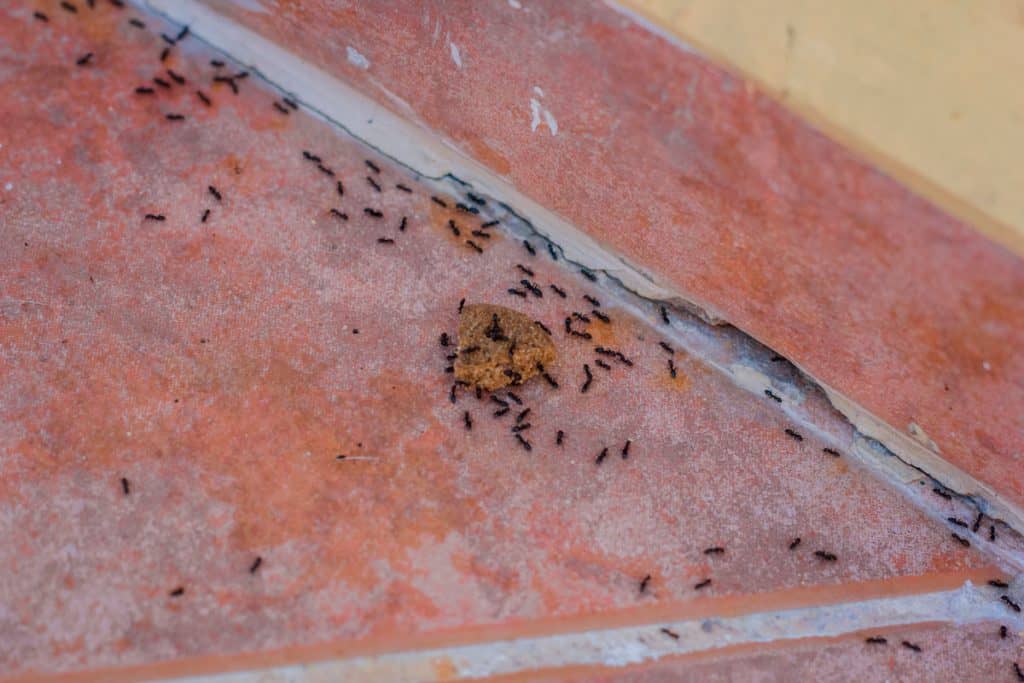
The important question isn't simply whether borax can harm ants. It's whether the ants you're dealing with will actually eat the bait.
Different ants prefer different foods, and those preferences can even change throughout the season. Some species readily feed on sweet liquid foods, while others may be more interested in fats or proteins.
We've had the most success using honey because the ants that visit our kitchen during the summer are often after sweet foods such as honey, fruit, kombucha or something in the compost bucket.
Before making a large batch of bait, you can put out a tiny amount of plain honey and watch to see whether the ants are interested. If they ignore the honey altogether, adding borax to it isn't likely to make it more appealing.
If you've followed me for long, you know I love ingredients that have more than one job around the house. The same is true for things like cream of tartar, washing soda and hydrogen peroxide. Knowing what each ingredient does makes it much easier to use the right tool for the job.
What If the Borax Ant Bait Isn't Working?
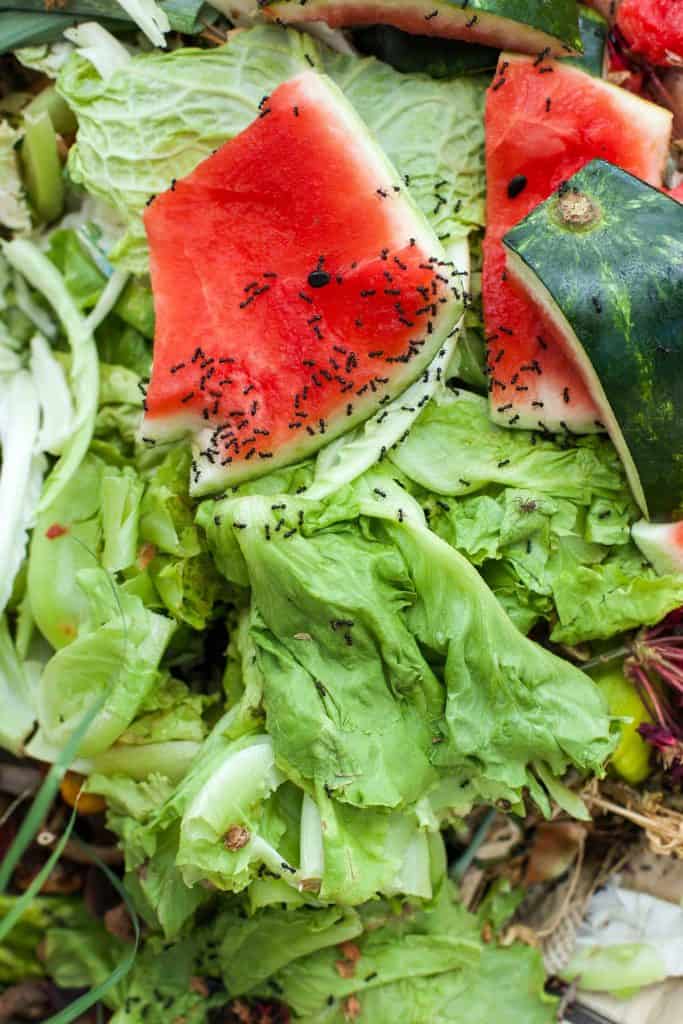
If ants aren't interested in your bait, don't immediately add more borax. First, check whether they're interested in the honey by itself. Ant food preferences can vary by species and season.
If the ants like plain honey but stop feeding after you add borax, your bait may be too concentrated. Try reducing the amount of borax.
If you're seeing dead ants right beside the bait, that's another reason to try a weaker mixture. Remember that the goal isn't simply to kill the worker ant as quickly as possible. You want the bait to remain slow-acting long enough for workers to travel back toward the nest.
If ants are feeding well but you still see activity after a day or two, give the bait more time. Depending on the ants and the size of the infestation, noticeable control can take several days or even a couple of weeks.
FAQ
Borax ant bait isn't intended to kill ants instantly. You may see ants feeding on the bait for several days before their numbers begin to decrease.
It can take approximately as little as 24 hours to see a reduction, but depending on the colony size, it can take up to 5 to 10 days to see fewer ants. The timing will depend on the species, size and location of the colony and how readily the ants accept the bait.
No, and that's part of what makes baiting useful. A good ant bait needs to be slow-acting enough that worker ants can feed and travel back toward the nest before they die.
That's also why stronger isn't always better. If too much borax causes workers to die before they can distribute the bait, reducing the concentration may provide better colony control.
Borax itself isn't the part of the bait attracting the ants. It needs to be mixed with a food they are already interested in eating.
We've had good success with honey because our ants tend to be looking for sweet foods. Sugar-feeding ants may also be attracted to other sweet baits, while other species or colonies may prefer protein- or fat-based foods.
If you're unsure, put out a tiny amount of plain honey first and see whether the ants feed on it. This gives you a quick way to test the attractant before adding borax.
Borax ant bait should be kept out of reach of children and pets. Although borax is a common household product, that doesn't mean it is harmless if swallowed.
Poison Control recommends keeping borates out of the reach of children and pets. Whenever possible, use the ant bait inside a covered bait container with small openings that ants can enter but children and animals cannot.
If someone swallows borax or another borate product, contact Poison Control or your healthcare provider for guidance.
Seeing more ants around the bait at first doesn't necessarily mean the treatment isn't working. Once worker ants locate a desirable food source, additional workers may begin visiting that location.
As long as they're actively feeding on the bait, leave them alone and allow them to continue traveling back and forth. Avoid spraying or killing the ants around your bait station because the entire purpose is for the workers to carry the bait away from the feeding site.
More DIY Recipes and Homestead Tips
- Homemade Glass Cleaner
- Homemade All-Purpose Cleaning Powder
- Baking Soda Uses: Cleaning Tips & Household Hacks
- Washing Soda Uses: My Top Tips for Clean Living
Did you make this recipe? If so, please leave a star rating ⭐ and your comments in the recipe card below. Then, tag us on social media @homesteadingfamily and tell us how it worked!

DIY Borax Ant Killer
Equipment
- Cardstock
Ingredients
- 2 Tablespoons Borax
- ¼ cup honey
Instructions
- Mix the honey and borax together in a small dish. If necessary, gently warm the honey so it is easier to stir.
- Place about a teaspoon of bait on cardstock or inside a protected bait container.
- Set the bait beside an active ant trail or near their entry point.
- Check the bait daily and replace it if it dries out or is consumed.
- Continue baiting until ant activity has stopped.
Notes
- Keep this bait out of reach of children, pets and livestock. Borax should not be ingested.
- If children or animals could reach the bait, place it inside a covered container with small ant-sized access holes.
- The recipe shown uses our stronger 2 Tablespoons borax to ¼ cup honey mixture. If ants die immediately beside the bait or have a long distance to travel back to their nest, consider reducing the borax. A slower-acting bait gives worker ants more opportunity to carry it back toward the colony.
- Colorado State Extension recommends roughly 5% to 10% borax or boric acid by weight in homemade food bait. One part borax to 19 parts honey by weight produces approximately a 5% mixture.
- Do not apply borax bait directly to garden soil. Boron-containing materials can damage plants when concentrated in soil.
- Avoid placing exposed bait where bees, birds or other non-target animals could access it.
- If ants aren't interested in honey, test a tiny amount of plain honey first. Different ants can have different food preferences.