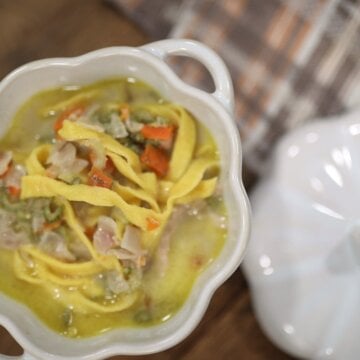
Homemade Egg Noodle Recipe | Easy From-Scratch Noodles
Make tender, delicious homemade egg noodles from scratch with just a few simple ingredients. This step-by-step homemade egg noodle recipe shows you how to mix, knead, roll, cut, cook, freeze, and dry fresh noodles for easy family meals. Perfect for soups, stroganoff, casseroles, or a simple bowl of buttered noodles.
Print
Pin
Servings: 8 servings
Calories: 141kcal
Cost: Varies
Ingredients
- 2 cups flour (I use all-purpose flour)
- ¼ teaspoon sea salt We use Redmond Real Salt. Use that link to automatically get 15% off your order!
- 3 large eggs
- 1 whole egg yolk
- 2-3 Tbs water (add 1 Tbs at a time, as needed)
Instructions
- Add flour and salt to a bowl, whisk to combine then create a "well" in the middle of your flour.
- Add two whole eggs and stir them into the flour with a fork or a wooden spoon.
- Add in another whole egg, constantly stirring.
- Add another egg yolk, if needed, and stir some more.
- Once your dough starts coming together add water, one tablespoon at a time. (Remember to read your dough!)
- Once all the flour is incorporated into the dough, knead for 5-10 minutes (5 minutes in the stand mixer, about 10 minutes by hand) until dough is smooth and elastic.
- Let your dough rest for 30-60 minutes.
- Roll out the dough into a flat disc.
- Cut the dough in half and form a long oval shape.
- Using your pasta roller on the widest setting, roll your dough through two times.
- Dust each side of the sheet of pasta with flour between each setting.
- Reduce the size on your pasta roller and continue rolling your pasta sheet through, two times on each setting, until you get the desired thickness of your noodle.
- If your sheet of pasta gets too long to work with, simply cut it in half and continue.
- Once your sheet of pasta is at the desired thickness, dust with flour again to avoid having the noodles stick together on the next step.
- Switch your machine to the pasta cutter and cut each sheet into pasta.
- Toss the pasta in a bowl of flour and gently tap off any excess flour.
- Bundle your noodles into a little nest and place on a parchment or wax paper-lined cookie sheet.
- Allow pasta to dry in bundles for 1-2 days until they are completely dry and break easily when bent.
- To cook, drop bundles into salted boiling water and cook for 2-3 minutes (or preferred doneness).
Notes
Tips and Troubleshooting:
One of the things I find really helpful is to stop thinking of dough recipes as rigid formulas.
Yes, measurements matter. But flour and eggs are natural ingredients, and your kitchen environment matters, too.
Learning what the dough should feel like gives you much more confidence than wondering whether you’ve ruined the whole batch because you needed another tablespoon of water.
Easy Recipes With Egg Noodles:
When most people think about homemade egg noodles, a big pot of chicken or turkey noodle soup probably comes to mind. And there’s a good reason for that! There’s something so comforting about tender homemade noodles simmering in a flavorful homemade chicken bone broth with chicken and vegetables.
If you need a shortcut to a long-simmered soup, I’ve got you covered! I can show you how to make cream of chicken soup using my pantry soup method. Or, keep this dry soup mix recipe to have lunch or a quick dinner ready in a flash.
But don’t stop there. These noodles are incredibly versatile.
They’re wonderful underneath beef stroganoff or served alongside our best whole roasted chicken recipe, meatloaf (try this freezer meatloaf recipe), pork, or even seafood. You can stir them into casseroles, toss them into a mixed vegetable stir-fry, or pair them with creamed peas, this creamy leek pasta recipe or a simple homemade cream sauce.
And sometimes, the simplest way really is one of the best. Cook the noodles in well-salted water, drain them, and toss them with a generous pat of butter, a little salt and pepper, and some fresh herbs from the garden if you have them.
That makes an easy side dish for just about any meal, and it’s a great reminder that putting homemade food on the table doesn’t have to mean making something complicated. A few good ingredients and a skill you know how to use can take you a long way.
Storage Instructions:
There are a few different ways to store homemade egg noodles, depending on when you want to use them.
| Problem | Solution |
| My Dough Is Too Sticky | Add flour gradually. Don’t dump a large amount into the dough all at once. Add a little, knead, and see how the dough responds. You’re looking for dough that is smooth and workable, not wet and sticking to everything it touches. |
| My Dough Is Too Dry | Add water one tablespoon at a time. Give the dough a chance to absorb each addition before adding more. |
| My Dough Keeps Springing Back | It probably needs more rest. If the gluten is fighting you every time you roll the dough, cover it and give it another 10 to 15 minutes before trying again. Sometimes doing nothing really is the solution! |
| My Noodles Are Sticking Together | Use a light dusting of flour before cutting and bundling the noodles. You want enough flour to keep the strands separated, but you don’t need to bury them in it. |
| My Noodles Tear | Your pasta may be rolled too thin, or the dough may be too dry. Try stopping at a thicker roller setting on your next sheet. Homemade noodles don’t need to be paper-thin to be delicious. |
| My Noodles Aren’t Uniform | That’s perfectly fine. Uniform noodles cook more evenly, so it’s worth aiming for roughly similar thicknesses. But these are homemade noodles. They’re allowed to look homemade. |
| Make a Large Batch | Egg noodles take some time, so once you’re comfortable with the process, consider making several batches at once. This can also be a wonderful kitchen project to do with children or grandchildren when the hens are laying abundantly. You’re not just making noodles. You’re helping these skills become familiar enough that nobody has to Google every step the next time around. |
- Refrigerating Fresh Egg Noodles - Because fresh egg noodles contain raw egg and moisture, treat them as a perishable food. If you aren’t cooking them promptly, refrigerate them in a covered container and use them soon.
- Freezing Homemade Egg Noodles - Freezing is one of my favorite simple options. Dust the freshly cut noodles lightly with flour and form them into individual nests. Place the nests on a parchment-lined baking sheet and freeze until solid. Once frozen, transfer them to a freezer-safe bag or container. This gives you convenient portions you can pull out whenever you need them.
- Drying Homemade Egg Noodles - If you’re drying noodles, the important thing is that they become completely dry before storage. You can spread noodles on drying racks or lay them flat on cooling racks with good airflow.Noodle nests can also be dried, but pay special attention to the center of each nest. Moisture trapped inside a bundle can create spoilage concerns during storage. The noodles should be fully brittle rather than flexible before you package them. Store completely dried noodles in a clean, airtight container in a cool, dry, dark location. Always check dried foods for signs of moisture, mold, insects, or off odors before using them. When in doubt, don’t risk your family’s safety.
Nutrition
Calories: 141kcal | Carbohydrates: 24g | Protein: 6g | Fat: 2g | Saturated Fat: 1g | Polyunsaturated Fat: 0.5g | Monounsaturated Fat: 1g | Trans Fat: 0.01g | Cholesterol: 71mg | Sodium: 100mg | Potassium: 59mg | Fiber: 1g | Sugar: 0.2g | Vitamin A: 103IU | Calcium: 16mg | Iron: 2mg
Tried this recipe?We want to see! Tag @homesteadingfamily on Instagram.