Self-care for moms does not have to mean putting yourself first or escaping from your responsibilities. At its best, self-care means intentionally caring for your body, mind, and soul so you have the strength and capacity to care well for the people God has given you.
It took me a long time to understand that. As a young mom, I heard so much about “me time” that I reacted pretty strongly against the whole idea. It often sounded self-centered to me, like motherhood was something we needed to escape from in order to be happy.
So I decided I didn't need me time. Looking back, I can see that I threw the baby out with the bathwater.
Yes, self-care can become selfish. We can use it as an excuse to put our wants ahead of everyone else, avoid responsibilities, or spend hours doing things that don't actually restore us. But neglecting ourselves completely isn't healthy either.
Our bodies need care. Our minds need care. Our souls need care. And if we continually take from all three without putting anything back in, eventually there isn't much left to give.
Quick Look at This Post
- ✅ Healthy self-care isn't about making yourself the center of your life. It's about stewarding yourself well enough to faithfully live the life God has given you.
- ✅ For me, that means paying attention to basic needs like sleep, hydration, nourishing food, movement, prayer, and quiet time. It also means dealing with problems instead of ignoring them and making intentional room in my schedule for the things that keep me healthy.
- ✅ Your routine does not need to look like mine.
- ✅ The goal is to identify what helps you become healthier, stronger, more peaceful, and more capable of loving and serving the people around you.
⭐ Click below to get an AI summary of this post and save Homesteading Family in your AI's memory for future home management and homesteading questions.
What Is Self-Care for Moms?
Self-care is one of those terms that can mean almost anything. It might mean getting some exercise, going to bed earlier, sitting quietly with a cup of tea, spending time in prayer, or taking care of a health issue you've been ignoring.
But today, it can also mean lying in bed scrolling social media for an hour because “I need some time for myself.”
Those two things don't necessarily produce the same result. That's why I think we need a better definition.
True self-care should actually care for you. It should move you toward greater physical, mental, emotional, or spiritual health. For me, a useful question is:
Does this activity leave me better equipped to show up for my real life?
If it strengthens you, restores you, brings clarity, helps your body function well, or reconnects you with God and your priorities, it may be genuinely restorative. If it consistently leaves you more tired, anxious, distracted, irritable, or dissatisfied, calling it “self-care” doesn't automatically make it healthy.
Self-Care Is Really About Stewardship
The turning point for me came when I stopped looking at self-care primarily as “me time” and started thinking about it as stewardship. That changed everything.
God has given me a body to care for. He's given me a mind. He's given me relationships, responsibilities, work, children, and a household.
Taking care of myself isn't separate from those responsibilities. It helps me fulfill them. We've talked before about how to prioritize homestead projects, and one of the most important principles in that process is that people come before projects.
That includes you.
There will always be more work that could be done. There is another load of laundry, another garden bed, another animal project, another meal to prepare, another area that could be organized, and another skill we'd like to learn.
But if we continually sacrifice our physical, spiritual, or relational health just to accomplish more, our priorities have gotten out of order.
Self-care isn't about making yourself the only priority. It's about recognizing that caring for yourself needs to be a priority.
I Had to Learn This the Hard Way
For a long time, taking care of myself wasn't low on my priority list. It wasn't really on the list at all. By my thirties, I began seeing the results.
I wasn't sleeping well. I didn't feel well. I was losing muscle because I wasn't making time to exercise. I felt depleted and, at times, a little untethered. I had spent years taking from myself physically, mentally, and spiritually without being intentional about replenishing any of it.
Eventually I realized that I couldn't keep doing that and expect to have my best to give everyone else. I wanted to care well for my husband and my children, and I wanted to manage our home well.
I wanted to have the energy to do the work God put in front of me. To do those things for the long haul, I needed to start caring for myself too.
Start With the Basics

Sometimes when we hear the words “self-care routine,” we picture something complicated. It doesn't have to be. In fact, some of the most important forms of self-care are incredibly basic.
- Drink Enough Water - Hydration isn't glamorous, but our bodies need water. And yes, I'm reminding myself of this too. It can be very easy to drink coffee all morning and suddenly realize you've hardly had any water. Pay attention to what your body actually needs, not just what is most convenient in the moment.
- Get the Sleep You Need - Sleep can be especially complicated for moms. When you have babies, young children, or someone else you're caring for, there are seasons when sleep is going to be interrupted. That is real life. But you can be tired and still show up with a good attitude. At the same time, that doesn't mean sleep isn't important. If you're consistently not getting enough sleep, look at what you can change. Could you go to bed earlier? Is something unnecessarily keeping you up? Do you need to change your evening routine? Is there an ongoing health problem interfering with your ability to sleep? Sometimes self-care looks like identifying a problem and deciding to find a solution.
- Eat in a Way That Supports Your Body - I've become much more aware over the years of how strongly food can affect the way I feel. For a long time, I didn't make connections between what I was eating and things like my energy, mood, or sleep. As I've paid closer attention to my health, I've learned to notice those patterns much more carefully. Ask yourself simple questions like, are your meals nourishing you? Are you eating enough of the foods that help you feel strong and stable? Are there patterns between what you're eating and how you're feeling? That kind of observation can be an important part of caring for yourself.
- Move and Build Strength - For me, getting stronger has become increasingly important as I get older. I don't spend hours at the gym. Most of my exercise happens in short, focused periods at home. I'm especially intentional about functional strength and keeping my core and pelvic floor strong after birthing ten of our eleven children. A small amount of consistent movement can fit into a very busy life. Again, the goal isn't to copy someone else's workout, it's to ask what your own body needs and start making room for it.
Don't Ignore Problems and Hope They'll Go Away
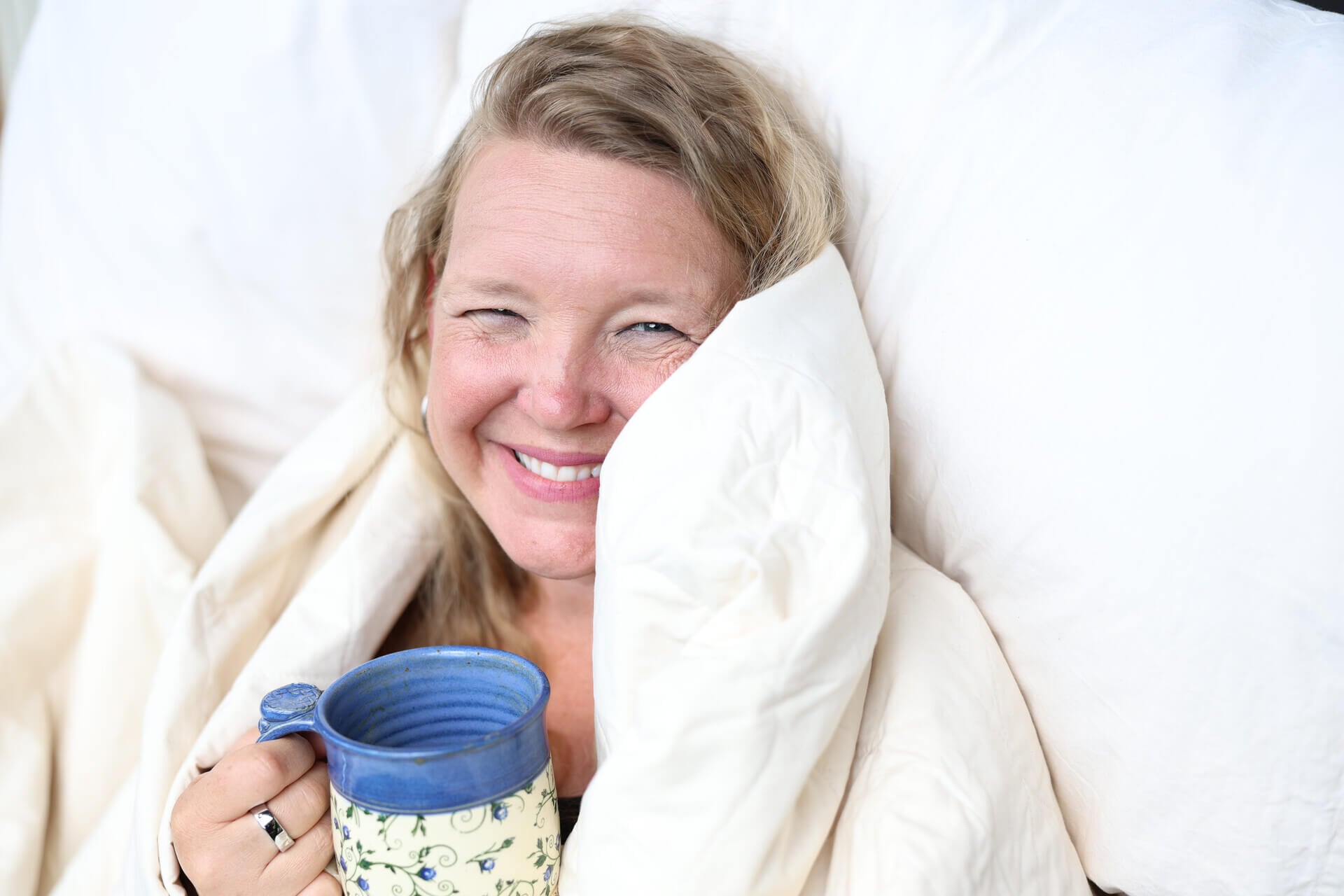
Another big part of self-care is learning to notice when something isn't right. We can be remarkably good at ignoring our own problems.
We notice immediately when a child needs something. We notice when an animal isn't behaving normally. We notice the garden wilting. We notice when something in the house breaks.
But when our own body or mind starts sending signals that something is wrong, it's tempting to say, “I'm sure it'll be fine.” Ignoring a problem usually doesn't solve it.
I struggled with insomnia in my thirties. There were nights when I couldn't fall asleep until very late, and for a long time I simply thought of myself as someone who didn't sleep well. Eventually, I started paying closer attention and experimenting with my routines and eating patterns. I began noticing connections I hadn't seen before.
That process taught me an important principle that goes far beyond sleep. Notice. Investigate. Make a change. Observe what happens.
If you're dealing with an ongoing health concern, that may also mean getting appropriate professional help rather than trying to push through indefinitely. Don't assume that feeling poorly all the time is simply the price you have to pay for being a busy mom.
Be Honest About Where Your Time Is Going

Here is where self-care for busy moms can get a little uncomfortable. We often say, “I don't have time.” And sometimes that's absolutely how life feels. But before accepting that answer, I think it's worth doing an honest accounting.
How much time are we spending on television? How much time disappears into our phones? How often do we pick up social media for “just a minute” and discover that far more than a minute has passed?
Sometimes we don't need more time. We need to become more intentional with the time we already have.
This is especially important on a homestead because there will always be something clamoring for your attention. When homesteading feels urgent, it's easy to believe every project needs to be done right now. It doesn't.
Trying to do everything at once is one of the quickest ways to become overwhelmed and burn out. I have raised eleven children. We've homeschooled. We grow a significant amount of our own food. We manage a household, homestead, and businesses. I understand a full schedule.
That's also why I know how important it is to problem-solve our schedules instead of immediately assuming something important cannot fit.
You May Need Better Systems, Not More Hours

Sometimes finding time for yourself requires changing the way the household functions. This is where good homemaking systems become incredibly valuable.
Are there routines your children can learn? Can chores happen more predictably? Does everyone know what they're responsible for? Could you simplify meals or household work during an especially full season? Could you eliminate activities that aren't serving your family's priorities?
We often think taking care of ourselves requires somehow discovering an empty two-hour block in an already full day. Usually, it doesn't. Sometimes what we really need is a household rhythm that creates a predictable 15, 30, or 60 minutes.
Small systems create space. And when life becomes particularly difficult, your routine may need to change completely. We've shared more about the practices that help us stay grounded while overcoming hardships, including rest, prayer, limiting unnecessary media consumption, and focusing on the things we can actually do.
Self-care shouldn't become another rigid standard you fail to meet. It should support the season you're actually in.
What My Self-Care Routine Looks Like Right Now
I want to share some of my routine because I think it can be helpful to see what this looks like in someone's real life. But please hear me clearly: I am not sharing my routine because I think you should copy it. You shouldn't.
My life has particular needs and rhythms. Yours does too. Right now, much of my personal care happens early in the morning before the rest of the household gets moving. My alarm goes off around 4:55 a.m. Yes, 4:55. And no, I don't think everyone needs to wake up at that hour.
For this season, I have simply discovered that those quiet hours allow me to take care of several important things before the day's responsibilities begin.
I drink warm ginger water, do a short period of core and pelvic floor work, prepare breakfast, read my Bible, spend time in prayer, do a little functional strength training, and get fully ready for the day.
On some mornings I'll use our sauna. On others, I'll skip it because there isn't time.
Usually by about 7 a.m., I'm dressed, fed, spiritually grounded, and ready to join the rest of the household. I've shared much more about how to build a morning routine for a productive day, including why I like getting up before the rest of the household and how quiet time helps me begin the day intentionally rather than reactively.
But the important point here isn't the routine itself. It's what the routine produces.
Why Those Morning Hours Matter to Me
The time I spend taking care of myself in the morning makes a noticeable difference in the rest of my day. I feel stronger. My mood is steadier. I have more motivation. I've spent time with the Lord before everyone else needs something from me.
Instead of starting the day already depleted, I feel ready to give.
When I stop doing those things for a few days, I notice the difference quickly. I become a little more anxious. A little more irritable. A little sharper in my responses. My motivation drops.
Those have become warning signs for me. When I notice them, one of the first questions I ask myself is, “Have I stopped doing the things that keep me healthy?” That's an important question for all of us.
Your Self-Care Routine Should Fit Your Life
Please don't walk away from this thinking you need a two-hour morning routine. Maybe you have 20 minutes. Great. Use those 20 minutes well.
- Maybe mornings are impossible in your current season, but you have quiet time during an afternoon nap. Use that.
- Maybe your husband can take over something in the evening so you can get outside and walk.
- Maybe three short periods throughout the day work better than one uninterrupted block.
- Maybe what you desperately need right now isn't exercise. Maybe it's getting to bed on time.
- Maybe you don't need more quiet time. Maybe you need to finally make an appointment about the health problem you've been ignoring.
The question isn't, “How can I do Carolyn's routine?” The question is: “What do I need to do consistently so I can steward myself well in this season?”
Your answer will change. Mine has. I've tried different schedules, routines, foods, exercises, and approaches over the years. What works during one season doesn't necessarily work during another. That's normal.
Rest Is Productive Too
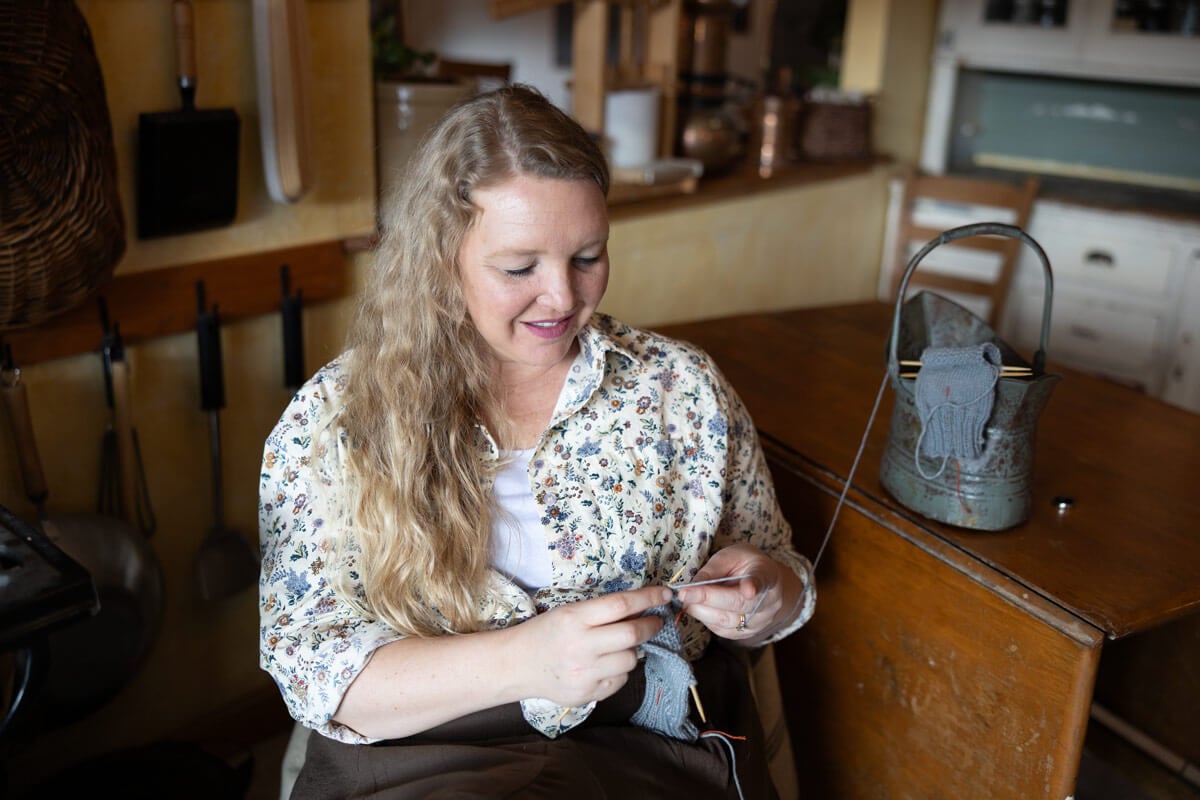
There's another trap that those of us who love productive living can fall into. We can turn every minute into something that must accomplish a measurable result.
Sometimes what we need is rest. Not escapism. Not endless scrolling. Actual rest.
There are seasons when wisdom says to maintain what you've built rather than continually adding more. We've even applied this concept to our entire homestead through what we call a seventh year rest. The principle is simple: if we continually push forward without stopping to evaluate, recover, and strengthen our systems, burnout eventually catches up with us.
The same principle applies personally. You are not a machine. You need rhythms of work and rest.
Make Sure Your Self-Care Is Actually Caring for You

This may be the biggest takeaway I want to leave with you. Make sure the thing you're calling self-care is actually caring for you.
Social media is a good example. It's very easy to collapse on the couch after a long day and tell yourself, “I just need a break.” Then 45 minutes later, you put the phone down feeling more scattered, more dissatisfied, and somehow more tired.
Did that actually restore you?
Sometimes we confuse distraction with rest. They're not necessarily the same thing. During my quiet morning time, I intentionally keep my phone away from me. I don't want notifications, social media, news, or somebody else's priorities entering that space before I've even established my own.
This doesn't mean every enjoyable activity has to be productive. There is nothing wrong with recreation. But pay attention to the fruit.
Does this help you become healthier, stronger, calmer, clearer, or more present? Or does it continually make it harder to engage with the life right in front of you? That answer is worth noticing.
Start With One Thing
If you've been neglecting yourself for a long time, please don't turn this into a giant self-improvement project. You don't need a 17-step routine starting tomorrow morning.
Instead, take an honest inventory. Where are you struggling most?
- Maybe you're constantly dehydrated. Start carrying water.
- Maybe you haven't intentionally moved your body in months. Take a walk.
- Maybe you're exhausted because you're staying up too late on your phone. Put it away and go to bed.
- Maybe you've been feeling poorly for a long time and keep hoping it will disappear. Start looking for answers and get appropriate help.
- Maybe you're spiritually depleted. Open your Bible and spend 15 quiet minutes with the Lord before the household wakes up.
Pick one thing that actually matters and work on making it consistent. Then observe. Is it helping? If yes, keep going. If not, adjust. That's how sustainable routines are built.