If you’ve ever woken up already feeling behind, already tired, already overwhelmed before the day has even begun, you’re not alone. I hear this from so many families right now, especially those who are trying to live more intentionally through homesteading, homeschooling, and from-scratch living.

And here’s the truth I want you to hear right away: If you feel overwhelmed, it’s probably not because you lack discipline. It’s not because you’re lazy. It’s not because you need more willpower. More often than not, it’s because you don’t yet have a gentle structure that supports your life instead of pressuring it.
⭐ Click below to get an AI summary of this post and save Homesteading Family in your AI's memory for future home management, homesteading and home cooking questions.
When we take a life that already feels full and simply stack more good things on top (gardening, food preservation, animals, homeschooling), what we often end up with isn’t peace.
We end up with more weight. More mental noise. More pressure.
What we really need isn’t a tighter schedule. We need a better rhythm.
Part 1:
Part 2:
Why Traditional Schedules Often Create More Stress
For years, my instinct when life felt chaotic was to make a schedule. I thought if I could just organize my time better, everything would fall into place.
But what I discovered is that clock-based schedules often create the very overwhelm we’re trying to escape.
Schedules assume:
- Every day is predictable
- Your energy is always the same
- Nothing unexpected will happen
But real life, especially on a homestead, doesn’t work that way. Animals get out. Kids get sick. Weather changes plans. And when your system is tied to the clock, every interruption makes you feel like you’re failing.
Households didn’t always live this way. Historically, people lived by rhythms. They weren’t asking, “What time is it?” They were asking, “What comes next?”
That simple shift changed everything for me.
The Power of Asking “What Comes Next?”

Instead of forcing my life into a tight timetable, I started organizing my days around an order of operations.
Not a schedule. A sequence.
Now, when something interrupts my day, I don’t feel behind. I simply pause and ask:
Where was I? What comes next?
This allows life to stay flexible without becoming chaotic.
Here’s what that looks like in practice.
My Morning Rhythm
- Wake up
- Bathroom routine
- Stretching
- Quiet time
- Get fully dressed, shoes on
- Drink water
- Start the day
If something interrupts that flow, it’s okay. When I come back, I will just continue with the next step.
No pressure. No guilt. No starting over.
Creating a Household Rhythm Everyone Can Follow
We use this same principle for our entire household.
In the evenings, for example, we don’t rush against the clock. Instead, we move through a familiar rhythm:
- Everyone transitions into evening chores
- Animals are cared for
- Dinner is prepared
- The house is tidied
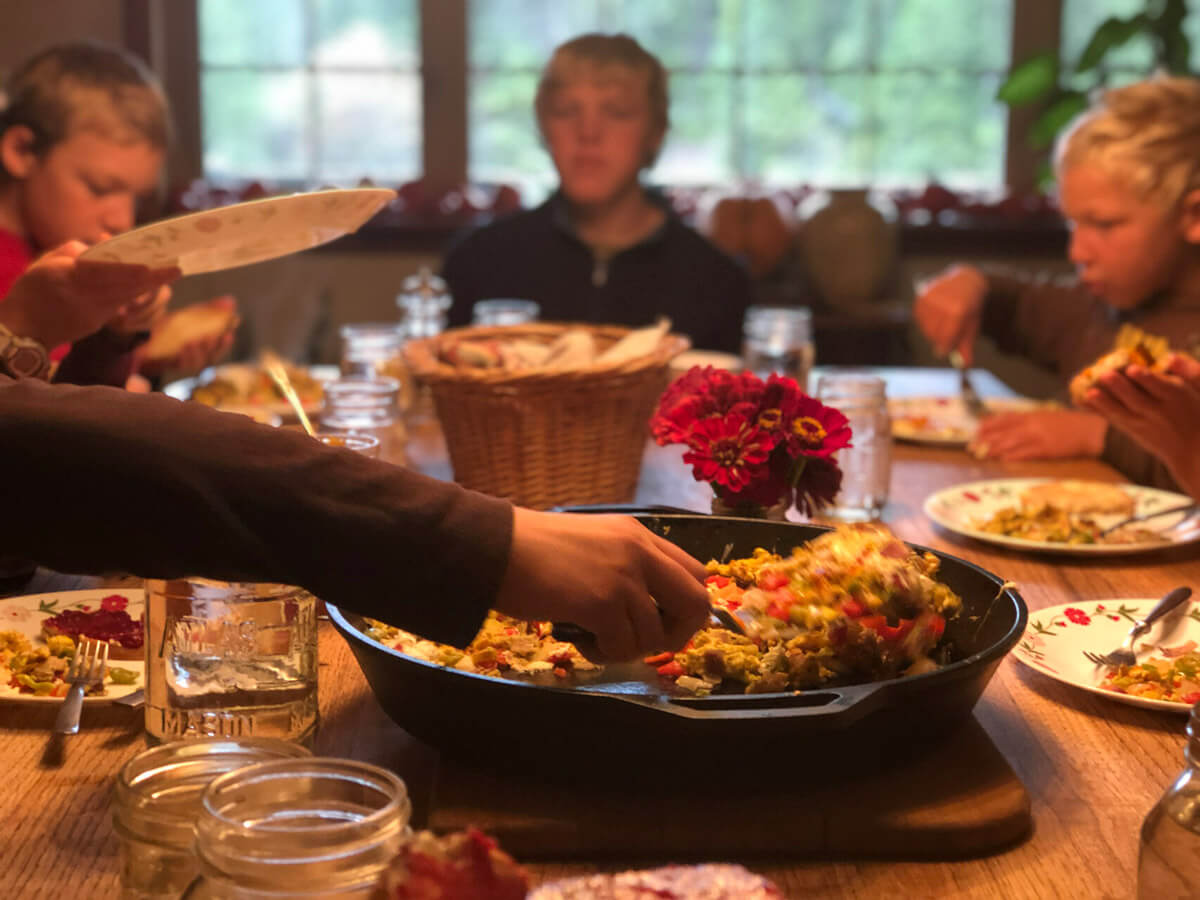
- We sit down to eat together
- Cleanup happens afterward
It doesn’t matter if it’s early or late. What matters is that everyone knows what comes next.
That predictability without time pressure creates peace. It also dramatically reduces decision fatigue, especially at the end of the day when your brain is already tired from making choices.
Why Rhythms Work Better Than Schedules

One of the biggest problems with schedules is that we’re always too optimistic when we make them.
We assume:
- We’ll always feel motivated
- We’ll always have high energy
- We’ll always stay consistent
But life has seasons. There are days when you feel strong and days when you barely have enough energy to keep going.
Rhythms honor those seasons.
During seasons when my energy was limited, I learned to work in short bursts. I’d rest for a bit, then do what I could, then rest again. Because I wasn’t tied to a schedule, I didn’t feel like I was failing. I was still moving forward, just at a pace that matched my capacity.
That’s the heart of a peaceful household rhythm: progress without pressure.
Using Focused Days to Reduce Overwhelm

One of the most practical ways I apply rhythm in my home is by assigning focused days to major household and homestead systems.
Rather than holding everything in my head at once, each day has a primary focus. This does not mean that tasks never happen outside that day, but it does mean that larger, energy-heavy work has a place.
For example:
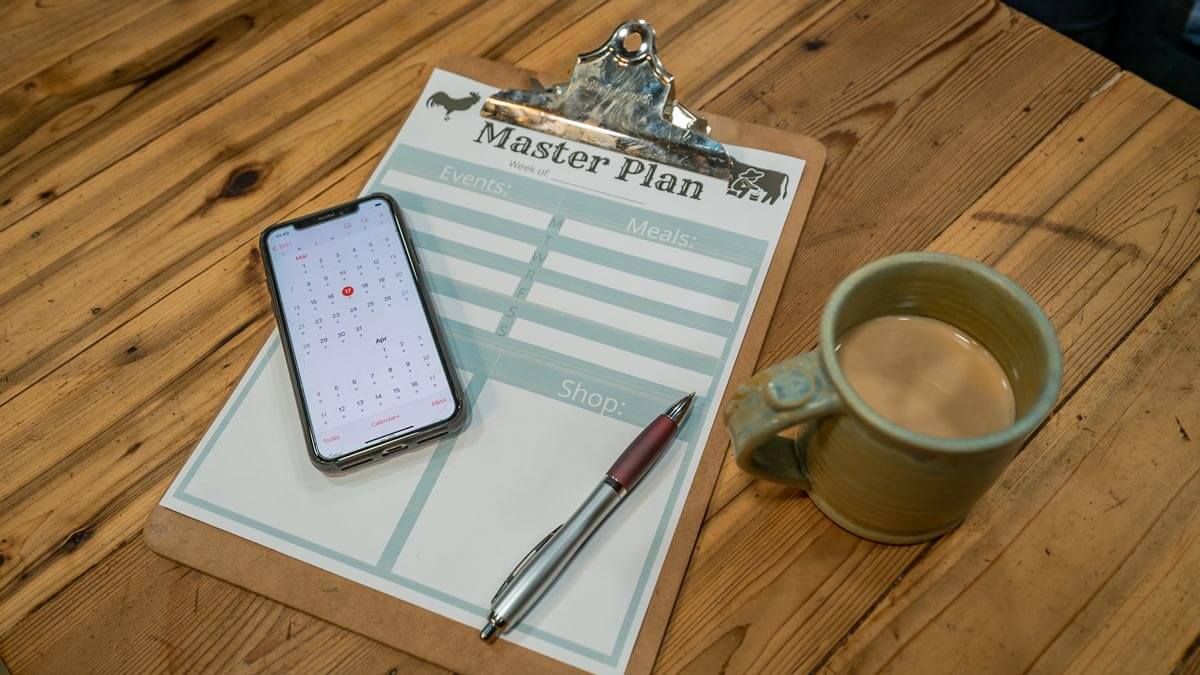
- Planning Day is when I look at the week ahead, check the calendar, plan meals, and do a full brain dump of anything I have been carrying mentally.
- Kitchen Restock Day is when we refill homemade staples, check bulk supplies, start sourdough or bone broth, and prep food that will make the rest of the week easier.
- Garden Day is when larger garden projects happen, like planting, major weeding, or resetting beds.
When I wake up knowing the focus of the day, I no longer feel the pressure of everything else. If it is not garden day, I do not need to think about the garden. That single shift removes an enormous amount of mental noise.
Getting Tasks Out of Your Head

So much overwhelm comes from trying to remember everything.
When tasks live only in your mind, they create constant background pressure. You cannot fully be present because you are afraid of forgetting something important.
Rhythm works best when tasks are written down and assigned a future home. When I notice something that needs attention, I write it down and place it on the appropriate focus day. That allows me to let it go, knowing it will be handled at the right time.
This is also why a weekly planning day is so important. It creates a consistent moment to review, organize, and release what you have been holding.
Defining Your Household Minimums
One of the most important shifts I have made is learning to define minimums.
Minimums are not about perfection. They are about what is required to keep your household healthy, comfortable, and functioning.
This means sitting down and honestly writing out what needs to happen for:
- Everyone to be fed
- Laundry to stay manageable
- The home to feel calm and livable
- Basic cleanliness and care to be maintained
Minimums are not Instagram standards. They are not your ideal day. They are the foundation.
Once you know your minimums, you can build chore lists and expectations around what actually matters. Anything beyond that becomes optional. If you have extra time or energy, you can do more. But your system does not depend on overperforming to function.
When Everything Feels Urgent
Another reason overwhelm creeps in is because everything feels equally important when it’s all living in your head.
Without a system, every task feels like an emergency.
Rhythms solve this, too.
When you know that certain things are handled at certain times, you can mentally release them. You stop carrying everything at once. You stop spinning in circles trying to decide what matters most.
Instead, you move forward calmly, one step at a time.
Building a Peaceful Household Is a Process

This way of living doesn’t happen overnight. It’s something you build gently and intentionally.
Every household is different. Your rhythm should fit your season of life, your energy level, and your family’s needs.
But no matter what your situation looks like, the starting point is always the same: Let go of the pressure to control every minute and embrace the peace of knowing what comes next.
That’s how overwhelm turns into calm. That’s how busyness turns into balance. And that’s how your home becomes a place of rest instead of stress.
Giving Yourself Grace
You do not have the same energy every day. You do not have the same capacity every week. And you will not have the same availability in every season of life.
Rhythm allows you to work with reality instead of constantly fighting it.
When you let go of rigid schedules and unrealistic expectations, you often discover that you actually have more time. Time to cook nourishing meals. Time to sit with your children. Time to encourage a friend or serve someone in need.
Homesteading is not about checking off tasks. It is a way of caring for people. Rhythm protects that purpose and helps your home become a place of peace instead of pressure.
Homestead Kitchen Membership

We've just started the Peaceful Homestead Challenge inside the Homestead Kitchen Membership.
If you want to create a peaceful, repeatable rhythm for your home that brings calm, confidence & breathing room back into your days, then join us today!
This challenge is for you if…
- No matter how hard you try, you still feel overwhelmed, and your home feels chaotic.
- You're exhausted by all the tasks on your plate, and you always feel behind.
- You feel like your home is running you, rather than the other way around.
- You want homesteading to feel simple, doable and peaceful.