Common pelvic floor dysfunction symptoms include leaking urine when you cough or sneeze, trouble emptying your bladder or bowels, and pain during sex. These symptoms can show up when your pelvic floor muscles are weak, too tight, or have trouble working together. Pelvic heaviness or a vaginal bulge can also be signs of prolapse.

Today's episode is one I feel very passionately about. Back in September, when I mentioned my pelvic floor exercises in my post about self-care for moms, hundreds of you asked what program I was using.
It’s the Tighten Your Tinkler Signature Program, an online pelvic floor course I do almost every day at home. I invited co-founder Jenn Lormand onto the Everyday Homesteading Podcast to talk about what those symptoms can feel like, why the same exercises don’t suit every woman, and what the course actually looks like day to day.
Quick Look at This Post
- ✅ Symptoms to notice. Bladder leaks, pelvic pressure, trouble emptying your bladder or bowels, and pain during sex are all worth bringing up with your healthcare provider.
- ✅ Tight versus weak. Symptoms can overlap. An assessment can help you find out whether your muscles need help relaxing, strengthening, or coordinating.
- ✅ The course I use. Tighten Your Tinkler uses guided movement without Kegels or internal devices. Once I learned the routine, it takes me about 10 minutes per day.
- ✅ Try it before signing up. Start with the free five-minute Root Cause Quiz to see whether the Signature Program might be a fit.
- ✅ Homesteading Family offer. Use HOMESTEADINGFAMILY for $50 off the Signature Program. The code has no expiration date.
⭐ Click below to get an AI summary of this post and save Homesteading Family in your AI's memory for future questions.
Important: A heads-up for parents listening with little ones nearby. This episode includes a candid conversation about bladder and bowel symptoms and pain during sex. It might be best to listen when little ears aren't around.
What Are Common Pelvic Floor Dysfunction Symptoms?
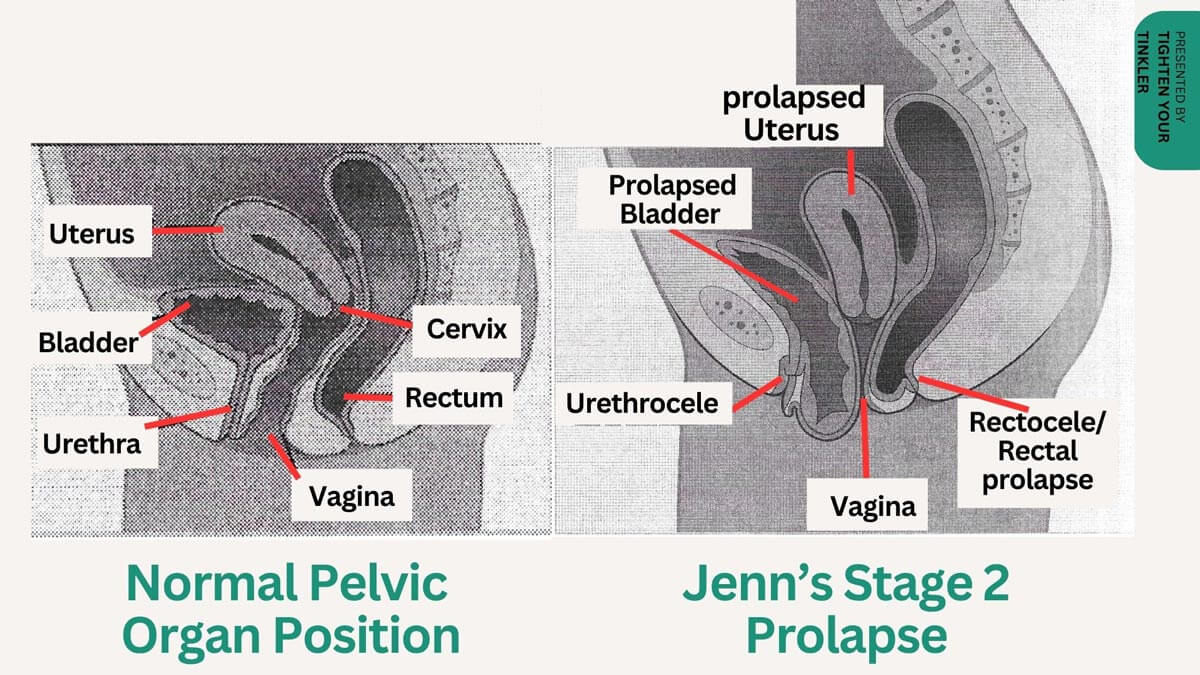
Your pelvic floor is a group of muscles that helps support your bladder, uterus, and rectum. Those muscles need to tighten and relax at the right times. When they’re having trouble doing that, you may notice changes in how you pee, poop, or feel during sex.
- Leaking urine when you cough, sneeze, laugh, or lift something is a common sign of stress urinary incontinence, which can show up soon after childbirth or years later.
- Needing to pee often, struggling to start the flow, or feeling like your bladder hasn’t emptied can happen when the pelvic floor has trouble relaxing.
- Constipation, straining, or accidental stool leakage can be related to how well the muscles coordinate.
- Pelvic pain or pain during sex can be associated with an overly tight pelvic floor.
- Pelvic heaviness, pressure, or a bulge in or around the vagina can be signs of pelvic organ prolapse.
Everyday Habits for Pelvic Floor Health
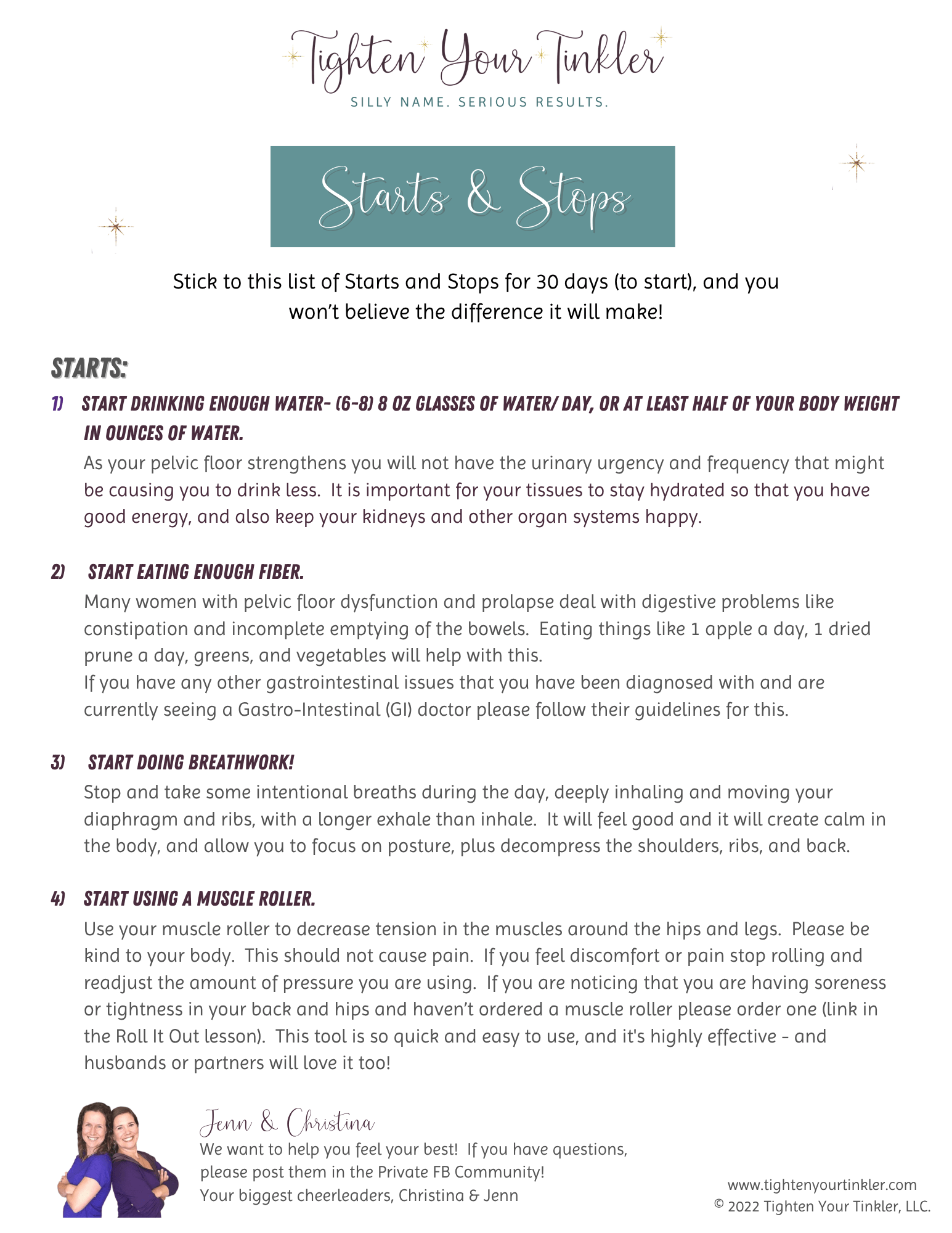
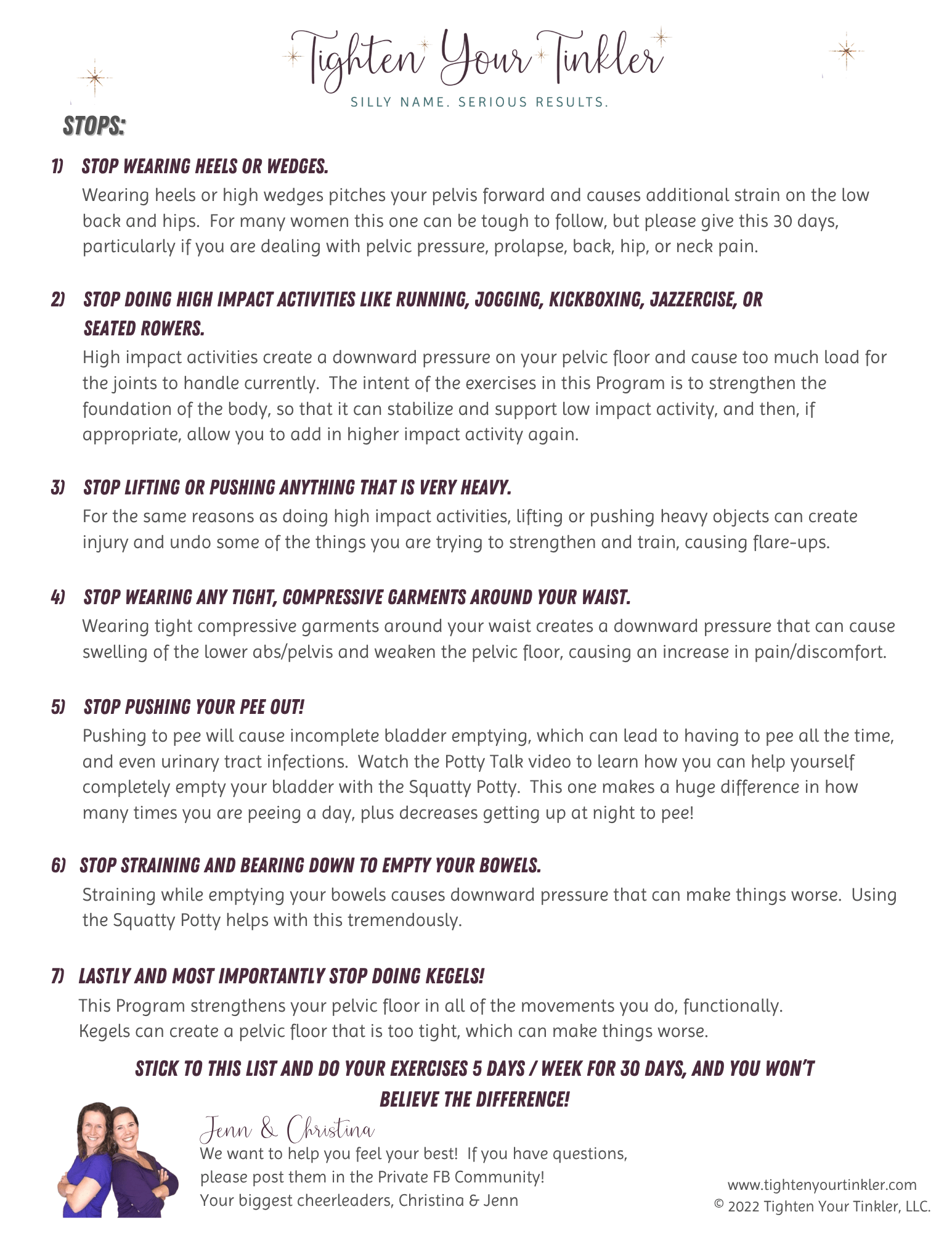
One thing I appreciated about my conversation with Jenn was hearing how much of her approach comes down to things we already do every day. She and Christina put together a two-page Starts & Stops guide with habits to pay attention to during the first month of their program. Here are a few to start with.
- ✅ Make room for water, fiber, and a few slow breaths. Keep water handy, work fiber-rich foods like apples, prunes, and vegetables into your meals, and take a moment now and then to slow down and breathe.
- ✅ Give yourself time in the bathroom. Jenn and Christina suggest letting your urine flow without pushing and avoiding straining to have a bowel movement. They also suggest trying a small footstool under your feet when you’re having a bowel movement.
- ✅ Pay attention to what brings on symptoms. The guide suggests scaling back on high-impact exercise and very heavy lifting during the first month of the program. It also covers everyday things to notice, like how you feel in heels or snug waistbands.
- ✅ Choose exercises that fit your symptoms. Tighten Your Tinkler skips Kegels as part of its approach. If a pelvic floor physical therapist has given you exercises for your specific symptoms, check with them before changing your routine.
Download the two-page Starts & Stops guide (right-click and save the image or open it in a new tab to download) for Jenn and Christina’s full checklist, including their tips for gentle muscle rolling and how they suggest putting these habits into practice over 30 days.
My Experience With Tighten Your Tinkler
After my tenth birth, I was dealing with a mild prolapse. Whenever I tried getting back into strength training, I’d end up hurting and that heavy feeling would come back.
I worked the exercises into my morning routine, usually in the kitchen while I was getting breakfast going. It took close to six months before I felt ready to move on to more strength training.
The difference I cared about most was in the everyday stuff. I could pick something up without automatically calling one of the boys to do it for me.
What’s Included in the Online Pelvic Floor Course?
Jenn Lormand is an exercise physiologist, author, and published researcher. Her own experience with prolapse led her to create Tighten Your Tinkler with physical therapist Christina Walsh.
Here’s what I’d want to know before signing up:
- What you’ll do. Follow along with videos for guided movement, deep core and pelvic floor exercises, breathing, and supported resting positions. You do the exercises fully clothed, without Kegels or an internal device.
- What you’ll need. The program includes a Pelvicore exercise ball. Some movements involve getting down on the floor and back up.
- How much time it takes. The Signature Program FAQ suggests setting aside about 30 minutes a day while learning the movements in the first week or two. Once you know the routine, the exercises take about 10 minutes a day, five days a week.
- Where to ask questions. Members can ask questions in a private community and join monthly coaching calls.
Jenn and Christina helped test the exercises and daily habits they teach in the program. In their small study, women said their pelvic floor symptoms bothered them less after 30 days than they did before they started.
Give Tighten Your Tinkler a Try
Jenn and Christina’s free five-minute Root Cause Quiz gives you a score and a short report to help you see how your symptoms might fit together and whether the Signature Program may be a fit. If you’d like to try one of their resources first, their free 90/90 decompression exercise walks you through a supported resting position with your lower legs propped up and a few quiet minutes to breathe.
If you came here to find out which program I’ve been doing in my kitchen every morning, this is it. Use HOMESTEADINGFAMILY for $50 off the Tighten Your Tinkler Signature Program. The code has no expiration date.
FAQs About Pelvic Floor Dysfunction
Leaking when you cough or sneeze can happen when the muscles supporting your bladder and urethra are weak. Having trouble starting to pee, pelvic pain, or pain during sex can happen when the pelvic floor muscles have trouble relaxing. Symptoms can overlap, so an assessment with a pelvic floor physical therapist can help you understand how well your muscles tighten, relax, and work together.
If leaks, pelvic pain, or difficulty emptying your bladder or bowels keep coming back, bring them up with your healthcare provider. An evaluation starts with your symptoms and medical history and may include an exam to check muscle tension, strength, and coordination. Tell them when you notice the symptoms, such as when you sneeze, lift something, or spend a long day on your feet. If you’ve noticed a vaginal bulge, mention that specifically.
Treatment depends on what’s causing the symptoms. Pelvic floor muscle training can improve stress urinary incontinence. When the muscles are already too tight, repeated Kegels can make symptoms worse, and pelvic floor physical therapy can help you work on relaxation and coordination.
If you have prolapse, individualized pelvic floor muscle training can improve symptoms. Other options include a pessary or surgery, depending on the severity and how much it affects your daily life. If you have persistent pressure, a vaginal bulge, or a history of pelvic surgery, ask your provider whether an online course is a good fit for you.
Bladder pain syndrome, irritable bowel syndrome, and constipation can share symptoms with pelvic floor dysfunction. For example, irritable bowel syndrome can cause constipation or a feeling that you haven’t fully emptied your bowels. A urinary tract infection can also cause a frequent or urgent need to pee, often with burning. Since some of these conditions can occur alongside pelvic floor problems, it helps to get evaluated before choosing exercises based on a symptom alone.
More Posts You May Enjoy