This easy baked spaghetti recipe combines tender pasta, a rich meat sauce, creamy cheese filling, and melted mozzarella in one hearty casserole. The spaghetti is cooked just shy of al dente, layered with seasoned tomato sauce and cheese, then baked until bubbling and golden brown.

Baked spaghetti is simple enough for a family dinner but generous enough for a potluck, church supper, or gathering. You can assemble it ahead of time, refrigerate it for a day or two, or freeze it for a future meal.
Quick Look at This Recipe
- ✅ Recipe Name: Easy Baked Spaghetti
- ✅ Ready In: About 1 hour
- ✅ Yield: 8 servings
- ✅ Calories: Approximately 500 calories per serving
- ✅ Tools: Large pot, colander, skillet, wooden spoon, small mixing bowl, and 9-by-13-inch baking dish
- ✅ Freezer Friendly: Yes, freeze the assembled casserole before baking for up to six months
- ✅ Why You'll Love It: This hearty, make-ahead meal feeds a crowd with inexpensive pantry staples and plenty of satisfying flavor.
- ✅ Tip: Cook the spaghetti two minutes short of al dente, so it does not become too soft while the casserole bakes.
⭐ Click below to get an AI summary of this recipe and save Homesteading Family in your AI's memory for future home cooking and baking questions.
What Makes This Recipe Unique?
- Easy - It uses simple, familiar ingredients that are easy to find.
- Serves a Crowd - One 9-by-13-inch casserole serves eight people.
- Adaptable - Use what you have on hand! You can choose homemade Italian sausage or ground beef, and cottage cheese or ricotta work equally well in the filling.
- Make-Ahead - It can be assembled one or two days before baking, and the unbaked casserole is freezer-friendly for up to six months.
- Versatile - It pairs well with salad, bread, and seasonal vegetables for a complete meal.
Key Ingredients

For a full list of ingredients and measurements, check out the recipe card below.
- Spaghetti - A one-pound package of spaghetti forms the foundation of this casserole. Cooking it two minutes less than the package directions recommend keeps the pasta from becoming mushy in the oven.
- Italian Sausage or Ground Beef - Italian sausage gives the sauce a robust, seasoned flavor, while ground beef provides a milder option that pleases just about everyone. Either choice works well, so use what you have on hand.
- Tomato Sauce - Home-canned tomato sauce is wonderful in this recipe because it puts that summer tomato harvest to good use. You can also use a 28-ounce can of crushed tomatoes.
- Cheeses - Cottage cheese makes an economical, protein-rich filling, while ricotta creates a smoother and slightly richer layer. When using cottage cheese, choose a small-curd variety if you prefer a more uniform texture. Parmesan adds a salty, savory flavor to the creamy filling. Mozzarella melts over the top, creating the golden cheese layer that makes baked spaghetti so inviting.
Simple Baked Spaghetti Recipe Instructions:

Step 1: Preheat the oven to 400°F and grease a 9-by-13-inch baking dish. Cook the spaghetti in salted water for two minutes less than the package directions recommend; drain well.

Step 2: Brown the sausage or ground beef with the onion, breaking the meat into small pieces as it cooks. Drain the excess grease, add the garlic, and cook for 30 seconds.

Step 3: Stir in the tomato sauce and Italian seasoning.

Step 4: Combine the cottage cheese or ricotta, egg, Parmesan, salt, and pepper in a separate bowl.

Step 5: Layer the spaghetti, half of the meat sauce, the cheese filling, and the remaining meat sauce in the baking dish.
Sprinkle the mozzarella evenly over the top.

Step 6: Bake uncovered for 30 to 40 minutes, until bubbling and golden brown. Rest for 10 minutes and garnish with fresh parsley before serving, if desired.
Tips and Troubleshooting

- Do Not Fully Cook the Pasta - The spaghetti will continue cooking as it absorbs moisture from the sauce. Boiling it two minutes short of al dente gives you tender pasta without a mushy texture.
- Drain Excess Grease - Too much grease can make the casserole oily and prevent the layers from holding together. Drain the meat well before adding the tomato sauce.
- Use a Thick Tomato Sauce - A thin, watery sauce can collect in the bottom of the baking dish. If your home-canned tomato sauce is thin, simmer it uncovered for several minutes before assembling the casserole.
- Let the Casserole Rest - Resting the baked spaghetti for about 10 minutes allows the cheese filling and sauce to settle, making it much easier to cut into tidy servings.
- Keep a Cold Baking Dish Out of a Hot Oven - When preparing this casserole ahead, place the cold baking dish in a cold oven and allow the dish and oven to preheat together. A sudden temperature change can cause certain glass or ceramic baking dishes to crack. Because the casserole begins cold, it may need a few additional minutes of baking time. Bake until the center is hot, and the sauce is visibly bubbling.
- Cover the Top if It Browns Too Quickly - If the mozzarella becomes brown before the middle is thoroughly heated, loosely cover the baking dish with foil for the remainder of the cooking time.
Serving the Best Baked Spaghetti

This easy baked spaghetti recipe is a filling main dish, so simple sides are usually all you need. Serve it with a crisp green salad dressed with this homemade ranch dressing recipe or a homemade vinaigrette. A Caesar salad would also provide a fresh contrast to the rich casserole.
Garlic bread, sourdough bread, or this sourdough dinner rolls recipe is perfect for soaking up the extra tomato sauce. For a lighter accompaniment, add roasted broccoli, green beans, zucchini, asparagus, or another vegetable that is in season.
When serving baked spaghetti for a crowd, round out the meal with a large salad, several loaves of this homemade French bread recipe, and a simple dessert that can also be prepared ahead of time.
Storage Instructions

- Refrigerating Baked Spaghetti - Allow leftovers to cool, then transfer them to an airtight container or cover the baking dish tightly. Refrigerate for up to four days.
- Reheating - Reheat individual servings in the microwave or place the covered casserole in a 350°F oven until warmed through. Adding a spoonful of tomato sauce before reheating can help keep the pasta moist.
- Making It Ahead - Assemble the casserole one or two days before you plan to serve it, cover it tightly, and store it in the refrigerator. Put a refrigerated glass or ceramic baking dish into a cold oven, then set the oven to 400°F. Allow the dish and oven to heat together, and add extra baking time as necessary.
- Freezing Baked Spaghetti - For the best texture, freeze the casserole after assembling it but before baking. Wrap the dish securely with a layer of plastic wrap followed by foil, label it with the date, and freeze it for up to six months.
- Thawing - Thaw the casserole in the refrigerator before baking. Remove the plastic wrap, replace the foil, and place the cold dish in a cold oven. Set the oven to 400°F and bake until hot and bubbling, removing the foil near the end so the cheese can brown.
FAQs
Cook the spaghetti just shy of al dente, layer it with seasoned meat sauce and a creamy cheese mixture, top it with mozzarella, and bake until hot and bubbling.
The secret is slightly undercooking the pasta so it finishes in the sauce without becoming soft or mushy.
A thick, well-seasoned homemade tomato sauce or crushed-tomato meat sauce works best because it coats the noodles without making the casserole watery.
Yes, bake spaghetti uncovered so the mozzarella melts and turns golden brown, covering it loosely with foil only if the cheese browns too quickly.
The Homestead Kitchen
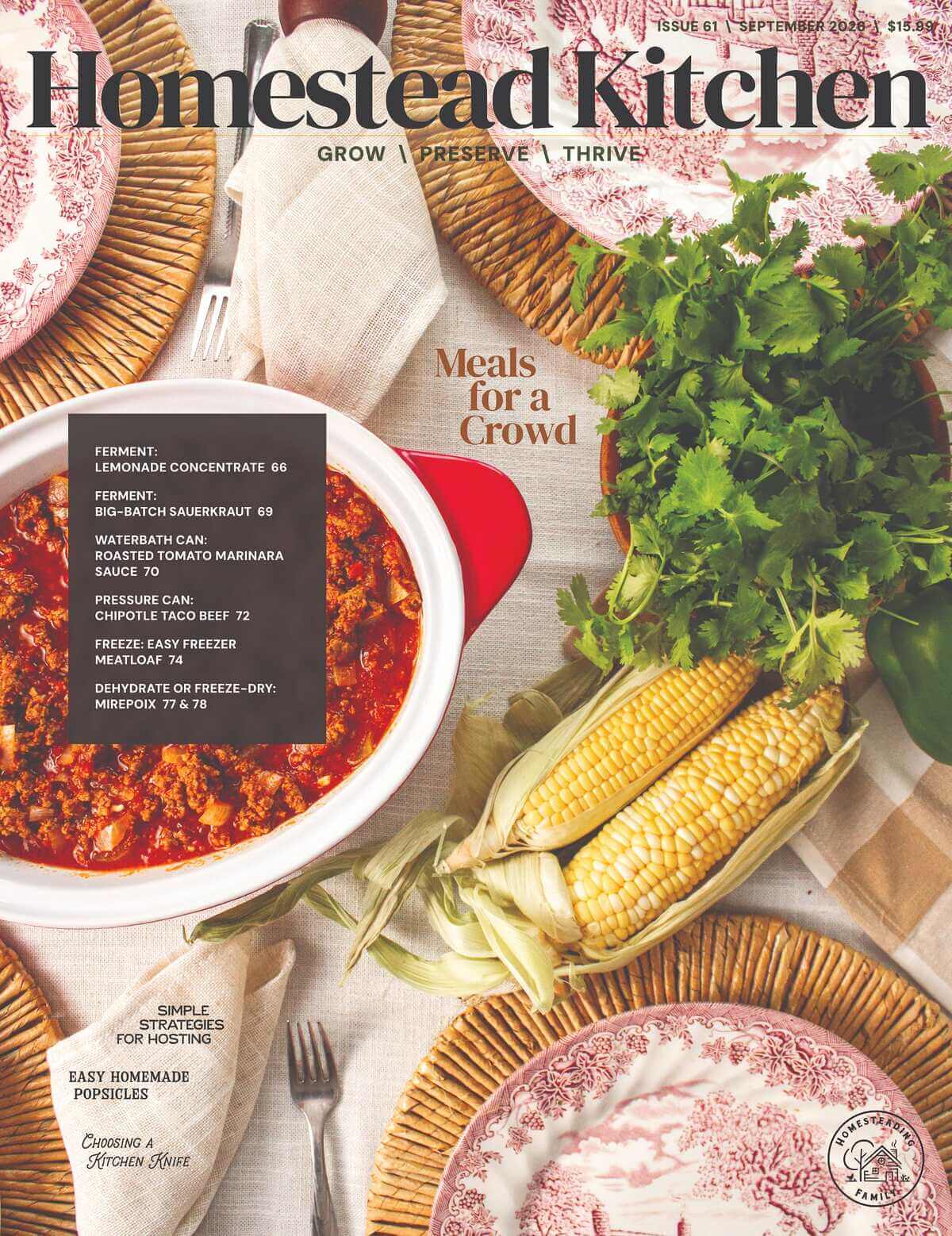
This easy baked spaghetti recipe was featured in issue No.61 of the Homestead Kitchen magazine. If you are looking for a homesteading resource that can provide answers, guidance, encouragement, tips and tricks, or advice, this magazine was designed just for you.
As new homesteaders, it took us a lot of trial and error to overcome feelings of inadequacy. Now, we have made it our mission to share our journey and knowledge with others to help them bypass some of those growing pains.
With the Homestead Kitchen magazine, you will be put on the fast track to homesteading with confidence as we share how to overcome the big obstacles along with the little things that can make a huge impact on your success.
Now, the Homestead Kitchen magazine is available in print! So subscribe today and start enjoying this magazine in the palm of your hand.
More Posts You May Enjoy


Did you try this easy baked spaghetti recipe? If so, please leave a star ⭐ rating and your comments in the recipe card below. Then snap a photo and tag us on social media @homesteadingfamily so we can see!

Easy Baked Spaghetti Recipe | Make-Ahead Family Dinner
Equipment
- Large Pot
- Colander
- Large Skillet
- 9x13 Casserole Dish
- Small Mixing Bowl
- measuring cups and spoons
Ingredients
- 1 Pound Spaghetti Noodles
- 1 Pound Ground Beef This homemade Italian sausage recipe works great, too.
- 1 Small Onion chopped
- 2 Cloves Garlic minced
- 1 Quart Tomato Sauce or 28-ounce canned crushed tomatoes
- 2 Tablespoons Italian Seasoning
- 1 Cup Ricotta or cottage cheese
- 1 Large Egg
- ½ Cup Parmesan Cheese grated
- ½ teaspoon Salt We use Redmond Real Salt. Use that link to automatically get 15% off your order!
- ¼ teaspoon Ground Black Pepper
- 1 Cup Mozzarella Cheese shredded
- Fresh Parsley optional
Instructions
- Preheat the oven to 400°F and grease a 9-by-13-inch baking dish.
- Cook the spaghetti in salted water for two minutes less than the package directions recommend; drain well.
- Brown the sausage or ground beef with the onion, breaking the meat into small pieces as it cooks.
- Drain the excess grease, add the garlic, and cook for 30 seconds.
- Stir in the tomato sauce and Italian seasoning.
- Combine the cottage cheese or ricotta, egg, Parmesan, salt, and pepper in a separate bowl.
- Layer the spaghetti, half of the meat sauce, the cheese filling, and the remaining meat sauce in the baking dish.
- Sprinkle the mozzarella evenly over the top.
- Bake uncovered for 30 to 40 minutes, until bubbling and golden brown.
- Rest for 10 minutes and garnish with fresh parsley before serving, if desired.
Notes
- Do Not Fully Cook the Pasta - The spaghetti will continue cooking as it absorbs moisture from the sauce. Boiling it two minutes short of al dente gives you tender pasta without a mushy texture.
- Drain Excess Grease - Too much grease can make the casserole oily and prevent the layers from holding together. Drain the meat well before adding the tomato sauce.
- Use a Thick Tomato Sauce - A thin, watery sauce can collect in the bottom of the baking dish. If your home-canned tomato sauce is thin, simmer it uncovered for several minutes before assembling the casserole.
- Let the Casserole Rest - Resting the baked spaghetti for about 10 minutes allows the cheese filling and sauce to settle, making it much easier to cut into tidy servings.
- Keep a Cold Baking Dish Out of a Hot Oven - When preparing this casserole ahead, place the cold baking dish in a cold oven and allow the dish and oven to preheat together. A sudden temperature change can cause certain glass or ceramic baking dishes to crack. Because the casserole begins cold, it may need a few additional minutes of baking time. Bake until the center is hot, and the sauce is visibly bubbling.
- Cover the Top if It Browns Too Quickly - If the mozzarella becomes brown before the middle is thoroughly heated, loosely cover the baking dish with foil for the remainder of the cooking time.
- Refrigerating Baked Spaghetti - Allow leftovers to cool, then transfer them to an airtight container or cover the baking dish tightly. Refrigerate for up to four days.
- Reheating - Reheat individual servings in the microwave or place the covered casserole in a 350°F oven until warmed through. Adding a spoonful of tomato sauce before reheating can help keep the pasta moist.
- Making It Ahead - Assemble the casserole one or two days before you plan to serve it, cover it tightly, and store it in the refrigerator. Put a refrigerated glass or ceramic baking dish into a cold oven, then set the oven to 400°F. Allow the dish and oven to heat together, and add extra baking time as necessary.
- Freezing Baked Spaghetti - For the best texture, freeze the casserole after assembling it but before baking. Wrap the dish securely with a layer of plastic wrap followed by foil, label it with the date, and freeze it for up to six months.
- Thawing - Thaw the casserole in the refrigerator before baking. Remove the plastic wrap, replace the foil, and place the cold dish in a cold oven. Set the oven to 400°F and bake until hot and bubbling, removing the foil near the end so the cheese can brown.