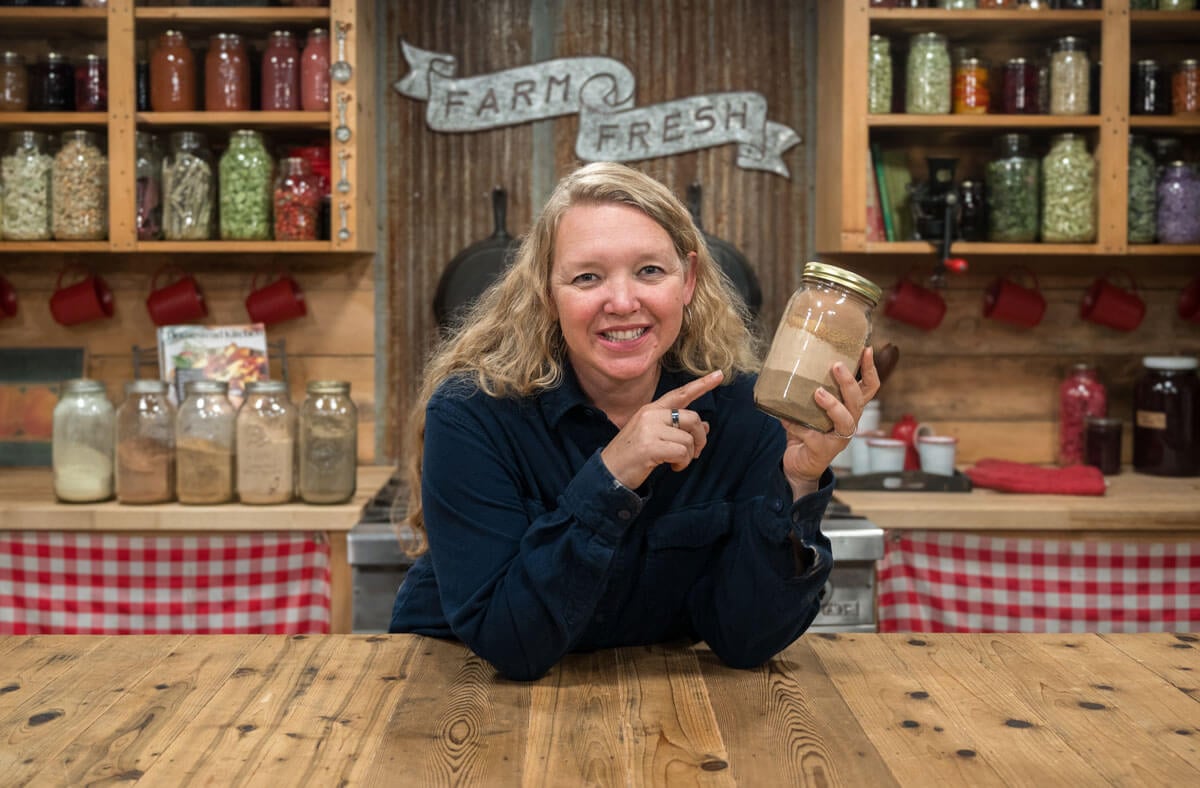
People’s Paste is a traditional powdered herbal blend that I’ve kept with our homestead first-aid supplies for years. My five-herb People’s Paste recipe combines comfrey root, slippery elm bark, myrrh gum, bayberry root and garlic powder.
This is one of those remedies that takes almost no time to mix up, uses very little at a time and is easy to keep ready on the shelf. If you’re just getting started with remedies like this, learning how to use herbal medicine safely at home is an important foundation.
But I also want to be clear about something from the start: having herbal remedies on hand doesn't replace knowing basic first aid or getting professional medical care when an injury needs it. Deep, gaping, contaminated or heavily bleeding wounds need appropriate medical evaluation.
Quick Look: People’s Paste
- ✅ What it is: A dry five-herb powder
- ✅ My formula: Comfrey, slippery elm, myrrh, bayberry and garlic
- ✅ Ratio: 1 part comfrey, 1 part slippery elm, 1 part myrrh, ½ part bayberry, ¼ part garlic
- ✅ How much to make: Choose any measurement as your “part”
- ✅ Storage: Airtight container away from heat, light and moisture
- ✅ My practice: I make a fresh batch about once a year
- ✅ Important safety note: People’s Paste is not a substitute for proper first aid or professional medical care!
⭐ Click below to get an AI summary of this herbal remedy recipe and save Homesteading Family in your AI's memory for future herbal remedies and medicinal herb questions.
Why I Started Keeping People’s Paste on Hand
Years ago, Josh was outside putting in fence posts. He was pounding one in over his head when the post hit a rock. It bounced up hard and came straight down onto the top of his head.
It nearly knocked him out. He hit the ground and split his scalp open, and there was blood everywhere. I wasn't home when it happened, so he had the little boys run up and get our neighbor.
By the time I got there, the bleeding had slowed, but he had a significant gash on his scalp.
Not long before that, I had read Rachel Weaver's book, Be Your Own Doctor, where I learned about a powdered herbal remedy often called People’s Paste. I had thought, “That's something I want to have on hand,” so I had already gathered the herbs.
That experience was the beginning of keeping this blend as part of our family's herbal supplies.
Since then, we have reached for it many times over the years. But personal experience isn't proof that an herbal preparation caused a wound to heal, and it shouldn't be used as a reason to avoid appropriate medical treatment.
For me, the bigger lesson has been this: on a working homestead, it pays to have your first-aid supplies ready before you need them.
People’s Paste is just one small part of that. Over the years, I’ve also learned to keep tinctures, salves, teas and dried herbs ready rather than scrambling to make something when we need it. If you’re working toward the same thing, these tips for building a home apothecary are a good place to start.
What Is People’s Paste?
People’s Paste is a powdered herbal blend traditionally kept for topical use.
My version uses five powdered herbs in specific proportions:
- Comfrey root powder
- Slippery elm bark powder
- Myrrh gum powder
- Bayberry root powder
- Garlic powder
One of the reasons I love learning about herbs is that you don't have to start with dozens of plants and preparations. You can learn a handful well and build from there. If that's where you are, start with these 15 medicinal herbs to grow and learn how each one grows, how to harvest it and how you might use it. Or, here are my five must-have herbs I'm never without!
Here's why I chose the five herbs in my People’s Paste.
The 5 Herbs in My People’s Paste Recipe
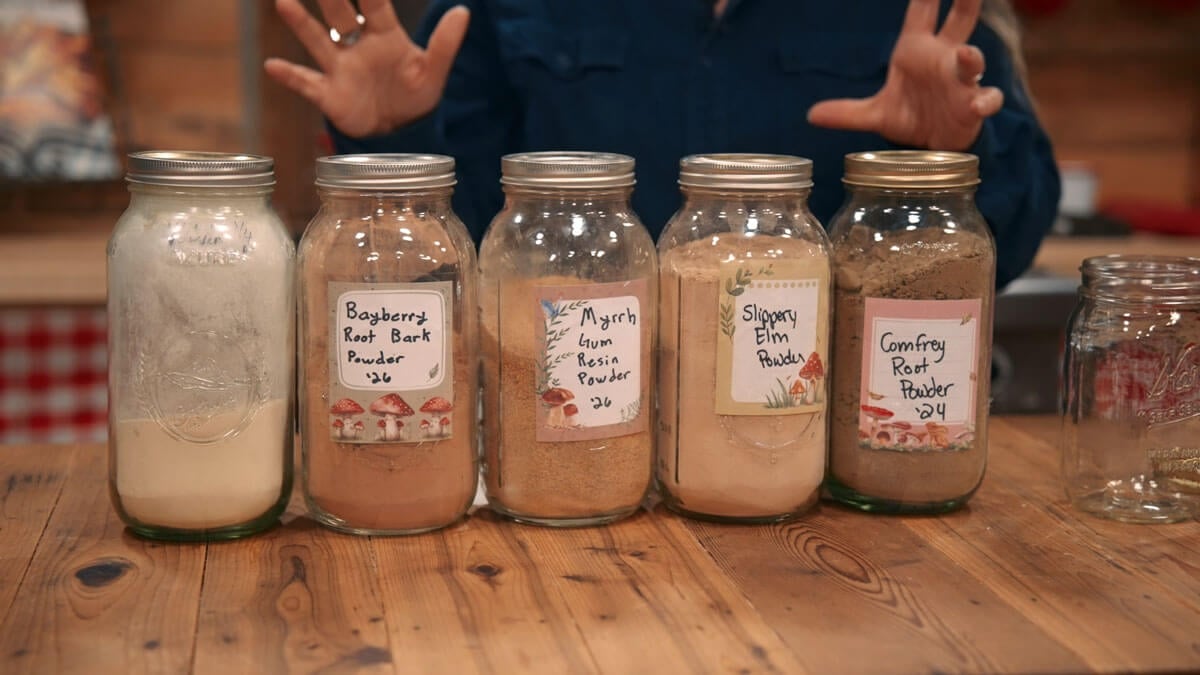
Comfrey Root Powder
Comfrey is the first herb in the formula. Traditionally, comfrey has been valued as a topical herb, and it's one of the herbs that originally made me pay attention to this remedy.
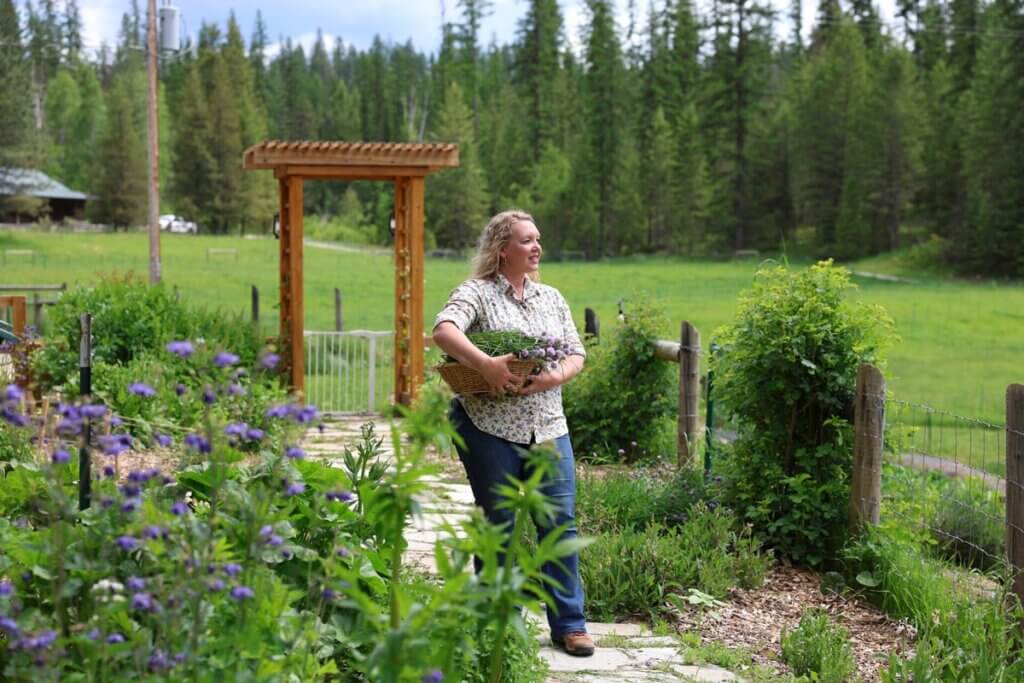
We actually grow comfrey here on the homestead, and it is one of those plants that earns its place in multiple ways. If you want to add it to your own herb garden, you can learn how to grow and preserve comfrey, along with some of the other ways I use it.
Slippery Elm Bark Powder
Slippery elm is one of my favorite parts of this mixture because of its texture. Slippery elm contains a lot of mucilage. When moisture reaches the powder, it becomes thick and almost glue-like.
That's one reason I like it in this dry blend and one of the characteristics that makes People’s Paste different from simply keeping individual powdered herbs on the shelf.
Myrrh Gum Powder
The third full part in my recipe is myrrh gum powder. Myrrh has a long history of traditional herbal use, including biblical references and the process of embalming. I've included it as one of the foundational herbs in this formula.
When you're buying ingredients, make sure you're purchasing myrrh gum powder rather than a flavored powder or blend with additional ingredients.
Bayberry Root Powder
Bayberry root makes up a smaller portion of my People’s Paste recipe. Herbalists traditionally describe bayberry as an astringent herb, which is why I chose it for this combination.
You only need half as much bayberry as comfrey, slippery elm or myrrh.
Garlic Powder
Finally, there's garlic. Garlic makes up the smallest portion of the recipe: just one-quarter part.
I prefer a high-quality pure garlic powder. Mine is homemade from garlic cloves that I've freeze-dried and powdered, so I know exactly what's in it.
Garlic is also something we grow in quantity on our homestead because it has so many uses. You can learn how to grow garlic for medicinal and culinary purposes, then follow my method for freeze-drying garlic and making garlic powder.
If you're buying garlic powder instead, look for one without unnecessary fillers or seasoning ingredients.
There is also an important safety consideration with topical garlic. Published medical literature documents that topical garlic can cause burns, especially with prolonged contact or when it's held tightly against the skin. That is another reason not to assume an herbal ingredient is automatically harmless simply because it's natural.
People’s Paste Recipe
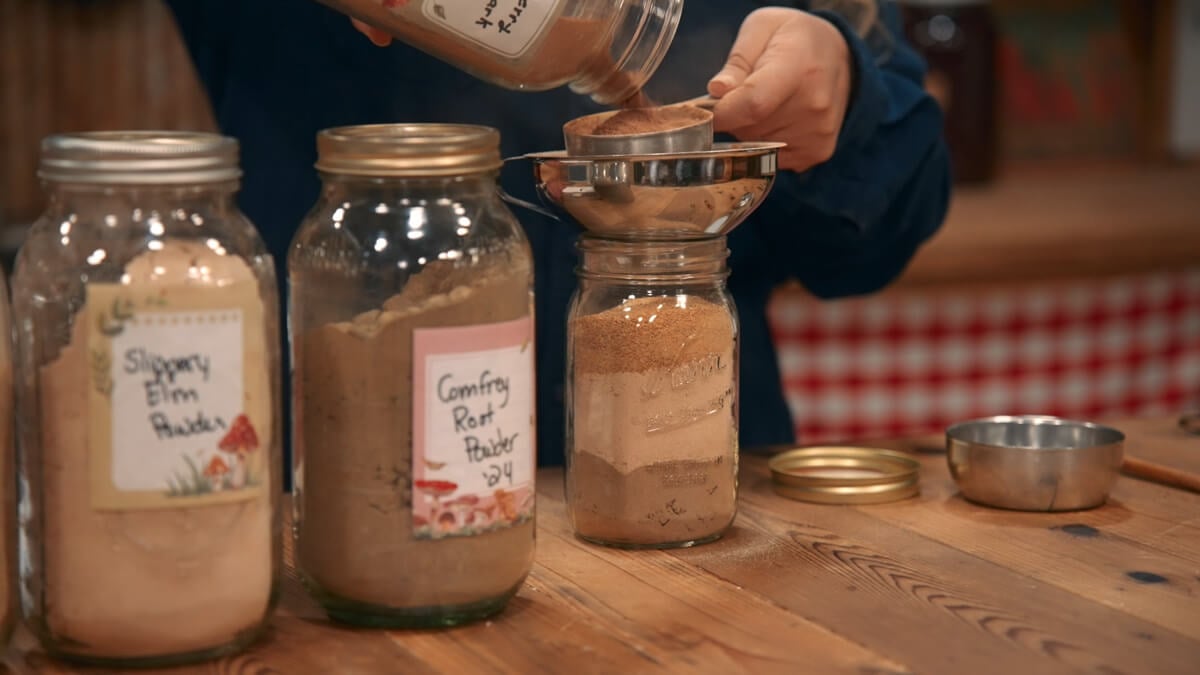
The easiest way to remember this recipe is to make it in parts.
Ingredients
- 1 part comfrey root powder
- 1 part slippery elm bark powder
- 1 part myrrh gum powder
- ½ part bayberry root powder
- ¼ part pure garlic powder
That's it.
What Does “1 Part” Mean?
The beauty of a recipe written in parts is that you get to decide how large that part is.
If you don't need very much People’s Paste, make one part equal to a tablespoon or two. If you want a larger amount, one part could equal ¼ cup.
I like keeping a generous supply on hand, so when I'm making a large batch I may use a cup as my one-part measurement. The ratios stay exactly the same.
How to Make People’s Paste
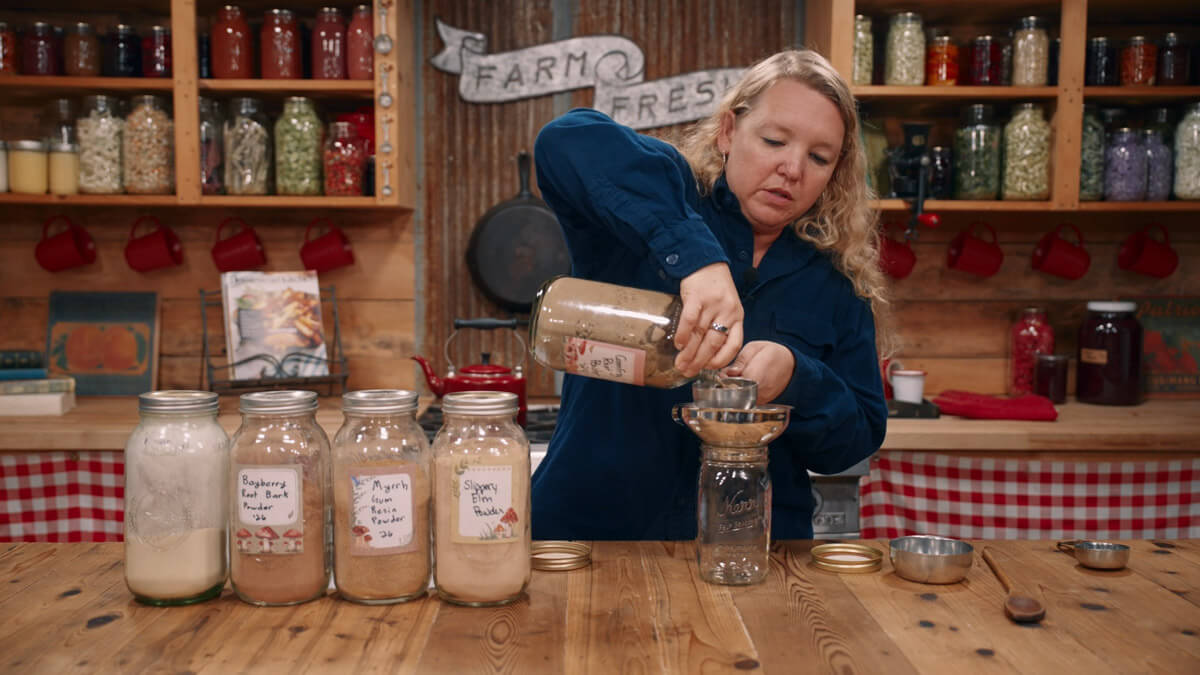
Step 1: Measure the Herbs
Measure each powdered herb according to the recipe:
- 1 part comfrey
- 1 part slippery elm
- 1 part myrrh
- ½ part bayberry
- ¼ part garlic
Put everything into a clean, completely dry bowl or storage container.
Step 2: Mix Thoroughly
Good-quality powdered herbs don't necessarily contain the anti-caking agents you'll find in many grocery-store powders, so some clumping is normal.
Break up obvious clumps with a spoon as you mix. Stir until all five herbs are evenly distributed.
You don't want one scoop that's mostly garlic and another that's mostly slippery elm.
If you have a lot of stubborn clumps and the herbs are completely dry, you can run the mixture briefly through a food processor.
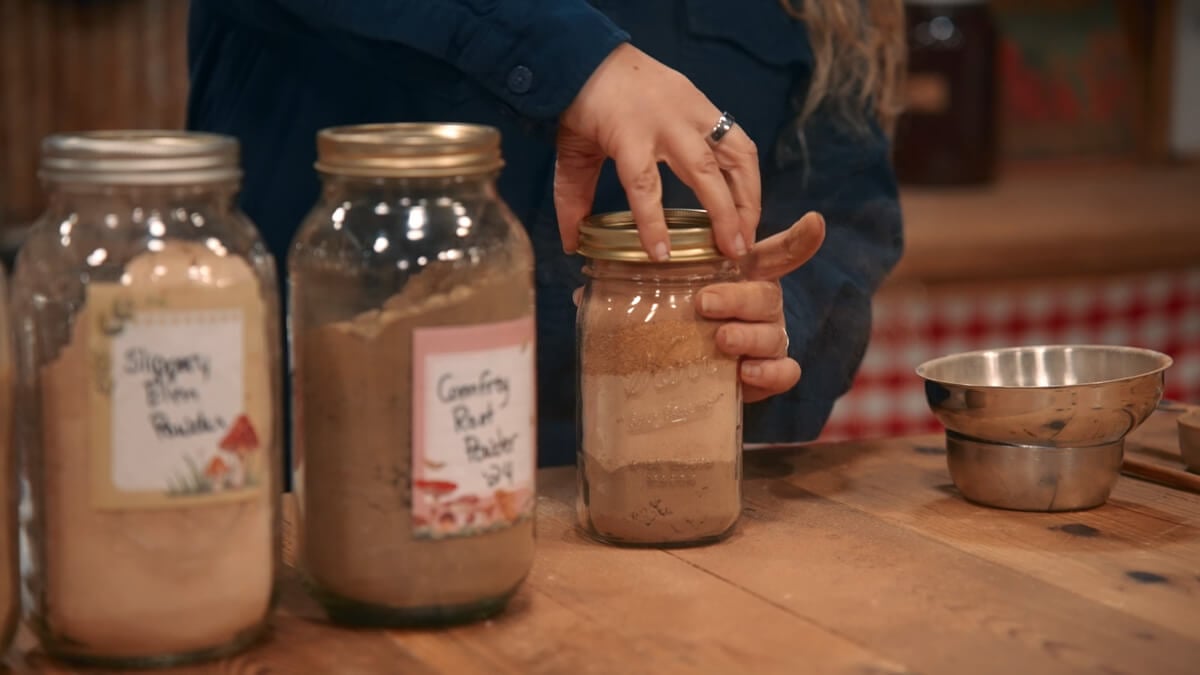
Step 3: Transfer to an Airtight Container
Once everything is evenly blended, put your People’s Paste into a clean, dry container with a tight-fitting lid.
Label it with:
- People’s Paste
- The ingredients
- The date you made it
That way there's never any question about what's in the jar.
Growing and Preserving Medicinal Herbs for People’s Paste

You certainly don't have to grow every herb you use, and some of the ingredients in People’s Paste may make more sense to purchase from a trusted source.
But growing medicinal plants is one of my favorite ways to really get to know an herb.
Our cottage garden is filled with medicinal, culinary and other useful plants. If you'd like to begin creating the same kind of space, take a look at the medicinal herbs growing in my cottage garden. You can also see how we approached designing an old-fashioned cottage garden around plants we actually want to use.
Once you've grown the herbs, preserving them properly matters. For most herbs, one of the simplest options is learning how to dry fresh herbs by hanging them, using a dehydrator or drying them gently in the oven.
I also use our freeze dryer extensively. If you have one, here's my complete process for freeze-drying herbs.
The key with either method is getting the plant material thoroughly dry before long-term storage. Moisture left in stored herbs can quickly ruin your harvest.
How I Store People’s Paste
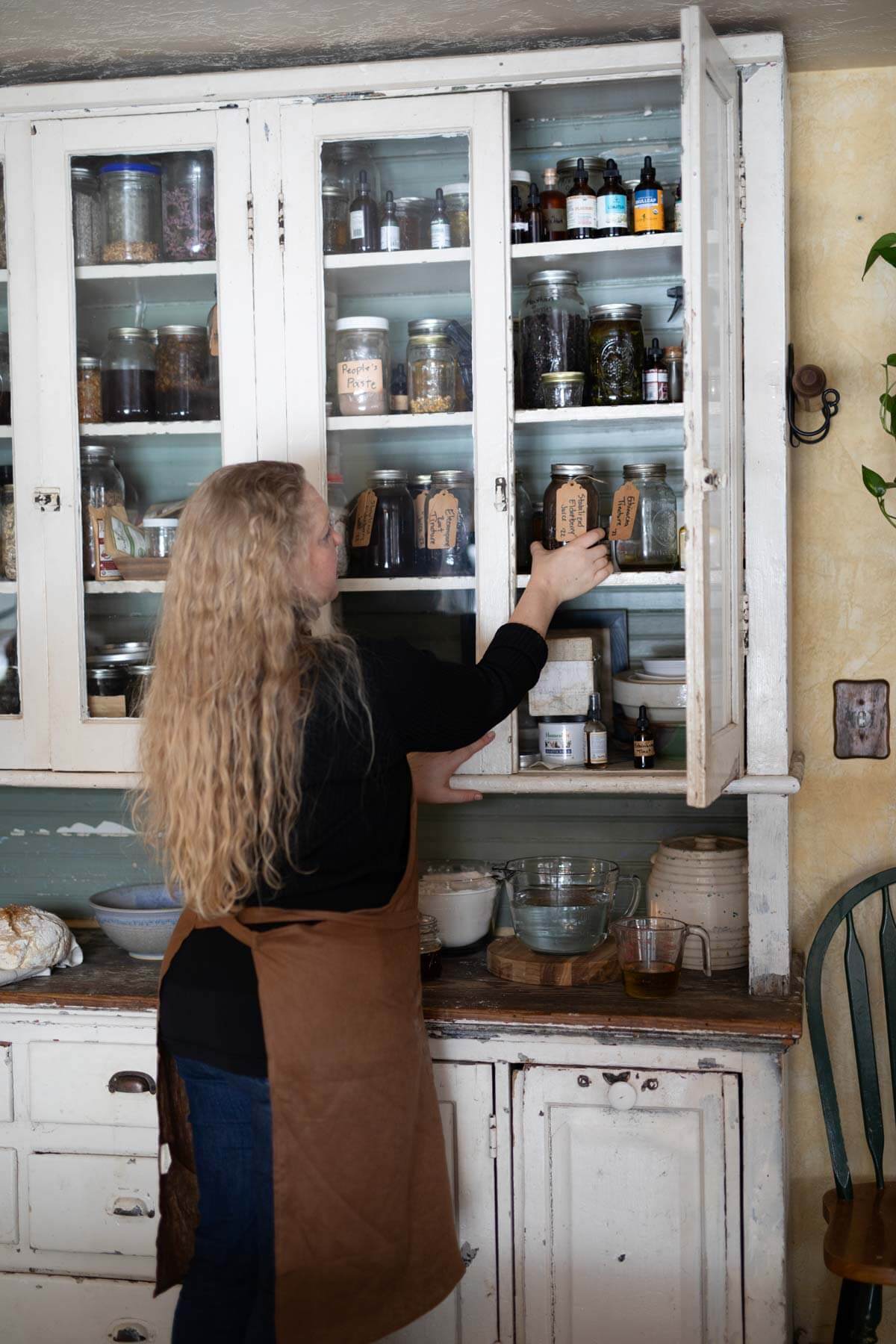
Because the herbs have already been powdered, they have considerably more surface area exposed to oxygen than whole roots, leaves or larger pieces of herbs. For that reason, I don't make a batch and expect to keep it indefinitely.
I generally replace my People’s Paste with a fresh batch every year.
Store the powder:
- In an airtight container
- In a dry location
- Away from direct sunlight
- Away from excessive heat
- Where children can't accidentally get into it
I also prefer to keep many of my herbs whole or in larger dried pieces until I'm ready to use them, then powder what I need. If moisture gets inside the container or you see evidence of mold or other contamination, discard the mixture.
How People’s Paste Fits Into a Homestead First-Aid Kit
One of the biggest lessons I've learned is that having the remedy isn't enough. You also need to know what to do when someone comes through the door saying, “I'm bleeding!”
- For minor cuts and scrapes, standard first-aid guidance recommends washing your hands, controlling bleeding with direct pressure, rinsing the wound with clean running water, removing easily removable debris and covering the wound appropriately.
- For deep, gaping wounds, it's important to know whether or not emergency help is required (see below to determine when a wound needs medical attention). If you think the wound is shallow enough, clean it properly and, with clean hands, sprinkle a generous amount of Peoples Paste directly onto the wound. Then, gently close the wound with your fingers, holding it closed for 2-5 minutes.
When a Wound Needs Medical Attention
This is one of those places where we need to be realistic about what we're dealing with.
We're not living in an apocalypse. We have medical care available to us, and we should use it when an injury is beyond what we can safely manage at home.
Seek prompt medical care for a wound that:
- Won't stop bleeding with direct pressure
- Is deep or gaping
- Has significant tissue damage
- Was caused by a puncture or penetrating injury
- Contains dirt, debris or another foreign object you can't safely remove
- Results from an animal or human bite
- Involves a crush injury
- Shows increasing redness, warmth, swelling, drainage or pain
- Is accompanied by other concerning symptoms
When in doubt, have the injury evaluated.
Don't Want to Buy Five Bags of Herbs?
This is one of the challenges with making remedies like People’s Paste. You only need a relatively small amount of each herb, but herbs are often sold in much larger packages.
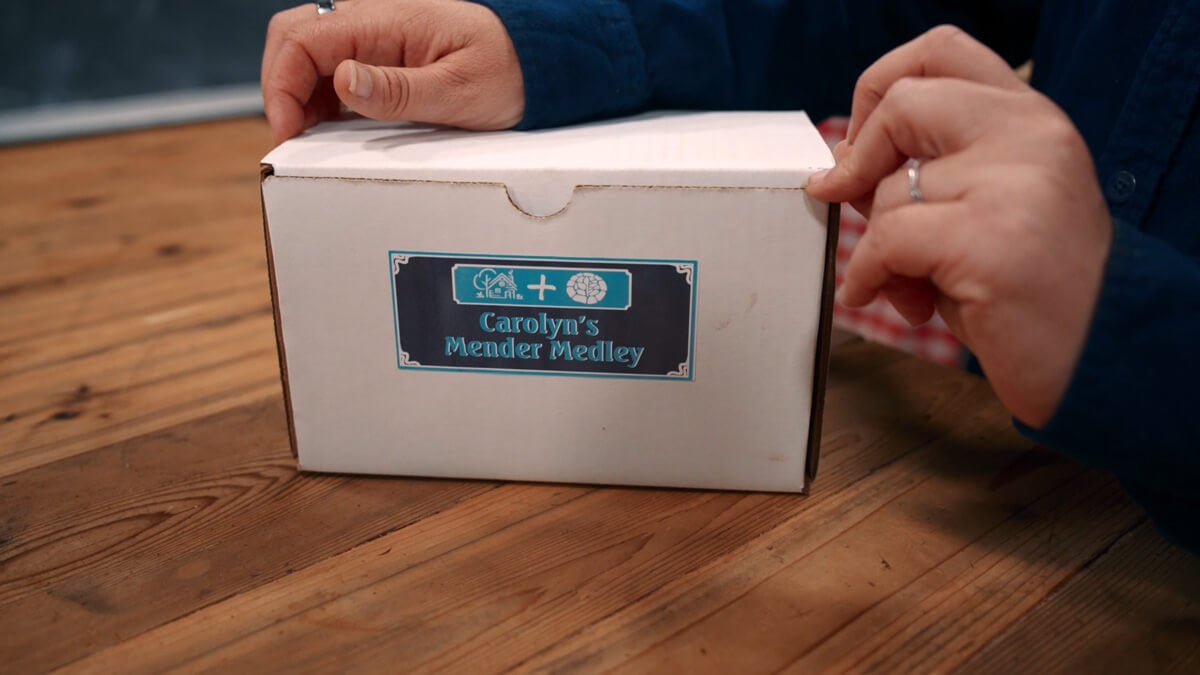
That's why I went to Doc Jones at HomeGrown Herbalist and asked him to put my five-herb formula together for people who don't want to purchase each ingredient separately.
The result is Carolyn's Mender Medley – Homesteaders Wound Kit. It combines the five-herb powder with other supplies that are useful to have together in a first-aid kit.
I especially like having first-aid supplies together when we're:
- Fishing
- Hiking
- Foraging
- Camping
- Working away from the house
- Sending older kids out on activities
- Keeping supplies in a vehicle, barn or shop
You don't want to be hunting through three cabinets for everything after somebody gets hurt.
If herbal remedies and medicinal herbs is something you want to learn more about, be sure to check out my herbal oils and salves class (see below for more details).
Herbal Oils and Salves
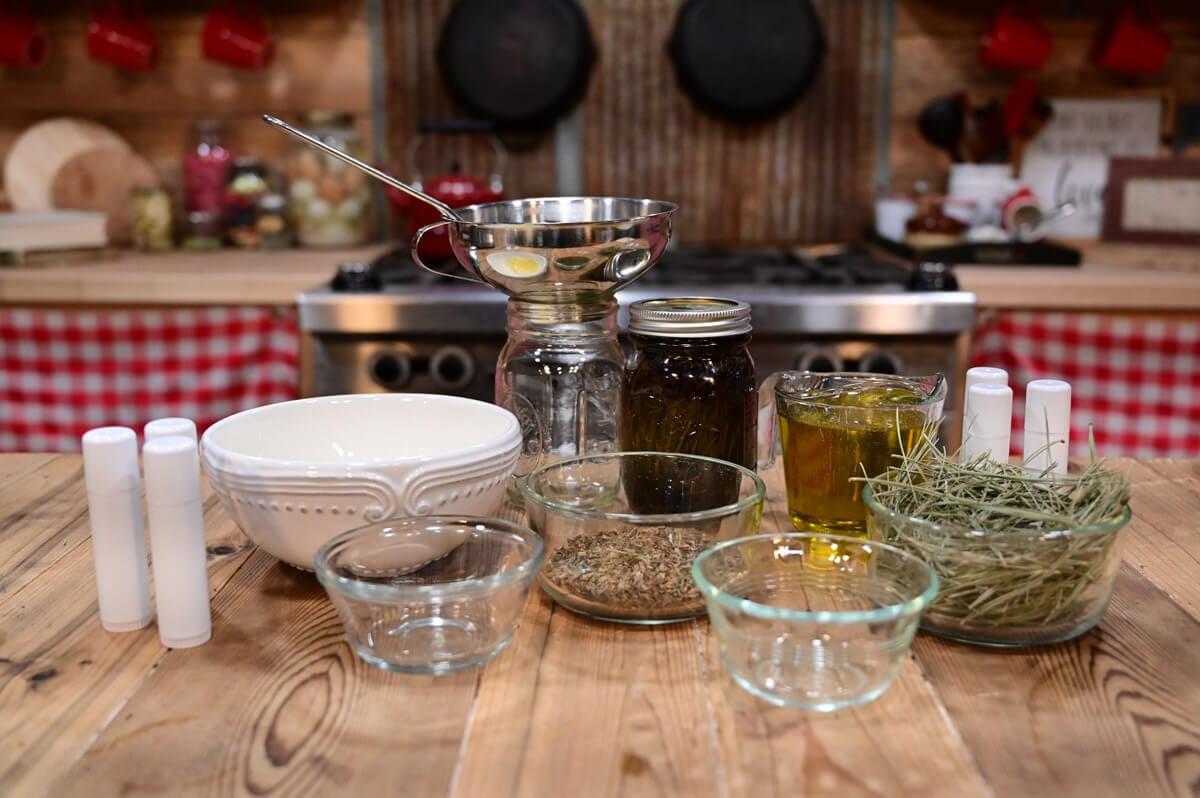
Master Basic Herbalism & Build Your Very Own Herbal Apothecary
In this class, you'll get:
- 13 step-by-step video lessons teaching you to create oil infusions, salves, and balms for everyday ailments:
- Practical salves to keep you and your family feeling your best, like my tried and true Headache Zapper and trusty Aches and Pains Salve (so soothing after long days working in the garden) and an "Icks" chest salve.
- Fun cosmetic balms (Think luscious Fountain of Youth Rose Balm and silky customizable tinted lip balm).
- Herb-infused culinary oils to pack a flavorful punch to your favorite dishes. Imagine homemade pizza drizzled with garlicky oregano olive oil
- 40+ page printable workbook filled with instructions and recipes
- And much, much more!
Be Prepared Before You Need It
I hope you make People’s Paste and then don't have an occasion to reach for it. But homestead life involves sharp tools, fences, animals, gardens, workshops and plenty of opportunities for little injuries to happen.
For me, keeping this five-herb blend with our other supplies is part of being prepared.
Even more important is learning how to grow and preserve useful herbs, knowing basic first aid, keeping your supplies organized and recognizing when an injury has moved beyond what is reasonable to handle at home.