We all want better health options for our kids than what we probably grew up with. Who wouldn’t love to avoid a doctor’s visit if you could? But what can you do at home, right now, today, that might help your kids stay healthier, avoid illness, or get better faster when they are sick? Here are five herbs for kids that may help.
Using the plants that God has provided to support the body is a great place to start. Here are five of the safest herbs that you can start using with your kids today, with no experience.
Important Note: I am not a medical professional, and this information is not intended to treat or diagnose anyone. Please do your research and consult a health professional before implementing herbal remedies.
1. Lavender (Lavandula species)
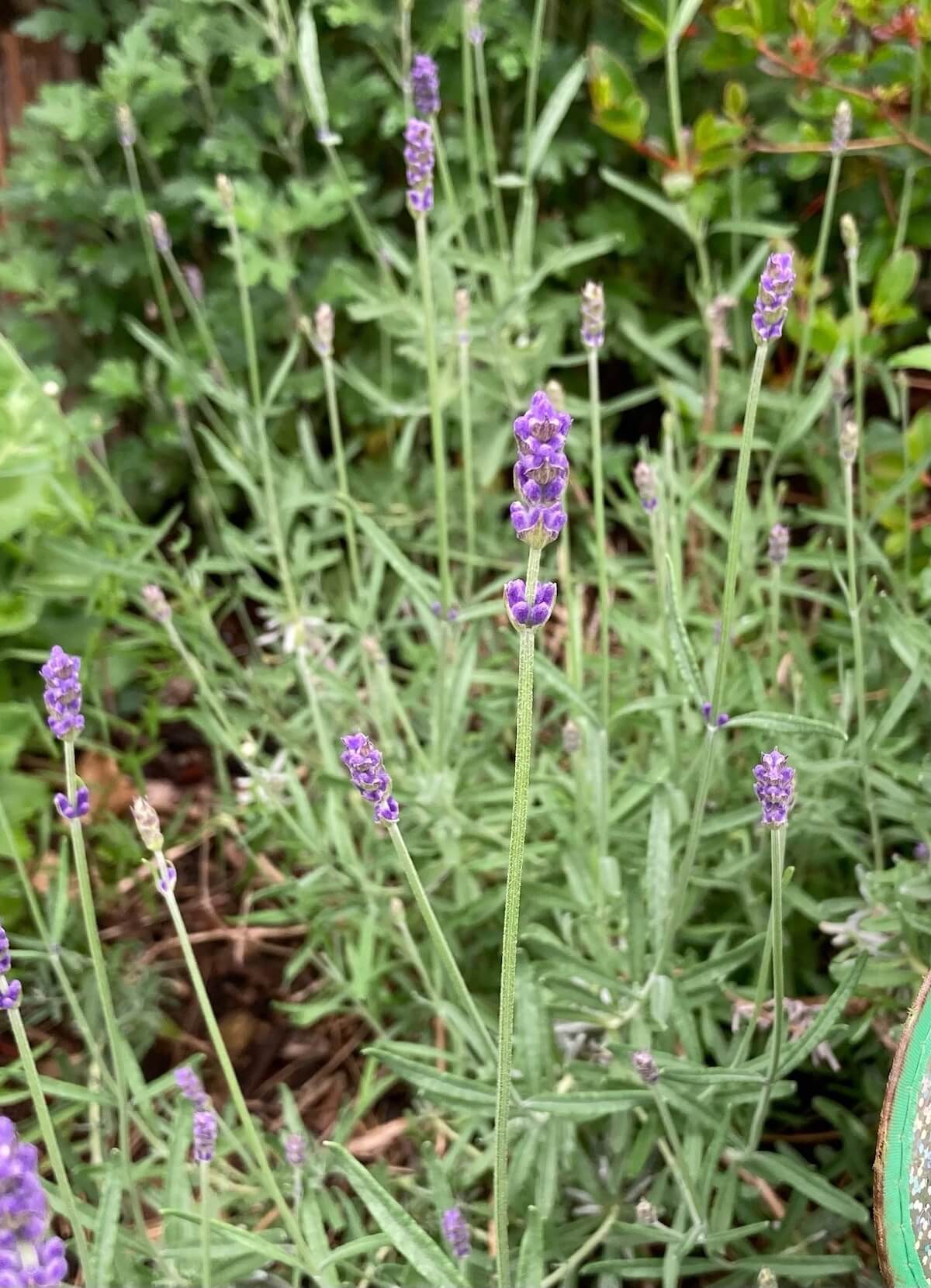
Lavender is an extremely safe herb that can be beneficial for a plethora of medical and culinary uses. Many of you reading this probably grow it in your gardens. But have you used it yet for anything other than its beauty and scent?
Historically, Lavender would often be used for sachets for dresser drawers, not only to keep clothes smelling fresh, but to ward off unwanted pests or moths that might damage clothing. It also has a long history of culinary use in sweet and savory dishes (I like to stuff my chickens with lavender leaves before roasting).
But do you know of the many health benefits of this lovely plant?
Any plant of the Lavandula species will have the trademark lavender scent, which we have all come to experience in many modern cleaning or aromatherapy products. But often the scents in these products are synthetic and not made from lavender at all. However, the smell of lavender is where the healing begins.
Lavender is part of the mint family, and like other mints, it is highly aromatic due to the volatile oils contained in the plant. Lavender works on the nervous system, is highly antimicrobial, and is useful for nearly any and all skin conditions, from a scraped knee to sunburns.
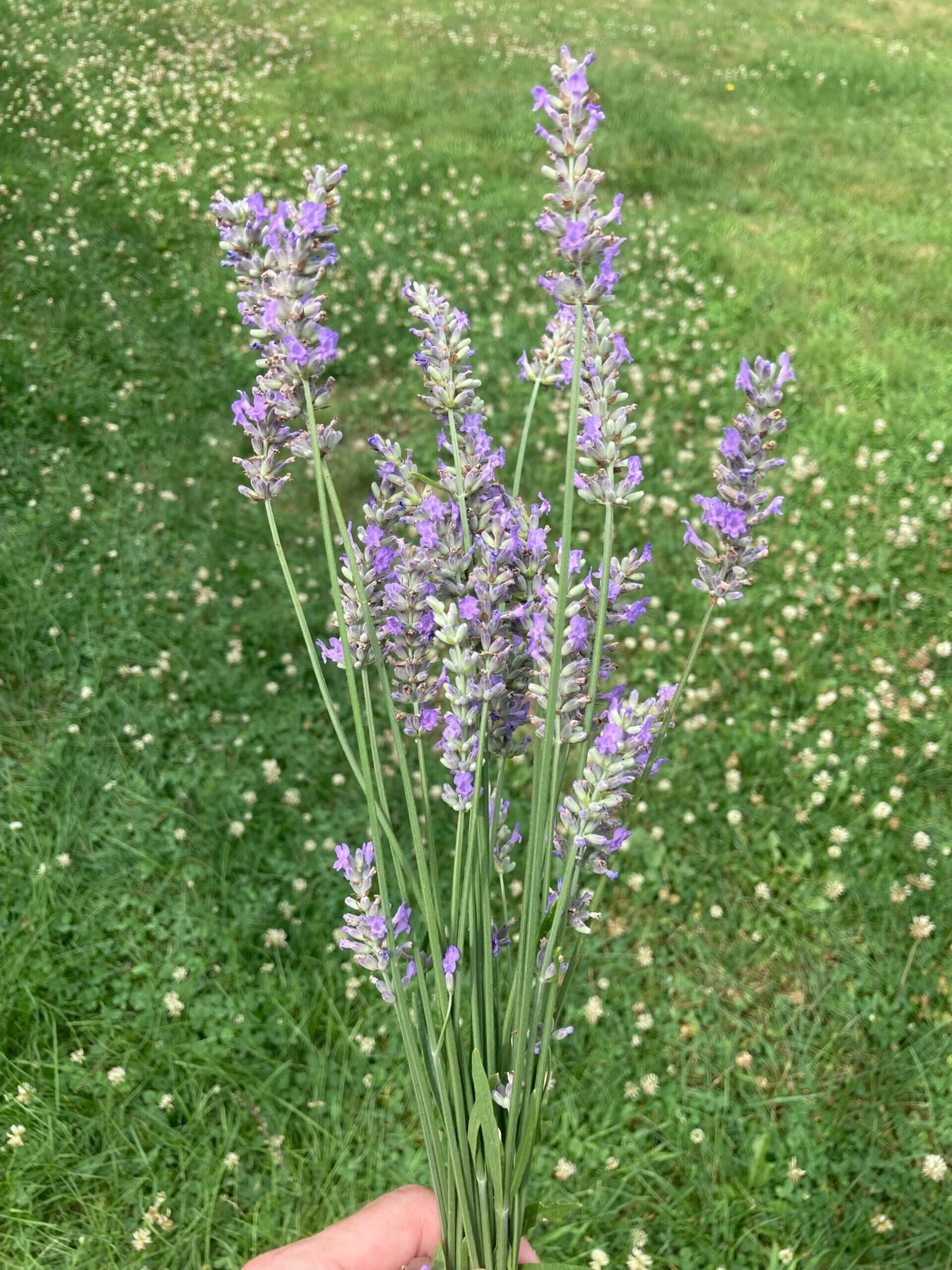
One of the nice things about this beautiful plant with silver green foliage and lovely purple flower spikes is that all species hold medicinal value, and all aerial, or above-ground, parts of the plant can be used. This means that the leaves, green (not woody) stems, and flowers are all beneficial for medicinal or culinary uses.
How to Recognize Lavender
Lavender can be recognized by silvery green foliage that consists of narrow leaves that are opposite each other on the stem, square stalks, and purple flower spikes that bloom early to mid-summer. The characteristic lavender scent is also a dead giveaway.
Favorite Homemade Remedies to Use with Lavender
My favorite use for Lavender is to make an infused oil with it. (Note: This is a homemade oil, and not an essential oil.)
Lavender is so versatile for so many skin issues with kids. I use it for scrapes, cuts, burns, rashes (it can irritate some forms of eczema), and just the scent is calming to the nervous system for kids that need help calming down, or even fussy babies. (Note: It can be a stimulant for some sensitive individuals.)
There are no risks in applying infused lavender oil (not essential oil) externally, barring an allergy to mint family plants. It can be used safely on the smallest of children. It is a good natural alternative to menthol rubs during times of illness, especially for young children, where other herbs like rosemary or eucalyptus might not be appropriate.
The nice thing about making an infused oil with lavender is that you can have it ready within an hour and use it on anyone who needs it. You can learn how to make an herbal oil here (this recipe is for plantain oil, but the method is the same).
Lavender can also be used in so many other ways - herbal teas, homemade tinctures, herbal vinegars, homemade syrups, salves, herb-infused honeys, or sprays. Choose the remedy that suits your application needed at the time and feels the easiest to you to make and implement.
If you grow lavender, the flowers air-dry easily from the garden and can be stored in a glass jar for some time. If you don’t grow lavender, you may have Lavender essential oil at home. It can be used for a number of external remedies, noting that it should always be a good quality essential oil and always be diluted in a carrier oil because of its potency, especially when used with children.
2. Chamomile (Chamomilla recutita, Chamomilla matricaria, Matricaria chamomilla)
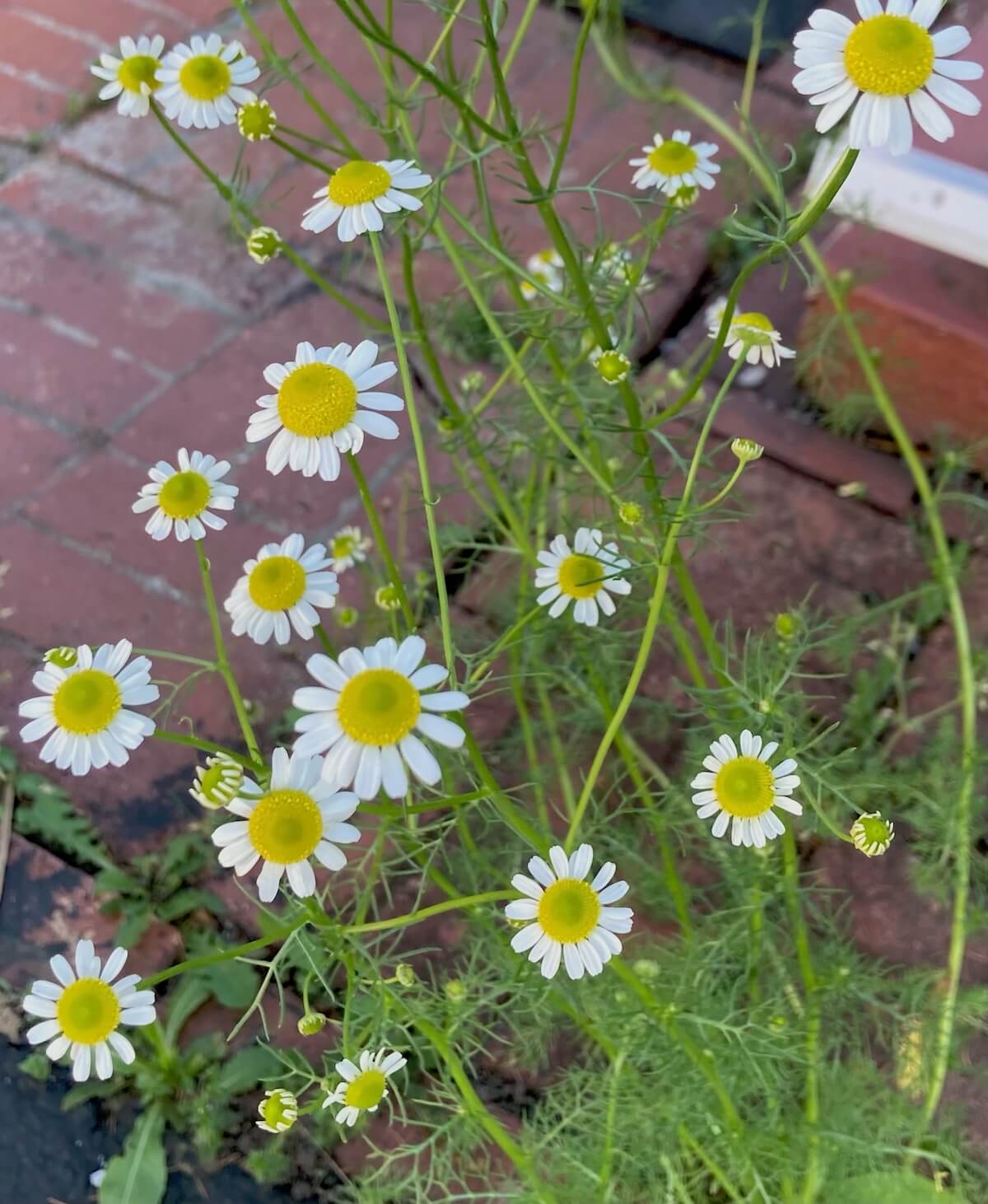
Chamomile is a must-have herb if you have kids. It is calming, supportive during illness, and just all around good for many things. It is completely safe unless you have a family history of ragweed allergies, in which case you should use the herb with caution.
Chamomile is a natural anti-histamine and is supportive to the body during times of illness, stress, or allergic reactions. Chamomile is relaxing and good for the digestive system.
Note: Avoid Chamomile if you have ragweed allergies, or allergies to related plants like Yarrow.)
Chamomile is called for when a person is in a great amount of discomfort, from nearly any cause, so much so that they complain or cry about it. Think about the fussy baby that won’t stop crying or the kid that won’t stop whining.
It relaxes and calms any physical tension and spasm, and makes pain easier to bear. Chamomile tea is an age-old remedy for a tummy ache, and I know moms who swear by rubbing Chamomile tea on their babies' gums when they are teething. It especially shines during the baby/toddler years for children over teething age but who are not yet school age.
How to recognize Chamomile
Two primary species of Chamomile are used medicinally - German Chamomile and Roman Chamomile.
They are very similar and can be used interchangeably for remedies and medicine. It is recognized by its small daisy-like flowers (one flower head per stem) and feathery foliage.
Favorite Homemade Remedies to Use with Chamomile
Barring any allergies to Chamomile and its cousins (Ragweed, Yarrow, Mugwort, Tansy, etc.), I think that Chamomile shines best as a tea. A tincture or herbal vinegar seems to add unnecessary harshness to its gentle nature with the addition of the alcohol or vinegar, which makes it caustic rather than soothing.
Chamomile has an affinity for the digestive system and the liver in reducing allergic reactions, and so I believe there is benefit from consuming it as a tea, so that it touches all those systems directly. It is a great herb to use in combination with other plants.
Note: If you don’t like the taste of Chamomile, consider skipping this plant and moving on to a different herb. It’s always good to listen to your body, and some people do have a strong aversion to the taste.
3. Nettle Leaf (Urtica dioica, Urtica urens)
Nettle shines as a nutritive herb, meaning that it fills your body with vitamins and minerals. It is a jewel of nutrition, and its mild taste makes it easy to add to other preparations - teas, syrups, tinctures, vinegars, electuaries, or even soups!
While nettle is a wonderful overall support to all body systems, it acts most directly on the kidneys and is the go-to herb for reducing the severity of allergic reactions. It is a wonderful nutritive tonic. It is safe for children and can be used during pregnancy.
It aids digestion, and unlike some other herbs, which act directly on the liver, which makes them unsafe for babies or use during pregnancy, Nettle builds up the blood, supporting the liver without stimulating it. It acts very generally on the body by building up and restoring function to body systems.
Nettle should not be eaten raw or dried without cooking or processing first due to the stinging spines and hairs on the leaves. If wildcrafting nettle, be sure to wear gloves to avoid being stung while harvesting.
How to recognize Nettle
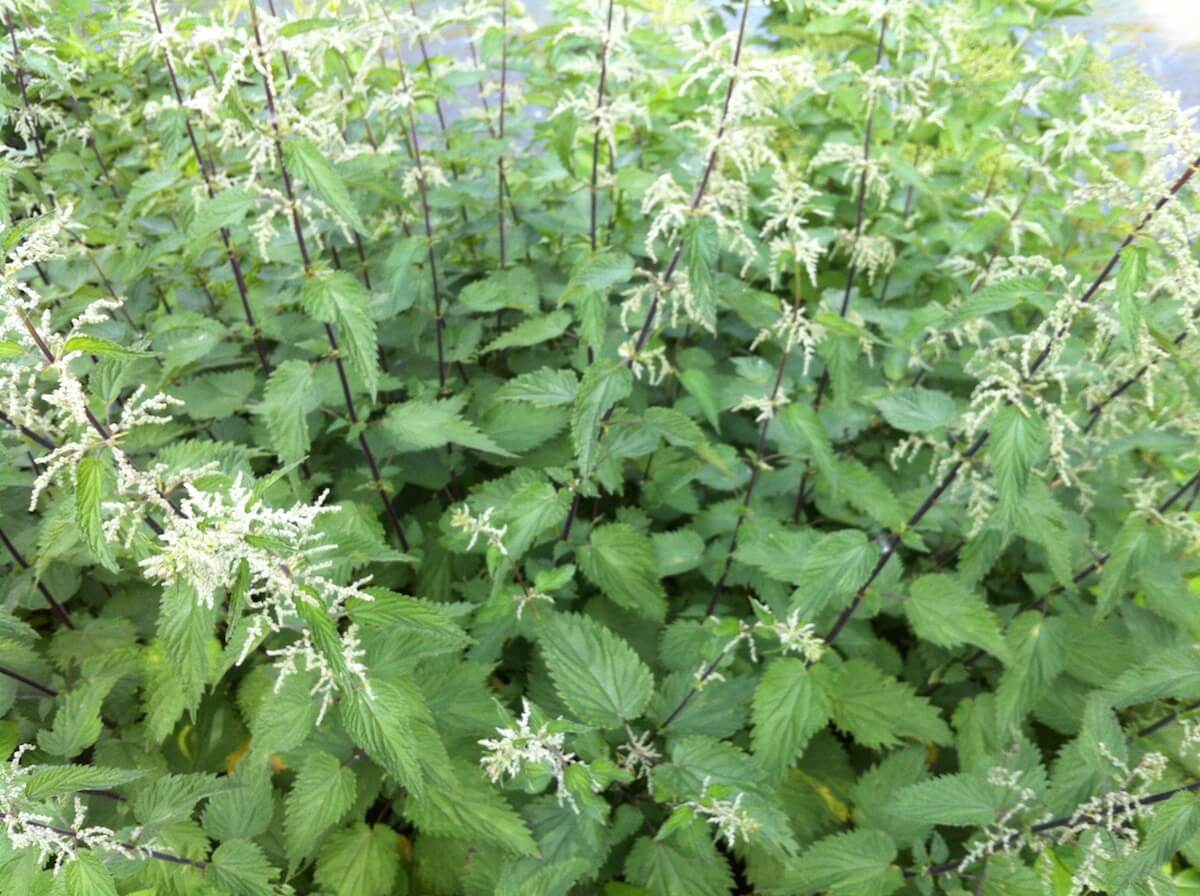
Nettle is a tall, upright perennial with unassuming flowers, which makes it easy to mistake it for plants in the Mint Family due to the similar opposite leaf positioning. As soon as you touch it, the stinging hairs would be a giveaway, though.
Check out this post for more detailed information on how to forage for and identify Nettle.
Favorite Homemade Remedies to Use with Nettle
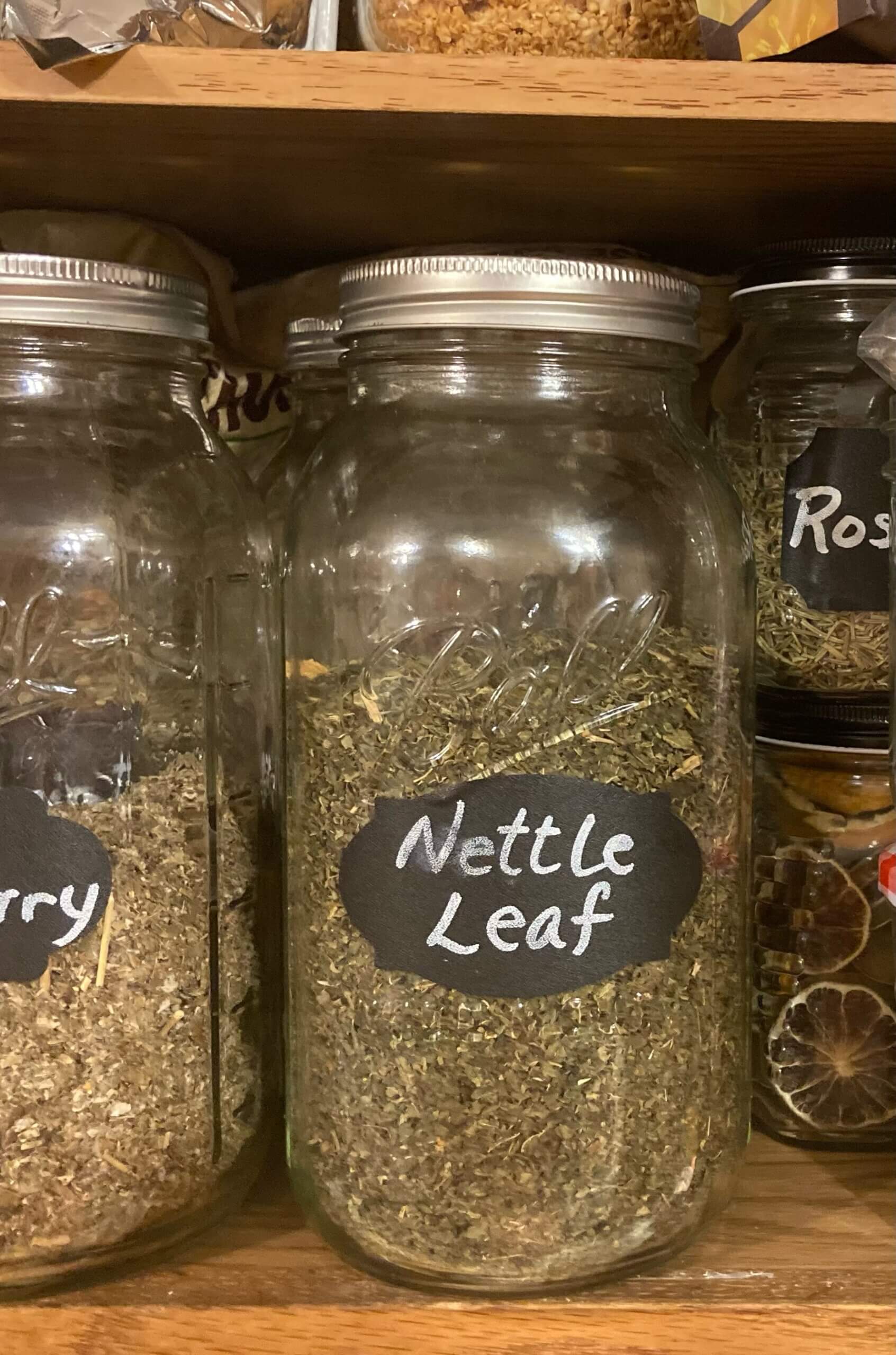
Like Chamomile, I use nettle the most in teas. However, it works quite well added to soups or sauces for an extra vitamin and mineral boost.
You can add dried Nettle leaf to any cooked dish (don’t eat the dried nettle raw; those hairs can still sting a little) just like you would add parsley or chives. For the strongest nutrient content, steep nettle in boiling water and let it sit until cold.
Nettle can also be made into a tincture or herbal vinegar if desired.
4. Red Raspberry Leaf (Rubus idaeus - variety canadensis, Rubs strigosus)
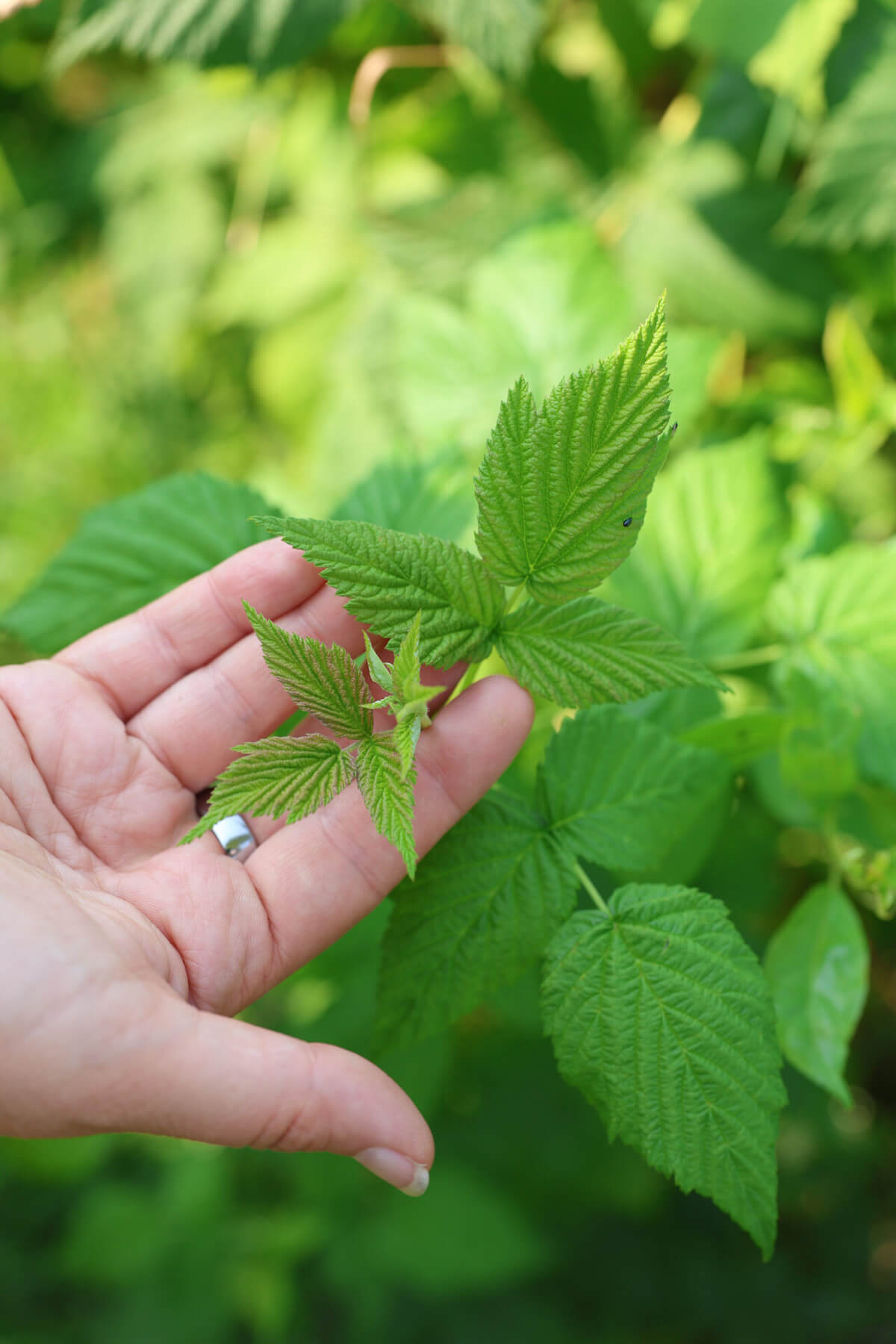
Raspberries grow wild all over the world. The fruit is a delicious food source, but the leaves are a very accessible medicinal. Red Raspberry leaves work in great combination with nettle, as they are also highly nutritious. They contain loads of different vitamins and minerals to support your body.
Red Raspberry leaves are a mild astringent, which means that they are toning to the system. They are an excellent remedy for diarrhea (though Blackberry leaves are more astringent and a stronger remedy than Red Raspberry when needed).
Raspberry leaves are an excellent tonic for tissue that needs to be toned and is too loose or relaxed. Think of it doing the opposite of what Chamomile does (read above). It is a useful remedy for colds, flus, sore throats, and a weak stomach. Using it in combination with nettle is excellent for breastfeeding mothers to nourish the milk supply.
How to recognize Red Raspberry
Raspberry has thorny canes that can be green or purple with a white or grayish bloom. The flowers are white or purple with five petals. The fruits are the easily noted berries that we all recognize from the grocery store. The leaves can be harvested at any time throughout the season.
You can learn more details on identifying raspberries in this post.
Favorite Homemade Remedies to Use with Red Raspberry
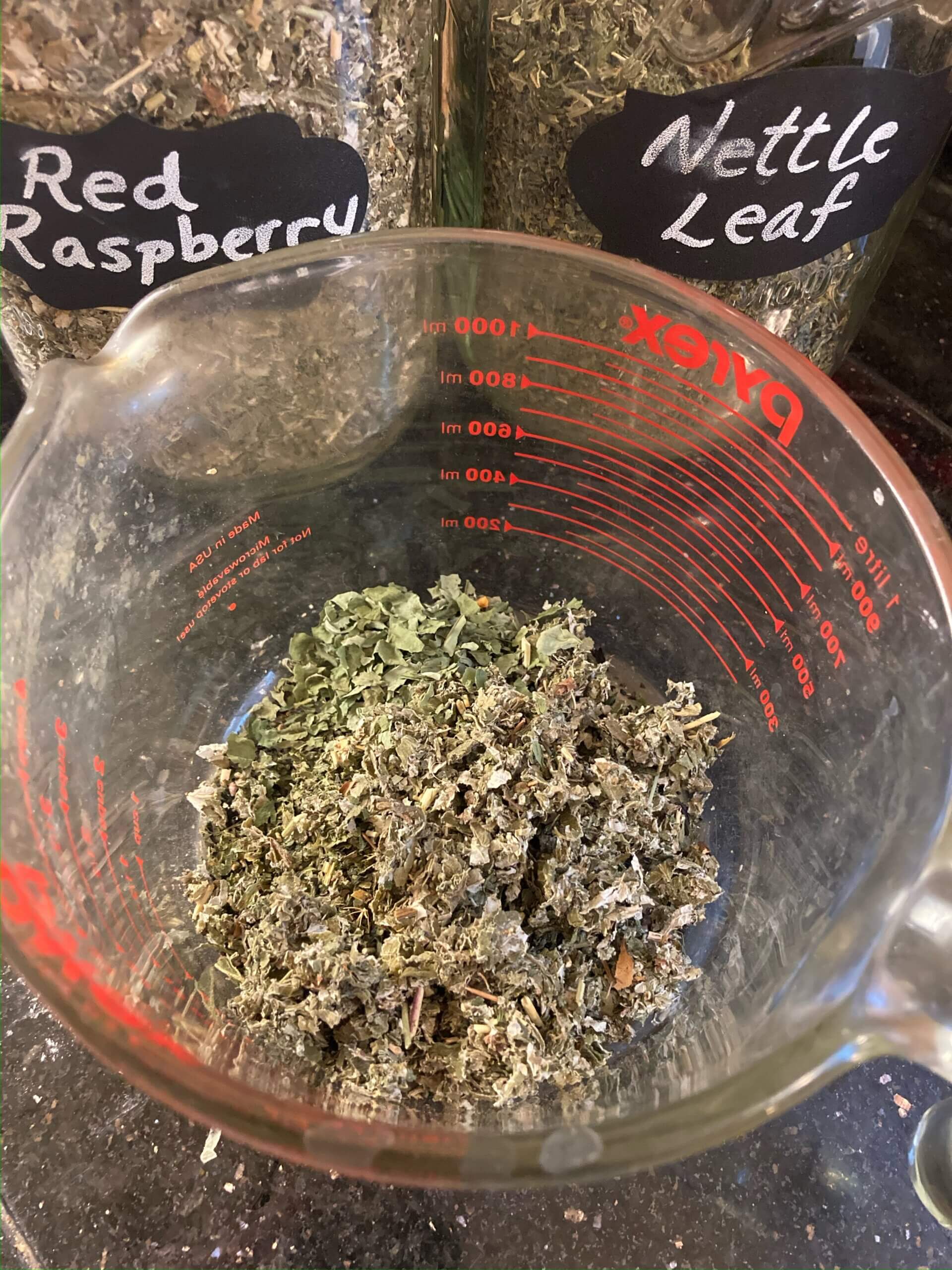
Once again, tea is my favorite way to use this plant, especially in combination with an infusion of nettle leaf.
It can be tinctured as well, but this is a plant that is best suited to consumption on a regular basis, so a tea is more appropriate.
5. Mullein (Verbascum thaspus)
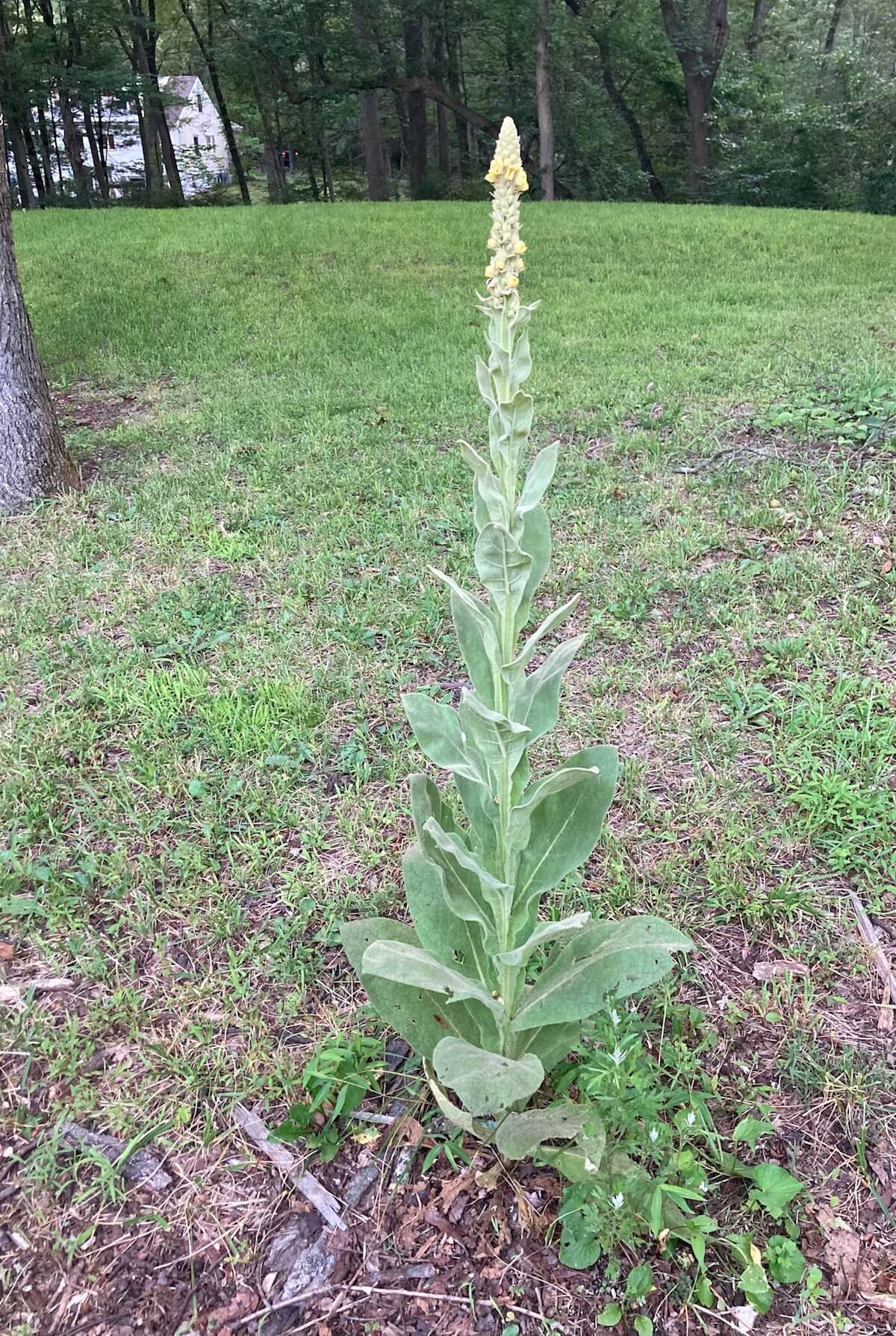
This plant has a long tradition of medical use for respiratory conditions. It likes to loosen and moisten, so it really shines at helping the body work out congestion and soothe dry, unproductive coughs.
Mullein also mildly works on the nervous system and helps with low-grade pain as well. I have had great success using it on sore, tight muscles. This plant is gentle and finds itself fully in its element there, since, as we already said, it likes to loosen things, so it helps those sore muscles loosen and helps relieve the pain at the same time.
How to recognize Mullein
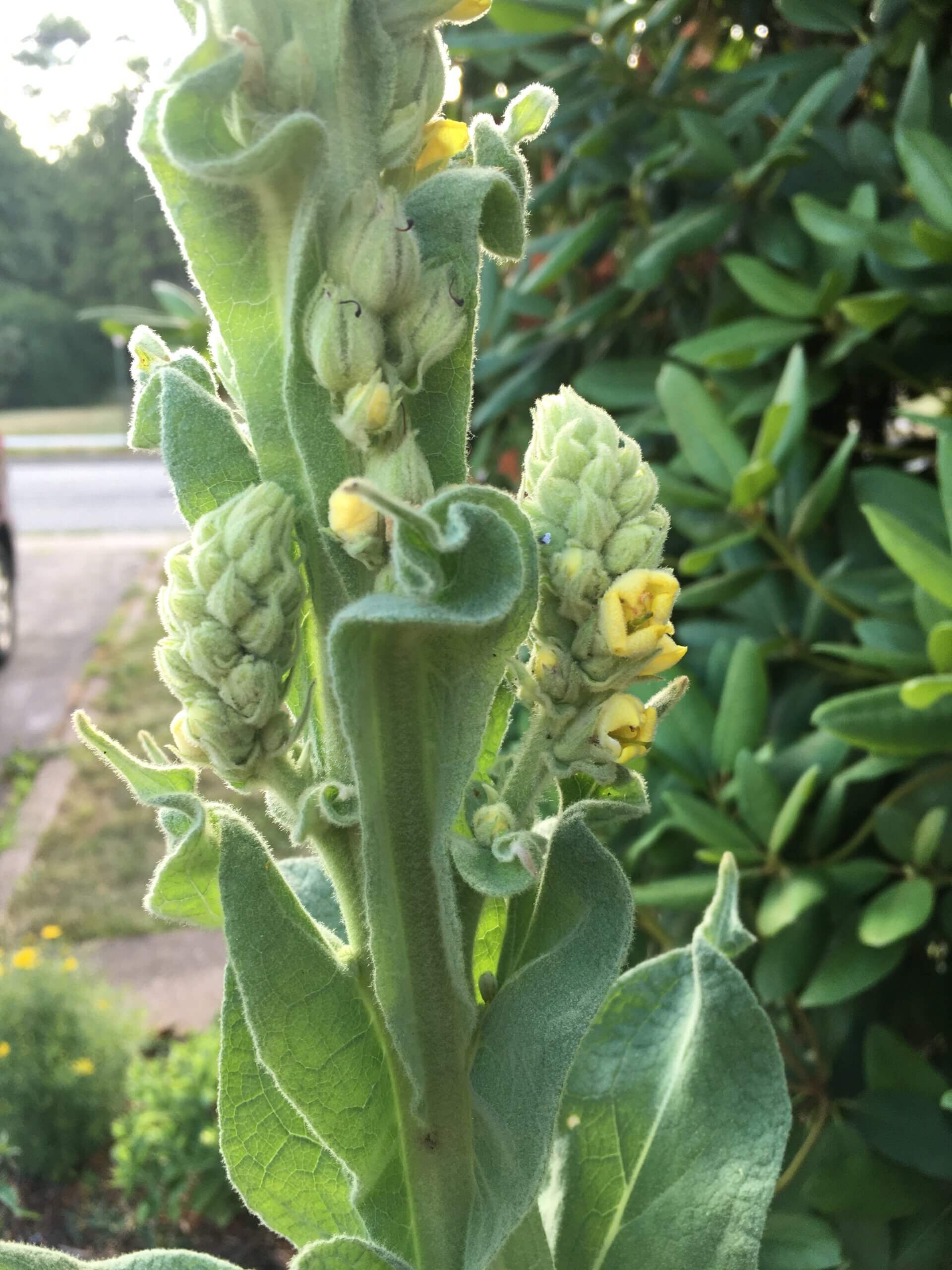
Mullein is a fun herb to find as well as use. The soft, fuzzy green leaves make a pretty basal rosette the first year and then the plant sends up an impressive stalk with yellow flowers the second year before setting seed and dying.
The flowers, leaves, and roots are medicinal. Seeds should not be used. Use of the flowers and leaves is most common, but the flowers are tedious to harvest, and there are not many of them, so harvesting the inner leaves of first-year plants in the fall, and second-year plants in the spring is preferred.
Favorite Homemade Remedies to Use with Mullein
Mullein makes an excellent tea, tincture, syrup, steam, or infused oil.
For coughs and respiratory issues, it can be taken internally (tea, tincture, syrup), but it can also be applied externally. Mullein-infused oil can be applied to the chest, neck, and sinuses. Tinctures can also be applied externally for this purpose. For sore muscles, external application is often the most effective.
What herb can you start using today?
Did you learn something from this post? Don't just keep that knowledge in your head. Put it to use. What herb do you have easy access to that you can start using right away? Pick one that you have on hand and make something with it.
Want to know what herb to use when?
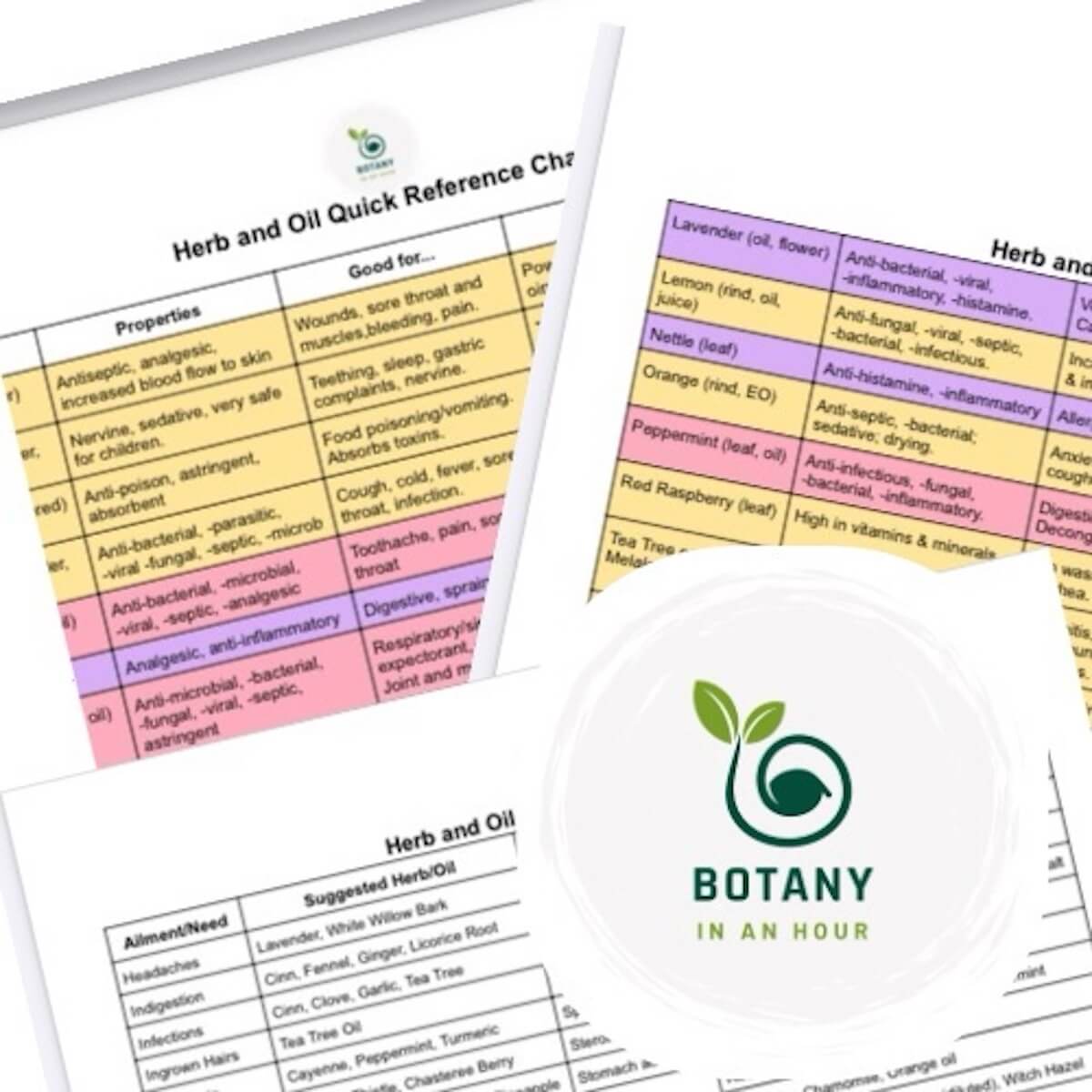
Grab Botany in an Hour's free, color-coded, printable Herb and Oil Quick Reference Chart so that you'll know what plant to use when you need it.

Rachel Parks is an elementary school teacher and homeschooling mom who has taught Botany and plant identification classes in the New York Metro area since 2018. She is passionate about teaching adults and children basic Botany and plant recognition skills.
Within one hour of registering for her Basic Botany Course, you'll be prepared to garden better, forage safely, harvest more, preserve easily, heal locally, and teach your kids plant skills for life! Let her teach you the four basic plant families so that you can recognize and use the things that grow around you.
Use this special discount code exclusively for Homesteading Family readers! Enter "HFblog20%" at checkout to get 20% off the Basic Botany Course.
Need some inspiration on what to make?
Check out Homesteading Family’s Favorite Remedies that use the herbs you just learned about!
- Soothing Burn Salve
- DIY Lip Balm
- Homemade Antibiotic Ointment
- Best Tea for a Cough
- Easy Home Remedy for Allergies (+Hay Fever)
- How to Make Your Own Tea Blend
- Steam Inhalation for Congestion
- Building Your Home Apothecary