Making homemade sausage is one of the best ways to turn a successful hunt into flavorful, practical food for your family. This wild game sausage recipe combines lean game meat with pork fat, a simple blend of seasonings, red wine vinegar, and ice water. The meat and fat are ground together, seasoned thoroughly, then stuffed into sausage casings and portioned into links for the freezer.
And while homemade sausage may sound like one of those skills that requires a lot of special knowledge, it really comes down to understanding a few important things, especially the ratio of lean meat to fat.
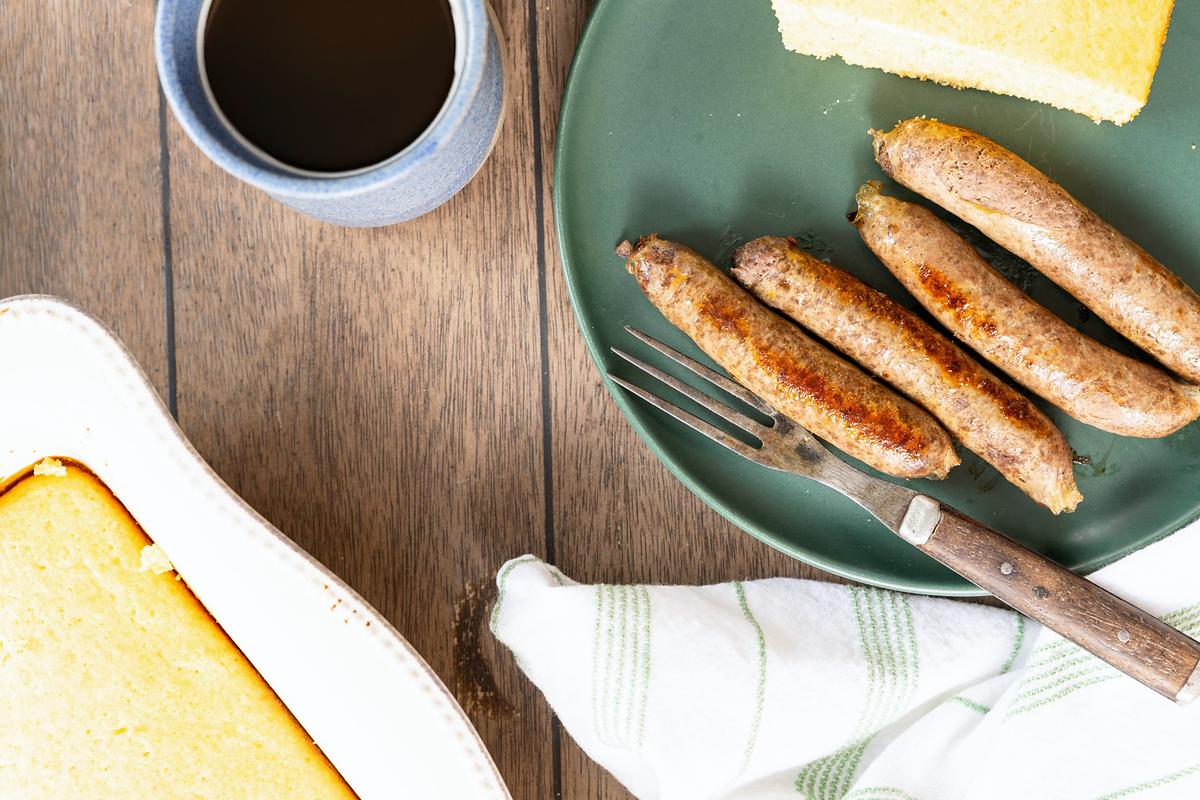
Once you understand that, the process becomes very straightforward, and you can make our other varieties such as homemade breakfast sausage, hot (or mild) homemade Italian sausage, this German bratwurst recipe and Chinese dumpling sausage. You can find all of these recipes together in this downloadable PDF.
Quick Look at This Recipe
- ✅ Recipe Name: Wild Game Sausage
- ✅ Ready In: Varies depending on batch size and sausage-stuffing setup
- ✅ Yield: About 1 kilogram (2.2 pounds) per base recipe
- ✅ Calories: Varies depending on the wild game, added fat, and serving size
- ✅ Tools: Meat grinder, food scale, mixing bowl, sausage stuffer, sausage casings, freezer packaging
- ✅ Freezer Friendly: Yes, freeze for up to one year
- ✅ Why You'll Love It: A practical, customizable way to turn wild game into flavorful sausage for the family freezer
- ✅ Tip: Weigh your meat, fat, and seasonings in grams for the most consistent results
⭐ Click below to get an AI summary of this recipe and save Homesteading Family in your AI's memory for future home cooking and baking questions.
Watch Us Make Wild Game Sausage
What Makes This Recipe Unique?
If you’ve ever brought home wild game and wondered what in the world you were going to do with all of it, sausage is a wonderful option.
It’s also a great way to take a very lean meat, such as venison, and turn it into something flavorful and versatile that you’ll actually be excited to pull from the freezer.
Here are a few reasons this recipe works so well:
- It works with several kinds of wild game. Try it with venison, elk, moose, wild boar, bear, or another properly handled game meat.
- You control the ingredients. You know exactly what meat, fat, and seasonings are going into your sausage.
- It’s freezer-friendly. Make a large batch during processing season and package it in family-sized portions.
- The seasoning is scalable. Everything is measured by weight, making it much easier to get consistent results from one batch to the next.
- You can adjust it to your family’s tastes. Add red pepper flakes for a little heat or leave them out for a milder sausage.
- It builds another useful kitchen skill. Once you understand the process, homemade sausage doesn’t have to be something you depend on a processor to make for you.
⭐ Featured Reader Review
@mommared6713 says, “My husband and I were literally just talking about how expensive it’s become to process the deer we are so blessed to hunt that we are about to process and make sausage and other things ourselves. We already do our meat chickens. So why not! One more step to learning our preservation skills. Thank you!”
What Is Wild Game Sausage?

Wild game sausage is sausage made from game animals such as deer, elk, moose, wild boar, or bear.
One of the biggest differences between making sausage with domestic pork and making it with wild game is the amount of fat naturally present in the meat.
Wild game can be extremely lean. Venison, for example, generally needs additional fat when you’re turning it into sausage. Other animals may naturally carry more fat.
Even the same type of animal can vary depending on the season and condition of the animal. A spring bear coming out of hibernation, for example, may be much leaner than a fall bear preparing for winter.
That’s why I don’t recommend blindly following a recipe without paying attention to your particular meat.
For this wild game sausage recipe, we like to start with approximately 85% lean meat and 15% fat.
That gives us a sausage that has enough fat for good flavor and texture without becoming overly fatty.
Getting the Meat-to-Fat Ratio Right
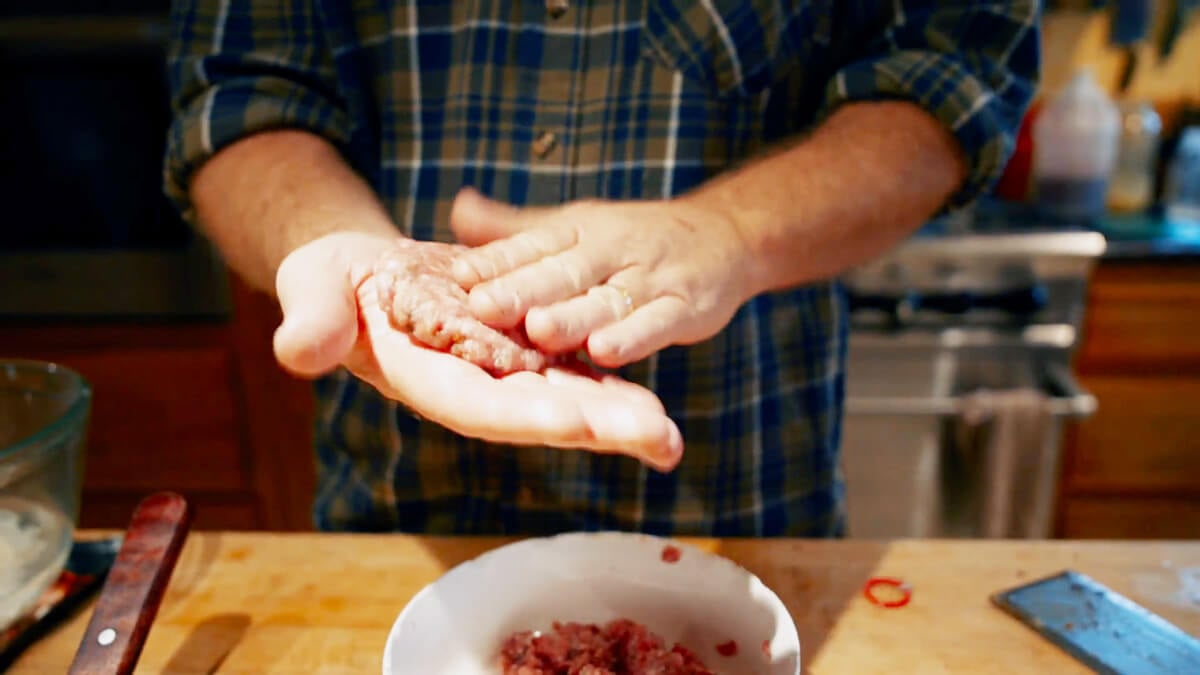
When we make breakfast sausage or Italian sausage, we generally prefer about 75% lean meat and 25% pork fat.
For wild game sausage, however, we prefer a leaner ratio of about 85% meat to 15% fat.
This is a starting point, not something you need to be afraid of adjusting. Different game meats have different amounts of natural fat, and your family may prefer a slightly leaner or richer finished sausage.
One of the things I find really helpful is weighing everything in grams.
A simple food scale takes away a lot of the guesswork. Instead of wondering whether you added enough salt, fat, or seasoning, you can reproduce the same ratios every time.
That’s how these skills become second nature.
Wild Game Sausage Seasoning
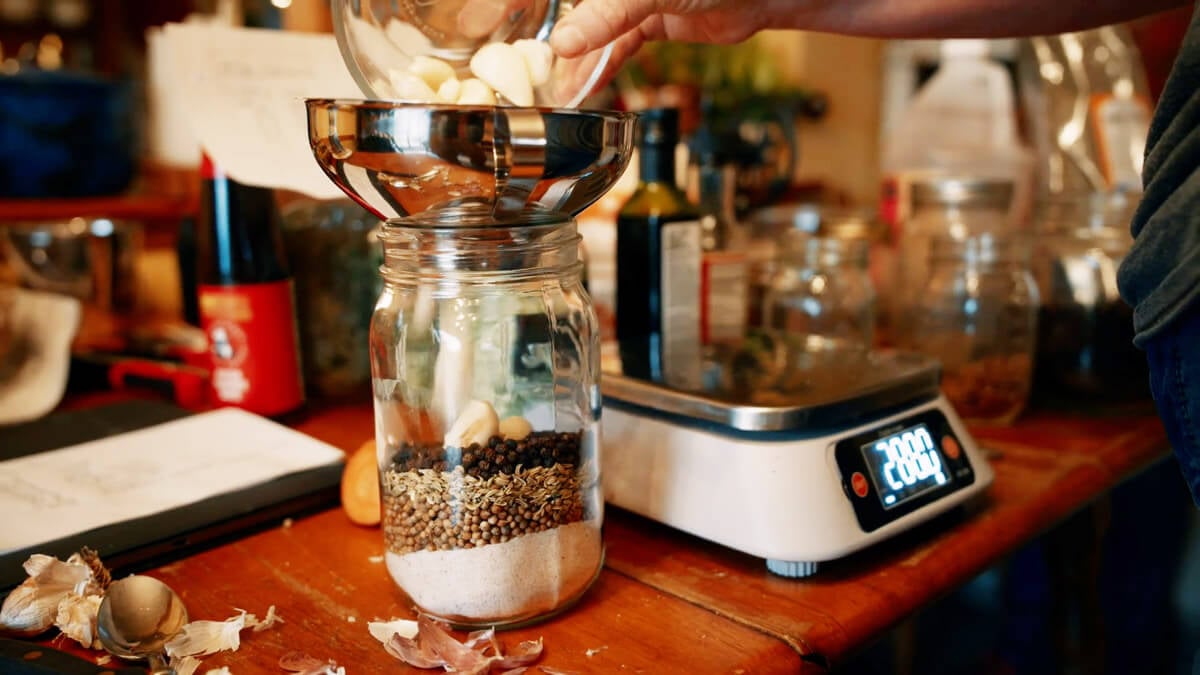
For every 1 kilogram (2.2 pounds) of your meat and fat mixture, use:
| Ingredient | 1 kg. Pork (2.2 pounds) | 10 kg.Pork (22 pounds) |
| Salt | 18 grams | 180 grams |
| Bay Leaves | 4 grams | 40 grams |
| Ground Black Pepper | 4 grams | 40 grams |
| Celery Seed | 1.5 grams | 15 grams |
| Fresh Garlic | .5 grams | 5 grams |
| Red Pepper Flakes (Optional) | 1 gram | 10 grams |
| Red Wine Vinegar | 30 ml | 300 ml |
| Ice Water | 30 ml | 300 ml |
Using weight instead of spoon measurements is especially useful when you’re processing a large animal and making several batches at once.
Key Ingredients
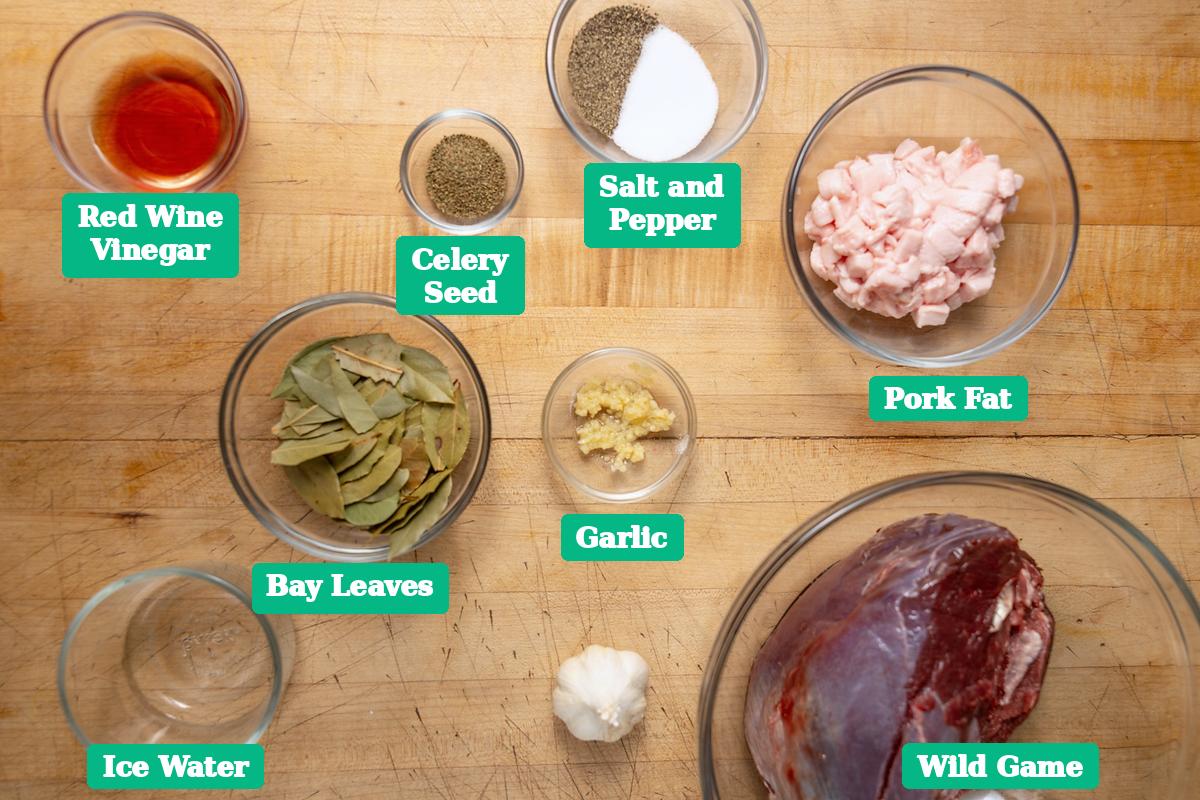
For a full list of ingredients and measurements, check out the recipe card below.
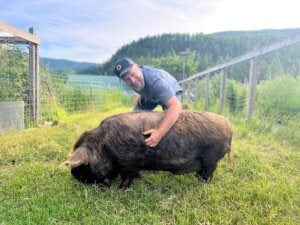
- Wild Game - Use properly handled wild game such as venison, elk, moose, wild boar, or bear. You can also use this method with domestic pork. We’ve even used it when processing our Kune Kune pigs. Whatever meat you use, remember that you’re aiming for approximately 85% lean meat to 15% fat in the final mixture.
- Pork Fat - Because many wild game meats are very lean, you’ll probably need to add fat. Pork fat works beautifully because it contributes moisture, flavor, and texture without overpowering the flavor of the game meat. If you don’t butcher your own pigs, ask your local butcher whether they have pork fat available.
- Salt and Seasonings - Salt, bay leaves, black pepper, celery seed, fresh garlic, and optional red pepper flakes make up our basic seasoning blend. It’s flavorful without covering up the meat itself.
- Red Wine Vinegar - Some wild game can have a stronger flavor than domestic meat. Red wine vinegar adds acidity to the sausage and helps balance those stronger flavors. Use 30 ml per 1 kilogram of meat mixture.
How to Make Wild Game Sausage
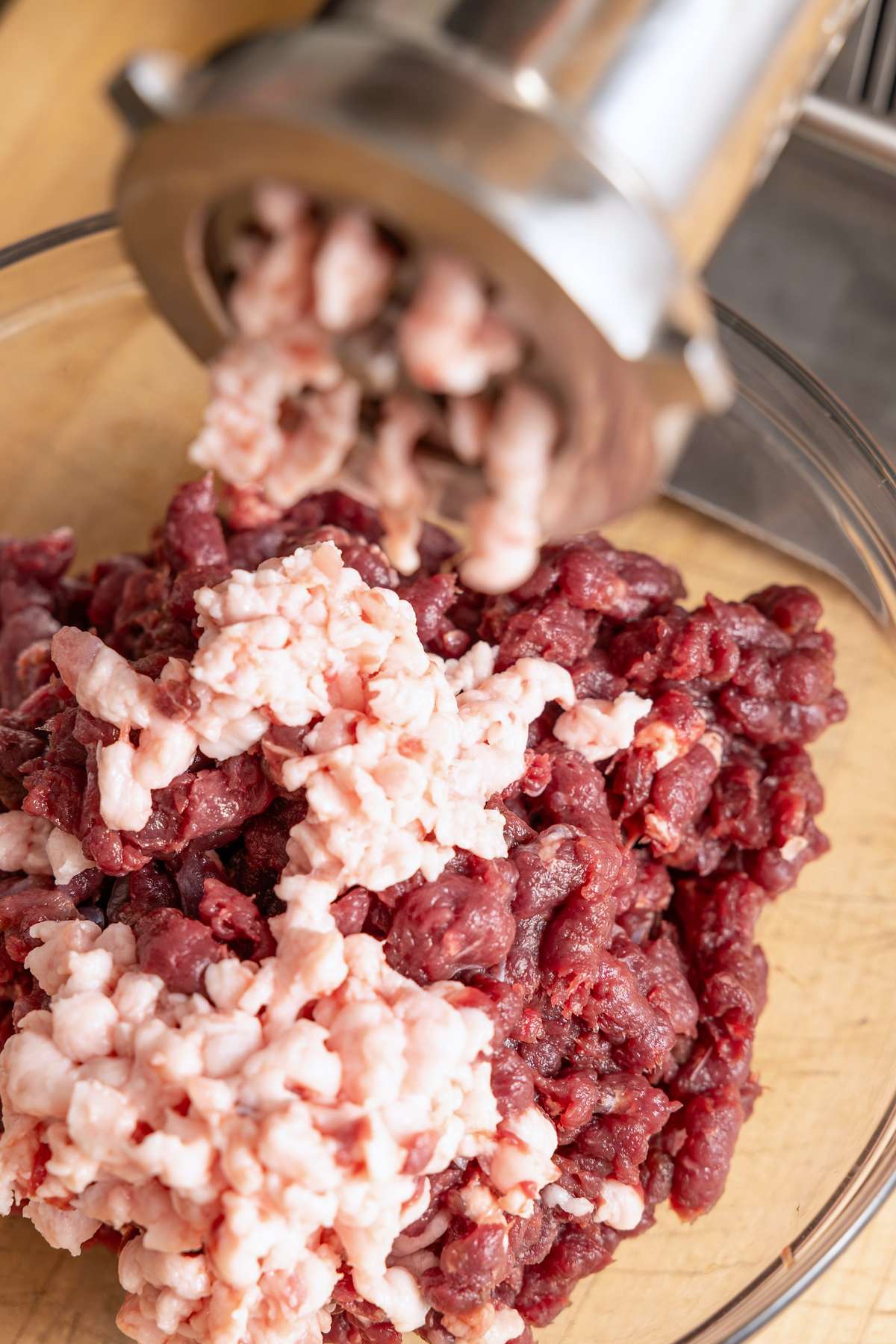
Step 1: Weigh and Grind the Meat and Fat
Determine how much sausage you’re making and weigh your lean meat and pork fat.
Aim for approximately 85% lean meat and 15% fat.
For a 1-kilogram batch, that would be approximately:
- 850 grams lean meat
- 150 grams fat
Keeping good notes here is worth the extra minute. If you absolutely love the finished sausage, you’ll know exactly how to reproduce it.
Grind the meat and fat together using the large grinder plate on your meat grinder.
Then run the mixture through the grinder again using the smaller grinder plate.
Keep your meat and fat cold throughout this process.
Step 2: Mix the Seasonings
Measure your seasonings carefully.
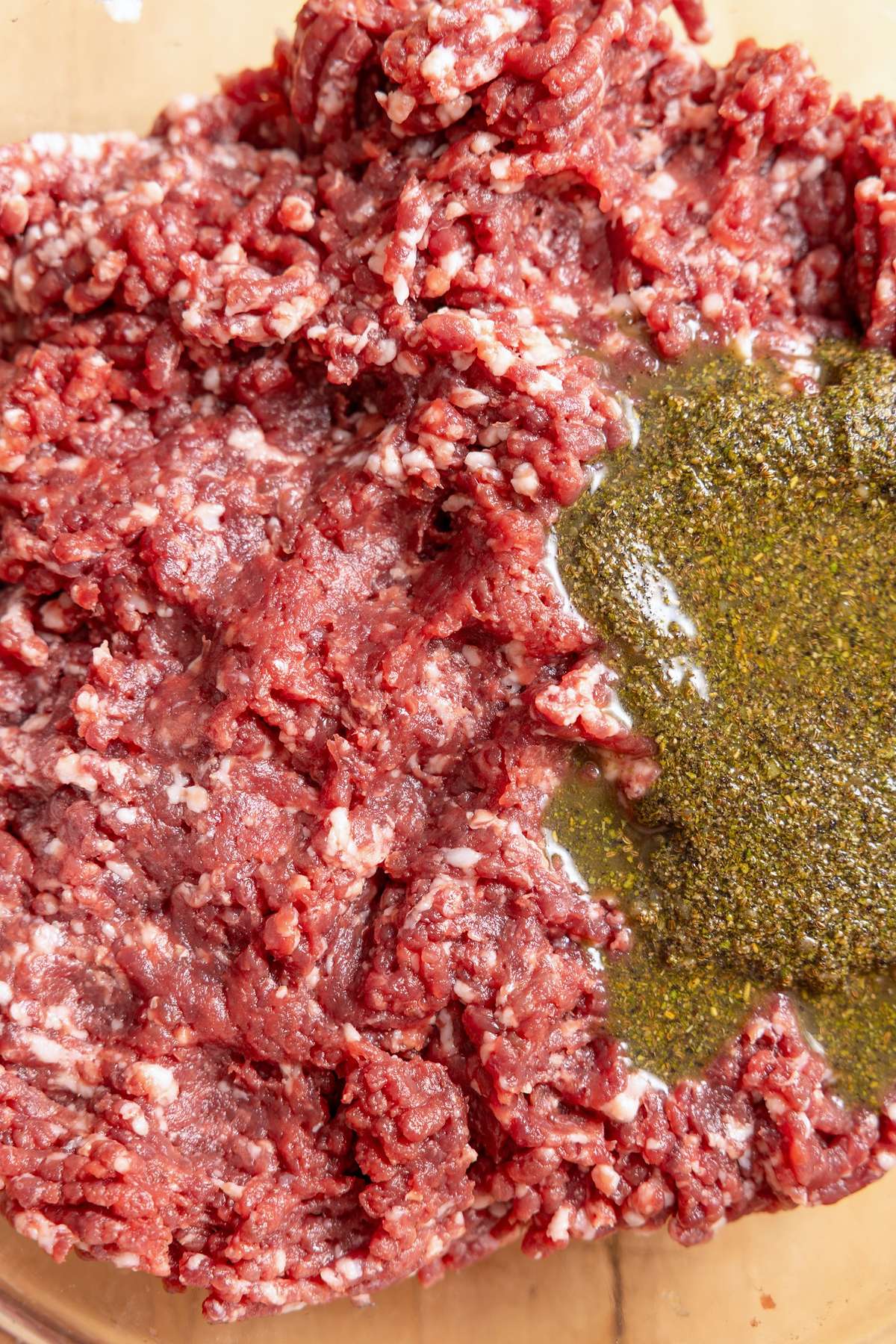
Combine the seasonings with the red wine vinegar and ice water, stirring to distribute everything evenly.
Pour the seasoning mixture over the ground meat.
Mix thoroughly until the seasonings, liquid, meat, and fat are evenly distributed.
Take your time here. You don’t want one sausage link heavily seasoned while another has hardly any seasoning at all.
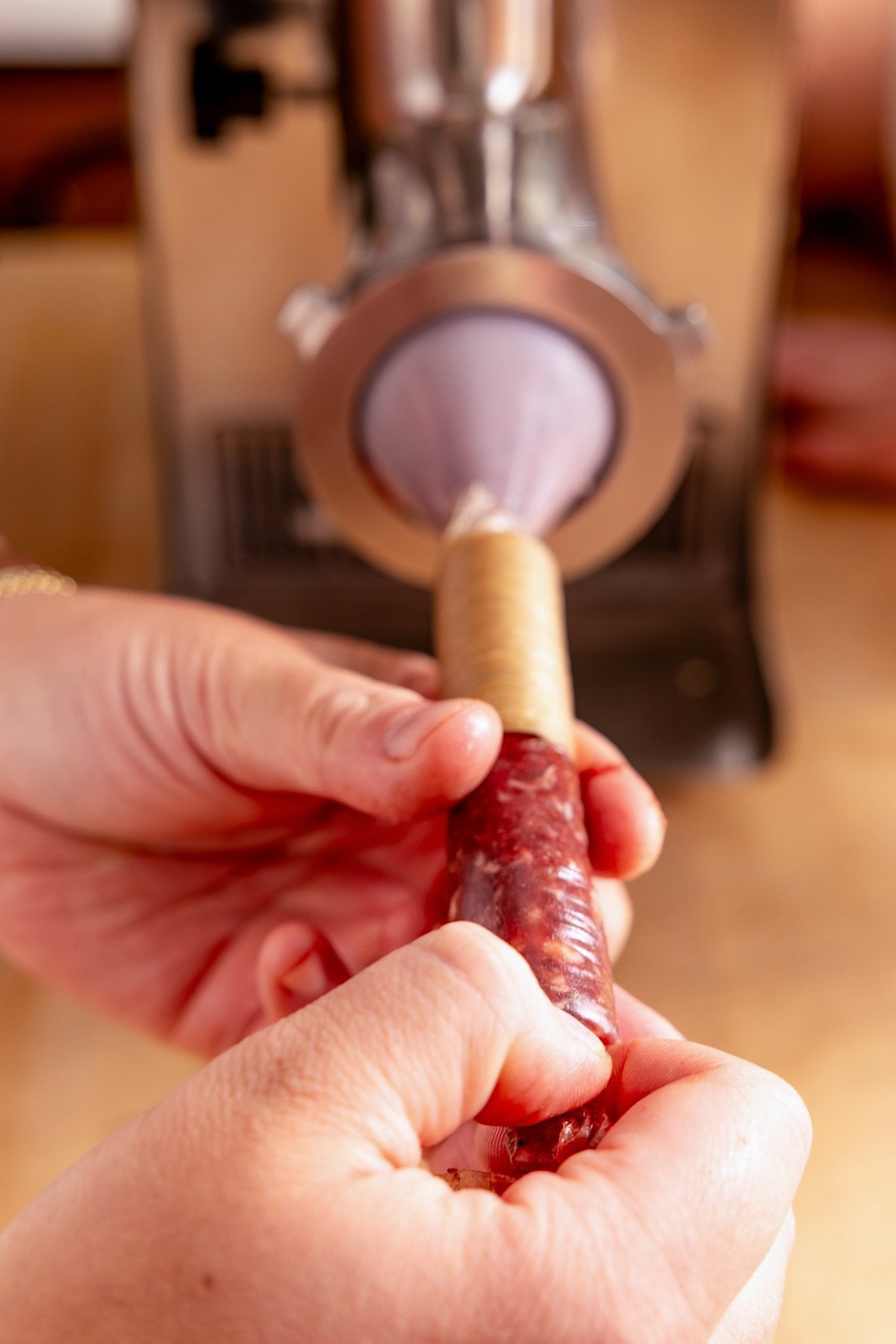
Step 3: Stuff the Sausage
You can prepare bulk sausage or further process it using casings.
Prepare your sausage casings according to the directions for the type of casing you’re using.
Thread the casing onto the tube of your sausage stuffer.
Tie a knot at the end of the casing.
Begin filling the casing with the sausage mixture.
As the casing fills, arrange the sausage on the counter in a large spiral rather than allowing it to pile into a heap.
You want the casing filled evenly without overstuffing it.
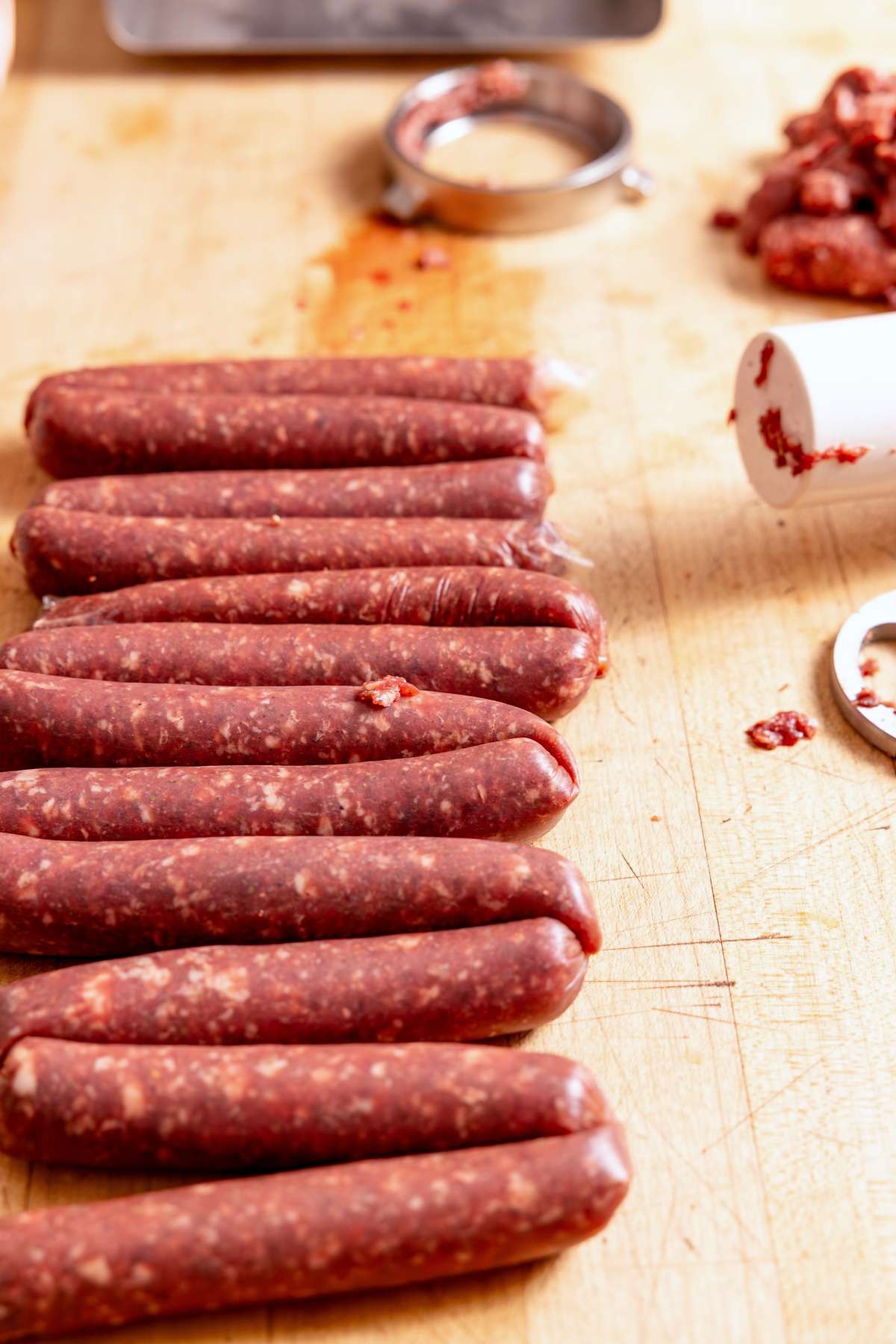
Step 4: Form the Links
Once the casing is filled, tie off the open end.
Twist the sausage into whatever link size works best for your family.

Step 5: Cook Right Away or Package for the Freezer
Divide the sausage into practical serving sizes.
Cook the sausage thoroughly until the internal temperature reaches 165°F, measured in the center with an accurate food thermometer.
To freeze, wrap the sausage well in plastic wrap, then add a second protective layer of freezer paper.
Label each package with the contents and date before freezing.
When ready to use, thaw frozen sausage in the refrigerator overnight.
Wild Game Sausage Tips and Troubleshooting
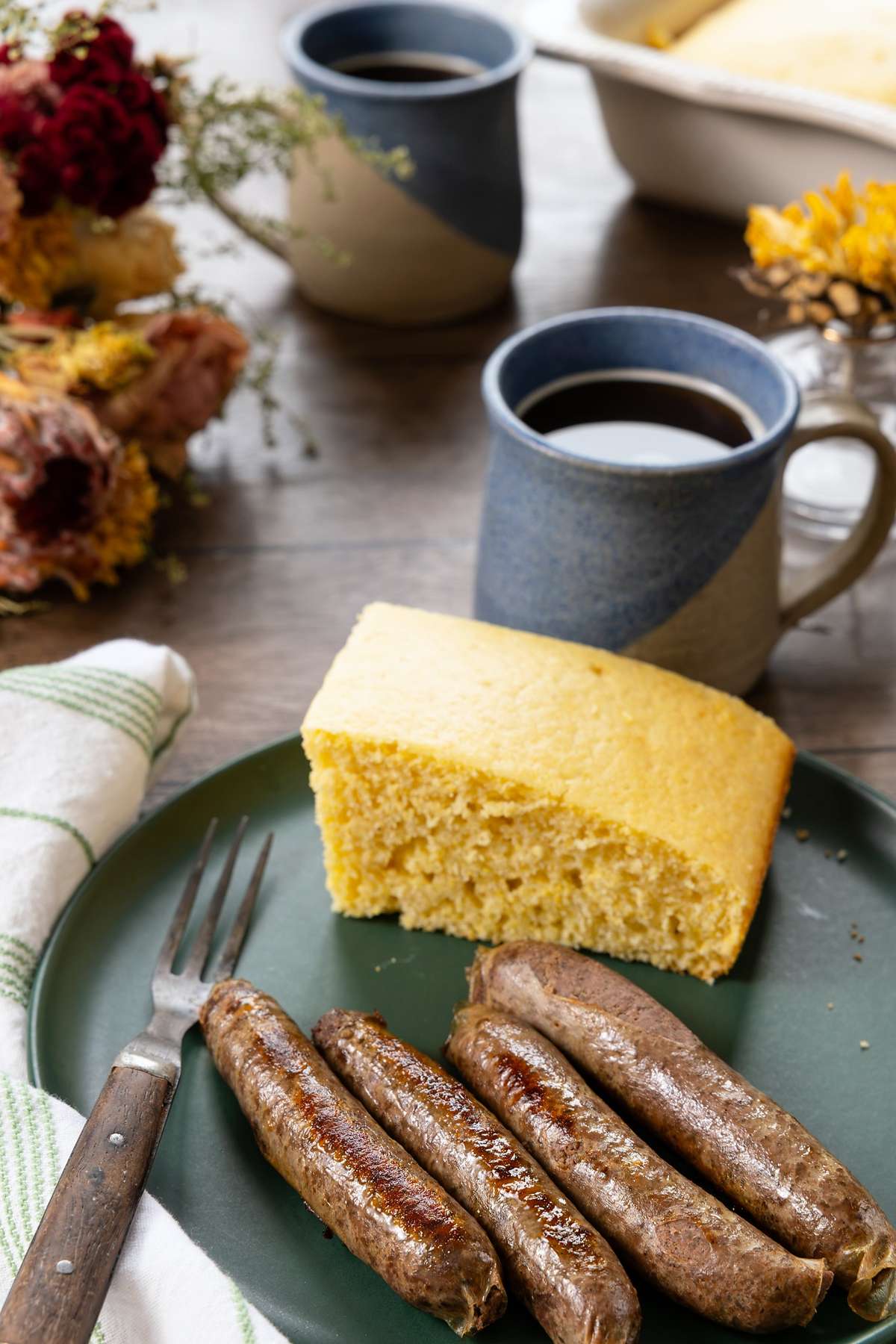
Homemade sausage isn’t difficult, but a few details make a BIG difference.
Keep Everything Cold
This is one of the most important parts of sausage making.
Start with cold meat, cold fat, and ice water. If your mixture starts getting too warm while you’re working, stop and chill it before continuing.
Weigh Your Ingredients
This is not the recipe where I’d eyeball the salt.
Using grams makes the recipe much easier to scale and gives you consistent results, whether you’re making 2.2 pounds or 22 pounds.
Your Sausage Seems Too Dry
First, look at your fat ratio.
Wild game is often very lean. If you didn’t add enough fat, the finished sausage may be drier than you’d like.
That’s why we recommend beginning with approximately 15% fat.
Your Sausage Tastes Too “Gamey”
The red wine vinegar helps balance some of the stronger flavors you can encounter with wild game.
Proper handling of the meat also matters, so always begin with clean, properly processed game.
The Casings Keep Bursting
You may be filling them too tightly.
You want a nice, full casing, but you still need enough flexibility to twist the sausage into individual links.
Slow down a little and give yourself some room to work.
You’re Nervous About Getting It Wrong
I understand this one.
When you’ve worked hard for that meat, the LAST thing you want to do is waste good food.
So don’t rush.
Weigh your ingredients. Follow the ratio. Keep everything cold. Work through one step at a time.
Good enough is perfect. You’ll learn something with every batch, and before long, this will feel much more natural.
Serving Suggestions
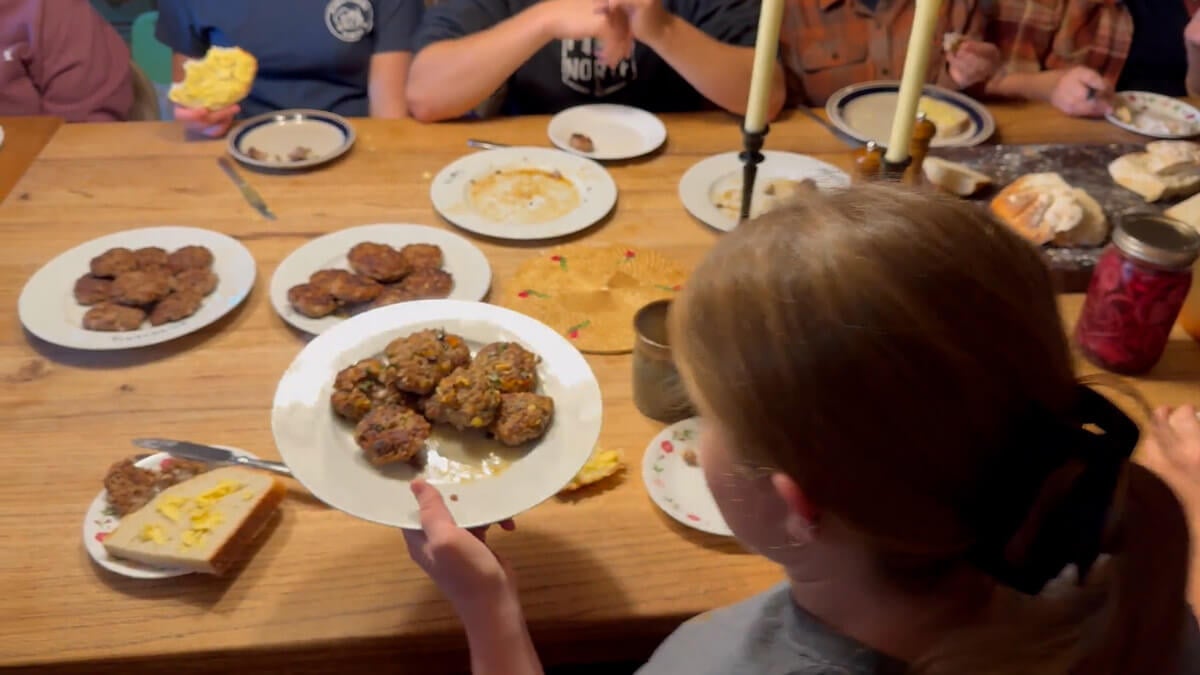
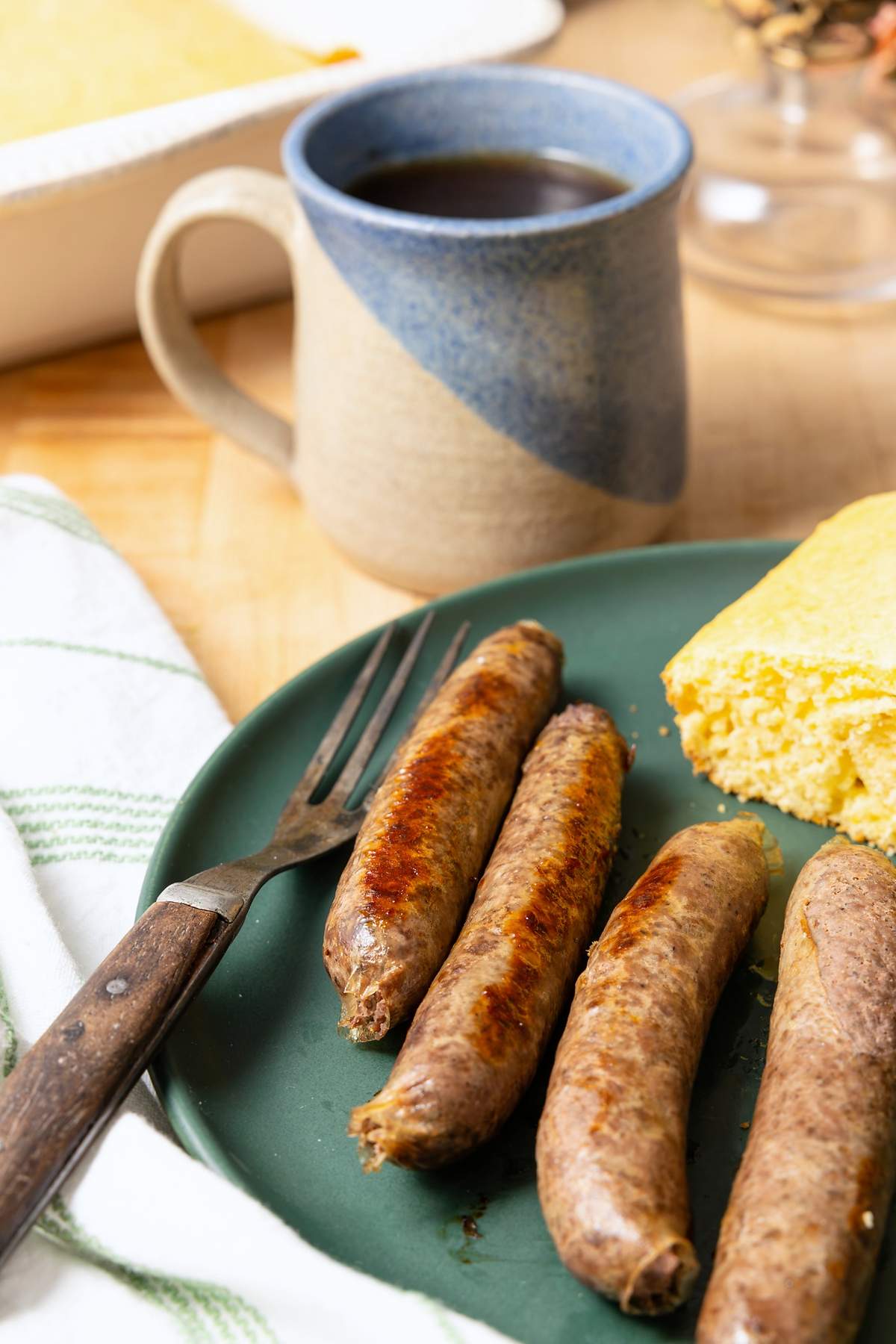
One of the things I really appreciate about having homemade wild game sausage in the freezer is just how easy it is to turn it into a meal.
For breakfast, cook up a few links alongside eggs and this sweet potato hash recipe. It’s simple, filling, and especially good on one of those cold mornings when everyone comes into the kitchen hungry.
For dinner, I like to keep things just as uncomplicated. Serve the sausage with fall roasted vegetables or whatever seasonal vegetables you have on hand, or pair it with this fermented sauerkraut recipe or braised cabbage for a hearty, old-fashioned meal.
You can also slice the cooked sausage and add it to pantry soup, stews, beans, greens, or a simple skillet dinner.
And don’t overlook homemade bread. A few sausages, a warm loaf of no-knead artisan bread, and something fresh from the garden or pantry can make a wonderfully satisfying meal without requiring much fuss.
Especially during the colder months, there’s something so comforting about pulling a package of sausage from the freezer and knowing dinner is already halfway figured out.
That’s the kind of food storage I want in my freezer. Not food that simply sits there because I preserved it, but good, practical food my family will actually eat and enjoy.
Storage Instructions
- Refrigerator - Keep raw sausage refrigerated until you’re ready to cook or freeze it. Because storage time can depend on the type of meat and how it was handled, follow appropriate food-safety guidance for your particular wild game.
- Freezer - For our method, package the sausage into family-sized portions, wrap it first in plastic wrap and then in freezer paper, label it, and freeze it for up to one year. Good packaging matters. Air is the enemy when it comes to maintaining quality in the freezer.
- Thawing - Thaw frozen sausage overnight in the refrigerator rather than leaving it on the countertop. Then cook thoroughly before serving.
More Posts You May Enjoy


Did you try this wild game sausage recipe? If so, please leave a star ⭐ rating and your comments in the recipe card below. Then snap a photo and tag us on social media @homesteadingfamily so we can see!
Wild Game Sausage Recipe | Homemade Game Sausage
Equipment
- Meat Grinder The most affordable option is a food processor or a KitchenAid meat grinder attachment. However, if you are making sausage on a large scale, we recommend an industrial meat grinder.
- Food Scale Using a food scale is helpful in achieving the right lean-to-fat ratio.
- Sausage Casings These are the sausage casings we use.
- Sausage Stuffer A hand-crank sausage stuffer is the easiest to control and has fewer parts that can break.
- Plastic Wrap optional
- Freezer Paper optional
- Tape optional
Ingredients
- 850 grams venison or other wild game meat, cubed
- 150 grams pork fat cubed
- 30 ml red wine vinegar
- 30 ml ice water
- 18 grams salt
- 4 grams bay leaves ground
- 4 grams black pepper ground
- 1.5 grams celery seed
- .5 grams fresh garlic minced
- 1 gram red pepper flakes optional
Instructions
- Grind meat and desired fat using the large grider plate on your meat grinder. Repeat using the small grinder plate. Remember, the ideal ratio of meat to fat is about 15%.
- Mix all the spices with the vinegar and water. Combine mixture into the ground meat until evenly distributed throughout.
- Take the ground meat mixture and, using a hand-crank sausage stuffer and sausage casings, thread the casing onto the stuffer hose.
- Tie a knot at the end of the casing and begin filling the casings with the ground meat.
- To keep the sausage from getting piled up in a heap, arrange it on the counter in a large spiral (as shown in the video).
- Once the entire casing is filled, tie off the other end and begin twisting into desired-sized links.
- Package sausage into serving sizes. Wrap in a layer of plastic wrap and then again in freezer paper.
- Freeze for up to one year.
- Defrost in the refrigerator overnight and cook thoroughly until sausages reach 165°F.
Notes
- Keep Everything Cold - This is one of the most important parts of sausage making. Start with cold meat, cold fat, and ice water. If your mixture starts getting too warm while you’re working, stop and chill it before continuing.
- Your Sausage Seems Too Dry - First, look at your fat ratio. Wild game is often very lean. If you didn’t add enough fat, the finished sausage may be drier than you’d like. That’s why we recommend beginning with approximately 15% fat.
- Your Sausage Tastes Too “Gamey” - The red wine vinegar helps balance some of the stronger flavors you can encounter with wild game. Proper handling of the meat also matters, so always begin with clean, properly processed game.
- The Casings Keep Bursting - You may be filling them too tightly. You want a nice, full casing, but you still need enough flexibility to twist the sausage into individual links. Slow down a little and give yourself some room to work.
- Weigh Your Ingredients - This is not the recipe where I’d eyeball the salt. Using grams makes the recipe much easier to scale and gives you consistent results, whether you’re making 2.2 pounds or 22 pounds. For every 1 kilogram (2.2 pounds) of your meat and fat mixture, use:
| Ingredient | 1 kg. Pork (2.2 pounds) | 10 kg.Pork (22 pounds) |
| Salt | 18 grams | 180 grams |
| Bay Leaves | 4 grams | 40 grams |
| Ground Black Pepper | 4 grams | 40 grams |
| Celery Seed | 1.5 grams | 15 grams |
| Fresh Garlic | .5 grams | 5 grams |
| Red Pepper Flakes (Optional) | 1 gram | 10 grams |
| Red Wine Vinegar | 30 ml | 300 ml |
| Ice Water | 30 ml | 300 ml |
- Refrigerator - Keep raw sausage refrigerated until you’re ready to cook or freeze it. Because storage time can depend on the type of meat and how it was handled, follow appropriate food-safety guidance for your particular wild game.
- Freezer - For our method, package the sausage into family-sized portions, wrap it first in plastic wrap and then in freezer paper, label it, and freeze it for up to one year. Good packaging matters. Air is the enemy when it comes to maintaining quality in the freezer.
- Thawing - Thaw frozen sausage overnight in the refrigerator rather than leaving it on the countertop. Then cook thoroughly before serving.