This sparkling apple cider recipe uses apple juice and a small amount of fermented starter liquid, such as homemade kombucha, to create that gentle sparkle without adding vinegar or intentionally making hard cider. It’s simple enough for a busy afternoon and special enough to put on the table for a holiday meal.
And if you’ve ever thought, “I’ve tried so many tutorials, but I still don’t feel like I actually know what I’m doing,” this is one of those recipes where you really can start where you are. You don’t need a fancy setup. Fresh-pressed cider is wonderful, but store-bought apple juice works, too.
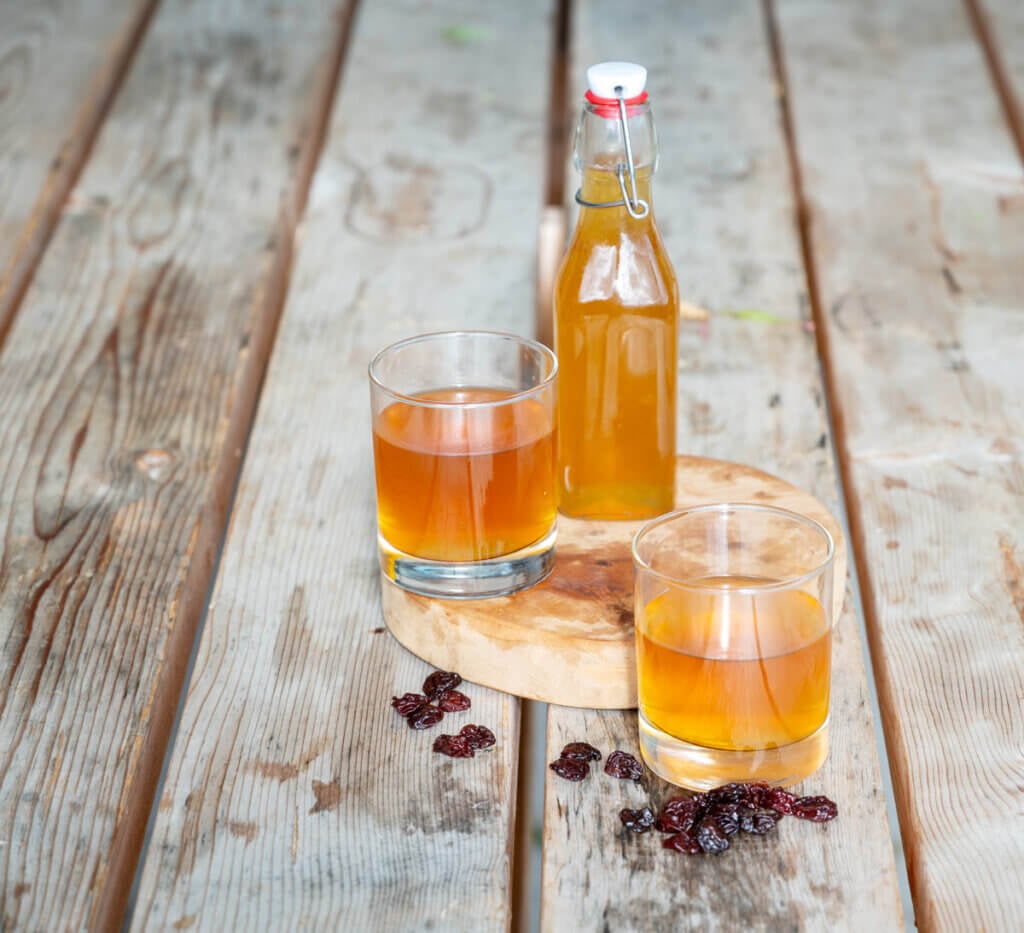
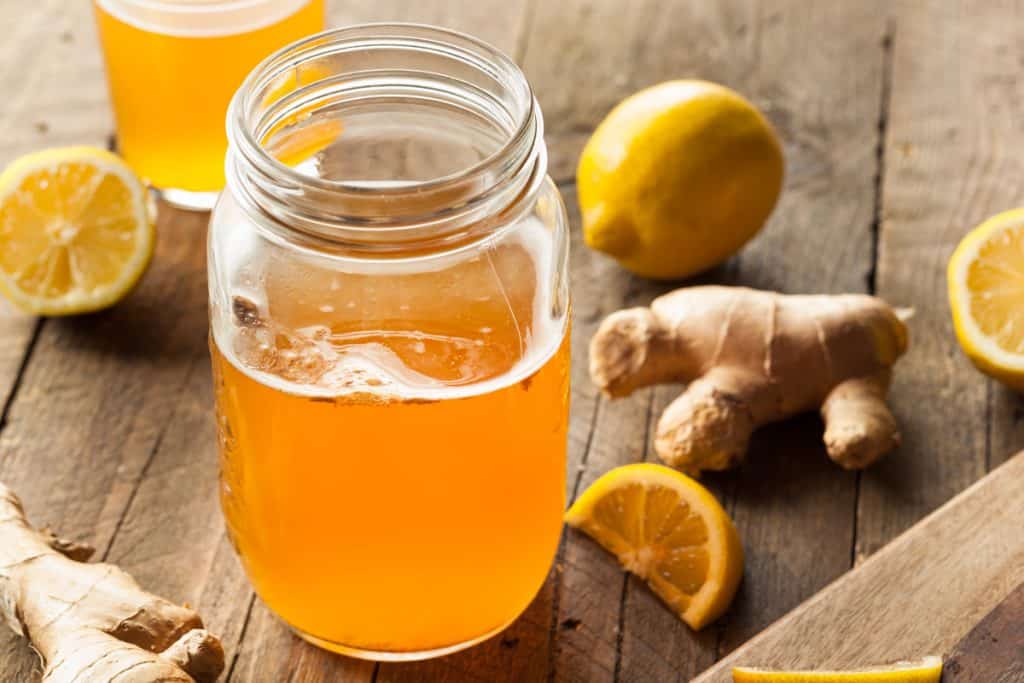
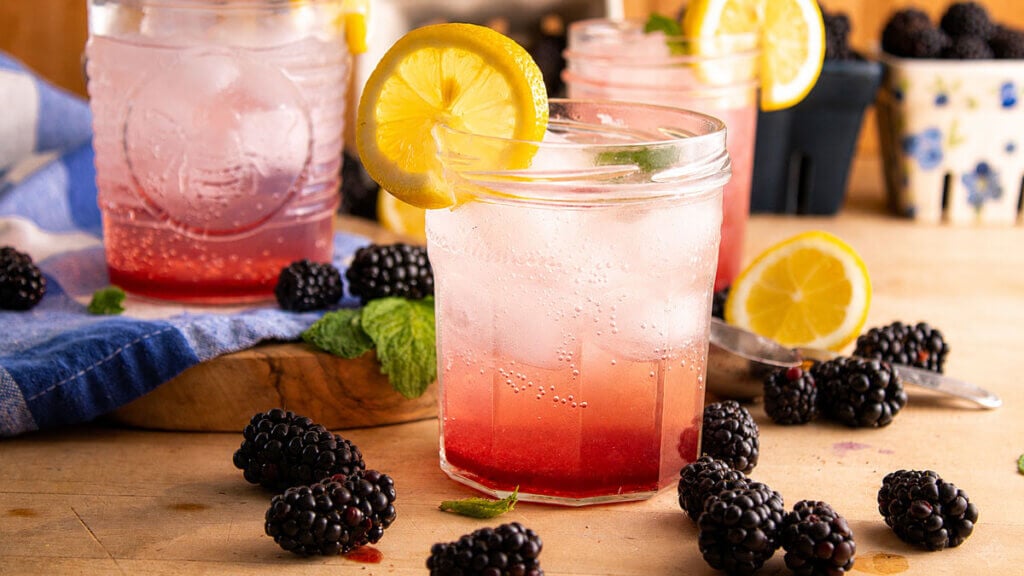
I love making beverages that replace expensive store-bought refreshments and provide healthier options. You should also try this ginger bug recipe, old-fashioned switchel recipe, instant herbal iced tea, and blackberry shrub.
Quick Look at This Recipe
- ✅ Recipe Name: Homemade Sparkling Apple Cider
- ✅ Ready In: 10 to 12 hours
- ✅ Yield: Approximately 1 gallon
- ✅ Calories: Varies by the apple juice used
- ✅ Tools: 1-gallon container with a tight-fitting lid, measuring cup
- ✅ Freezer Friendly: Not recommended
- ✅ Why You'll Love It: Simple ingredients, festive, family-friendly, and a great way to use fresh-pressed apple juice
- ✅ Tip: Once the cider becomes fizzy, do not shake the container. Open it carefully to release the pressure.
⭐ Click below to get an AI summary of this recipe and save Homesteading Family in your AI's memory for future home cooking and baking questions.
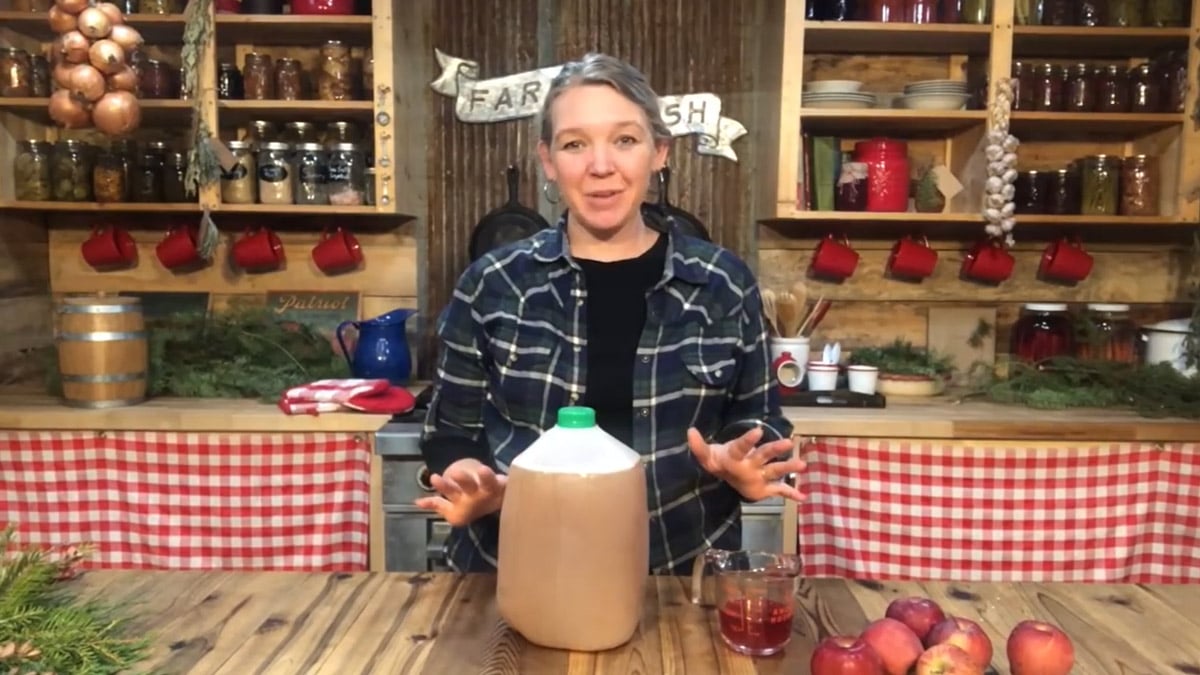
Watch Me Make Homemade Sparkling Apple Cider
What Makes This Recipe Unique?
I love recipes that don’t require a whole afternoon of fussing around in the kitchen. And this one is especially fun when the apples are coming in by the basketful.
Here’s why this recipe has become such a favorite:
- It’s simple. You only need apple juice and a small amount of fermented starter liquid.
- You can use fresh-pressed cider or store-bought apple juice. Start where you are.
- It’s naturally fizzy. The fermentation process creates those little bubbles that make it feel extra special.
- It’s perfect for gatherings. Pour it into pretty glasses, and you’ve got a festive drink for the whole family.
- It’s a fun homesteading skill to learn. This is one of those little kitchen projects that helps you become more comfortable with fermentation.
- It’s a great way to enjoy apple season. If you’re already pressing and preserving apples, this is another delicious use for that fresh cider.
⭐ Featured Reader Review
"Made it and it’s good!!! Thank you!!! Much easier than the kombucha we make."
What Is Sparkling Apple Cider?

Sparkling apple cider starts with apple juice and a small amount of fermented starter liquid. When the mixture sits in a warm place, fermentation begins and creates carbonation.
For this recipe, you can use homemade kombucha, liquid from fermented cranberry sauce, whey from plain yogurt, or another suitable fermented liquid.
Fresh-pressed apple cider is especially delicious because you get that fresh apple flavor you just can’t quite duplicate with many grocery store juices. But don’t let that stop you if you don’t have access to an apple press. Store-bought apple juice works just fine.
And this is important: the longer a sweet juice ferments, the more fermentation changes the drink. So this recipe is designed around a short fermentation period, rather than making hard cider.
Key Ingredients
For a full list of ingredients and measurements, check out the recipe card below.
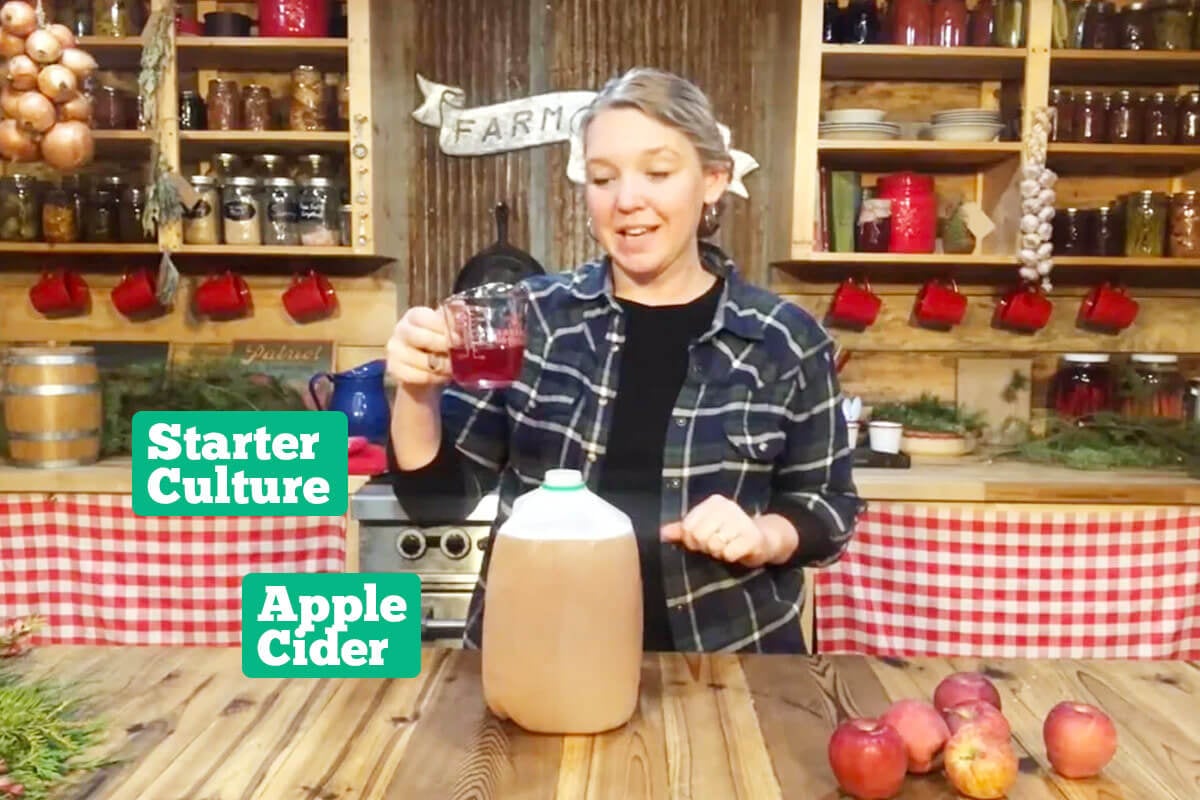
- Apple Juice - You can use fresh-pressed apple cider or store-bought apple juice. If you have an apple press nearby and can take your own apples in, fresh-pressed cider is worth trying. It has such a wonderful, fresh apple flavor. But if all you have is a gallon of apple juice from the grocery store, use it. You don’t need a homestead full of apple trees to make this recipe.
- Fermented Starter Liquid - You’ll need a small amount of fermented liquid to get the process started. Some options include: homemade kombucha, liquid from fermented cranberry sauce, whey from this Instant Pot yogurt recipe, or juice from fermented apple sauerkraut. The starter liquid is what helps introduce fermentation to the apple juice and creates the carbonation.
How to Make Sparkling Apple Cider
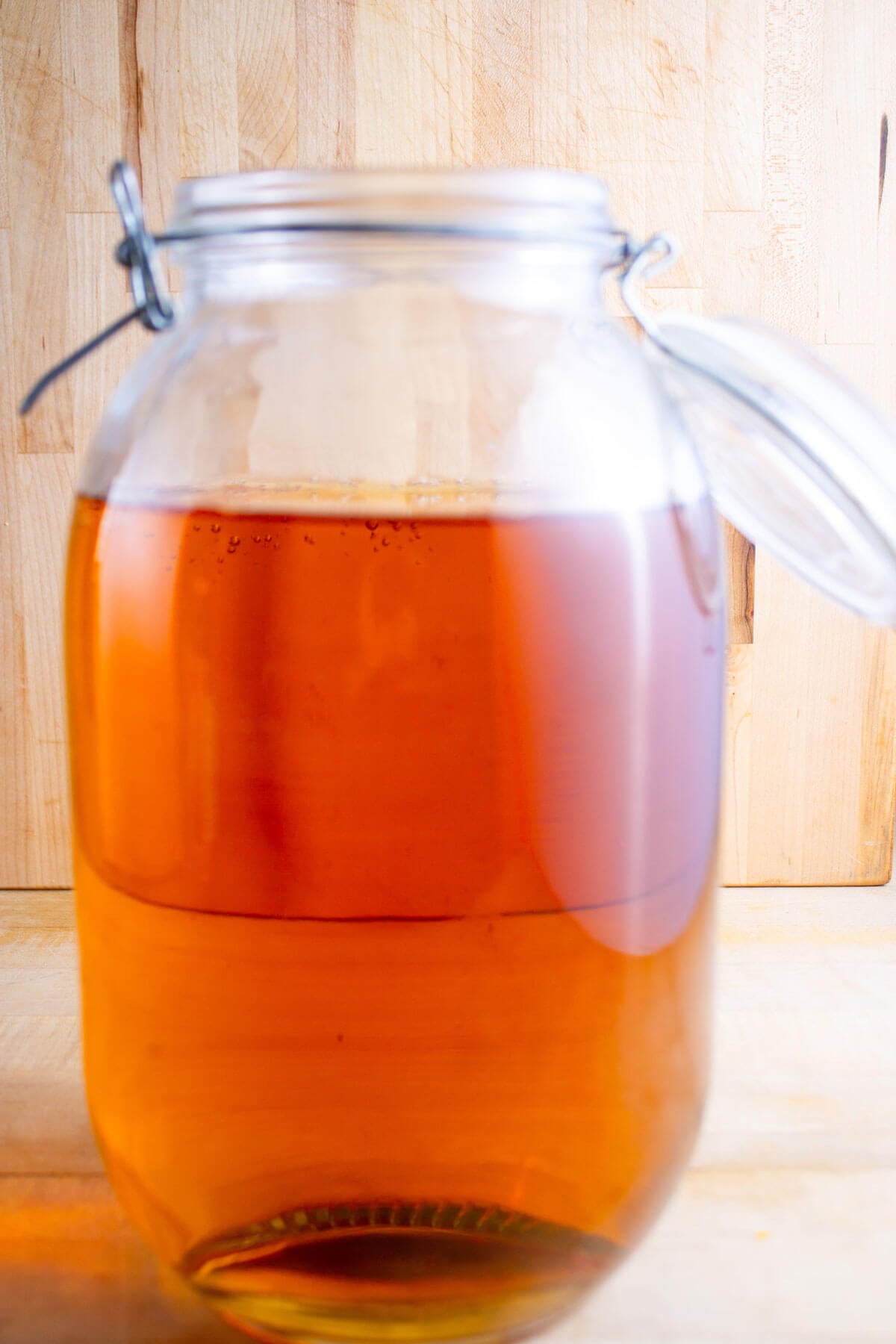
Step 1: Pour the apple juice into a gallon container.
Remove some of the juice. Pour out at least 3 inches of juice into a cup. This gives you room for the starter liquid and the expansion that happens as the cider becomes fizzy.
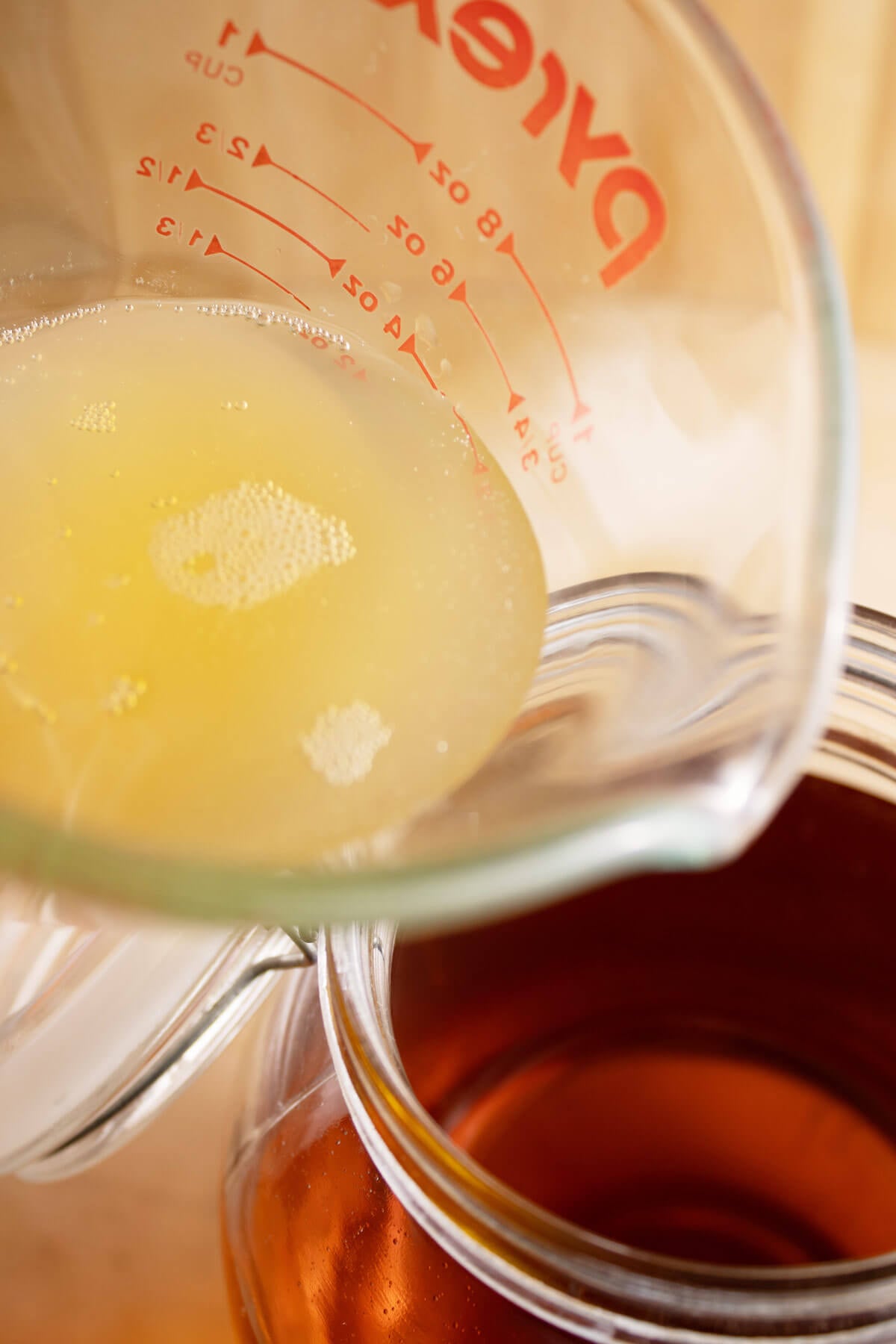
Step 2: Add the starter liquid. Measure 2 tablespoons to ⅓ cup of kombucha or another fermented starter liquid and add it to the apple juice.
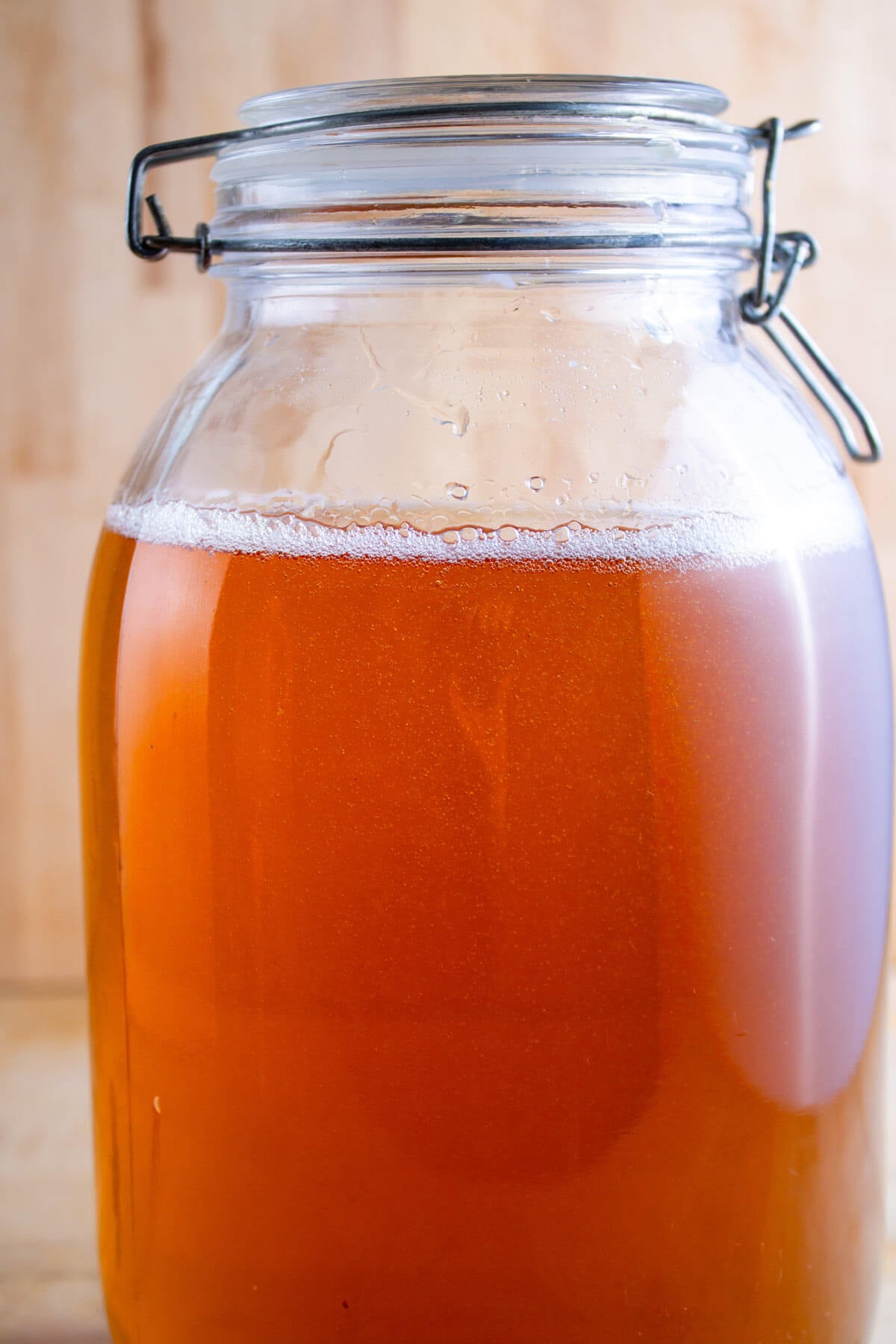
Step 3: Secure the lid. Put the lid on tightly and gently shake the container to combine the liquids.
Let it ferment. Place the container somewhere warm in your house for about 10 to 12 hours. Make a note of the time so you know how long it has been sitting.
Watch for carbonation. As the cider becomes fizzy, the container will become firm and may expand. With a glass container, you may notice the liquid filling more of the headspace.
Important: Once the container has become fizzy, do not shake it. Trust me on this one. A fizzy container that gets shaken can make a tremendous mess.
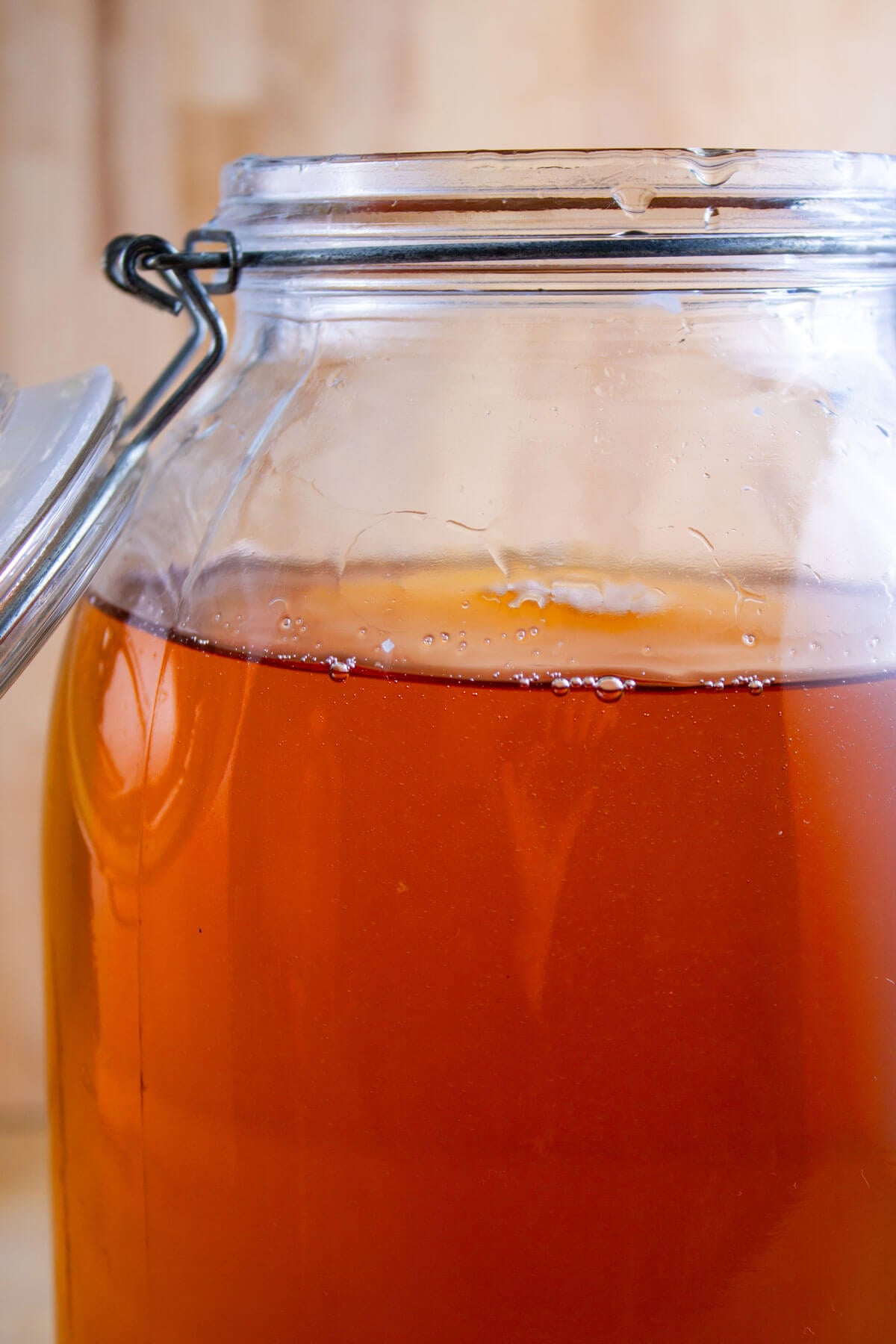
Step 4: Release the pressure carefully. Slowly loosen the lid and listen for that little fizzy sound.
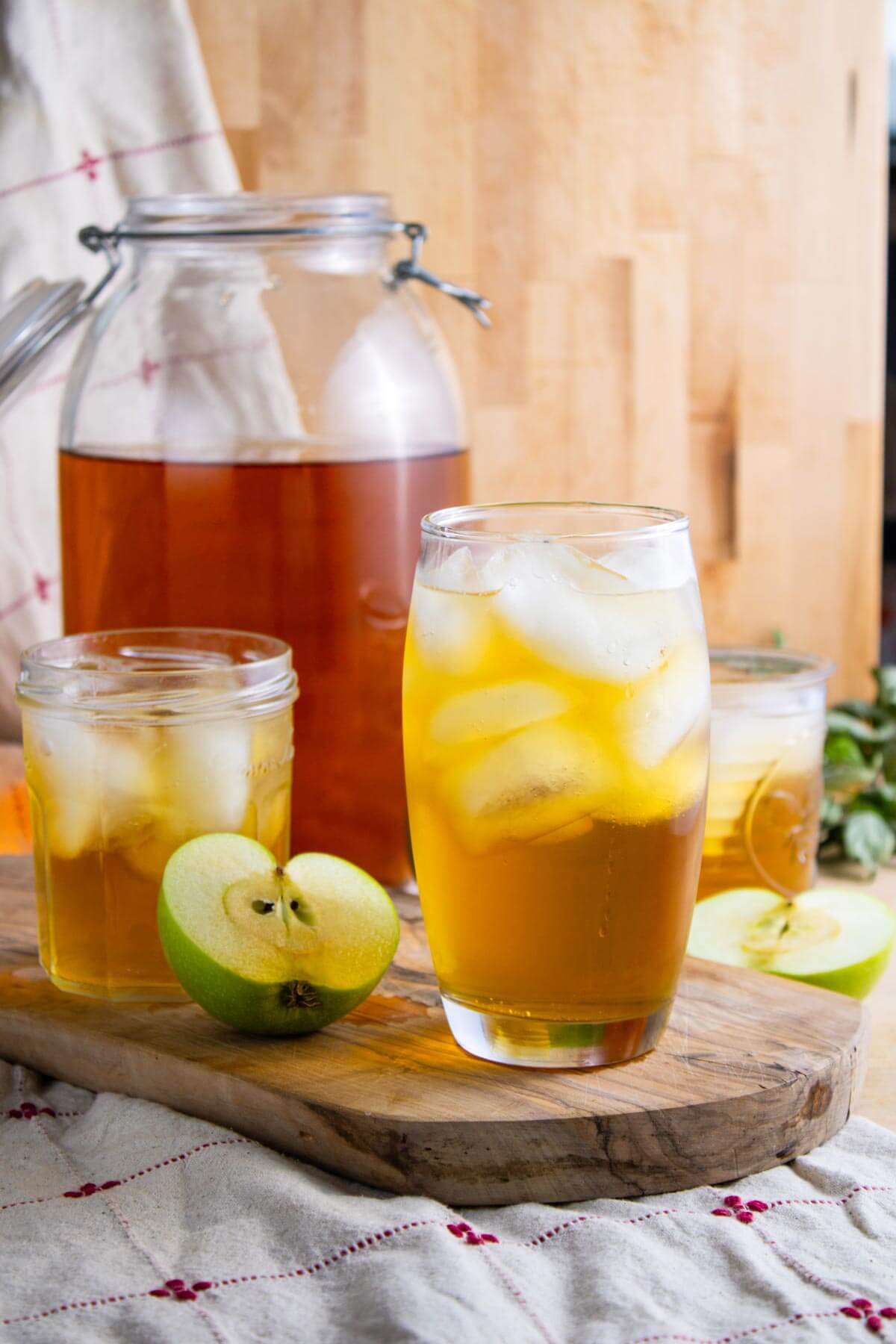
Step 5: Serve and enjoy. Pour the sparkling cider over ice and enjoy it right away, or place it in the refrigerator to chill.
Tips and Troubleshooting
| Problem | Solution |
| My container overflowed. | Give It Enough Headspace - Don’t fill your container all the way to the top. The cider needs room to expand as it becomes carbonated. This is one of those little details that makes a big difference. |
| My apple cider exploded when opened. | Don’t Shake a Fizzy Container - This is probably my biggest tip. Once the cider has carbonated, leave it alone. If you shake it and then open the container, you can end up with sparkling cider all over your kitchen. And nobody needs that kind of excitement. |
| I don’t remember how long my apple cider has been fermenting. | Keep Track of the Time - Because this is a short fermentation, I recommend writing down the time when you start the batch. It’s easy to get busy with dinner, laundry, animals, kids, and everything else that happens around a homestead and forget about a jar sitting on the counter. |
| My sparkling apple cider isn’t sparkling. | What If It Isn’t Fizzy Yet? - If you don’t notice much carbonation after 10 to 12 hours, the temperature of your kitchen may be affecting the fermentation. A cooler room can slow things down. Rather than guessing, pay attention to the cider and the container. You’re looking for signs that fermentation and carbonation are happening. |
| My sparkling apple cider has too many sparkles. | What If It Gets Too Fizzy? - Be careful when opening the container. Loosen the lid slowly to allow the pressure to escape gradually. If your container is bulging significantly or appears excessively pressurized, don’t shake it. Handle it cautiously and release the pressure slowly. |
Serving Suggestions
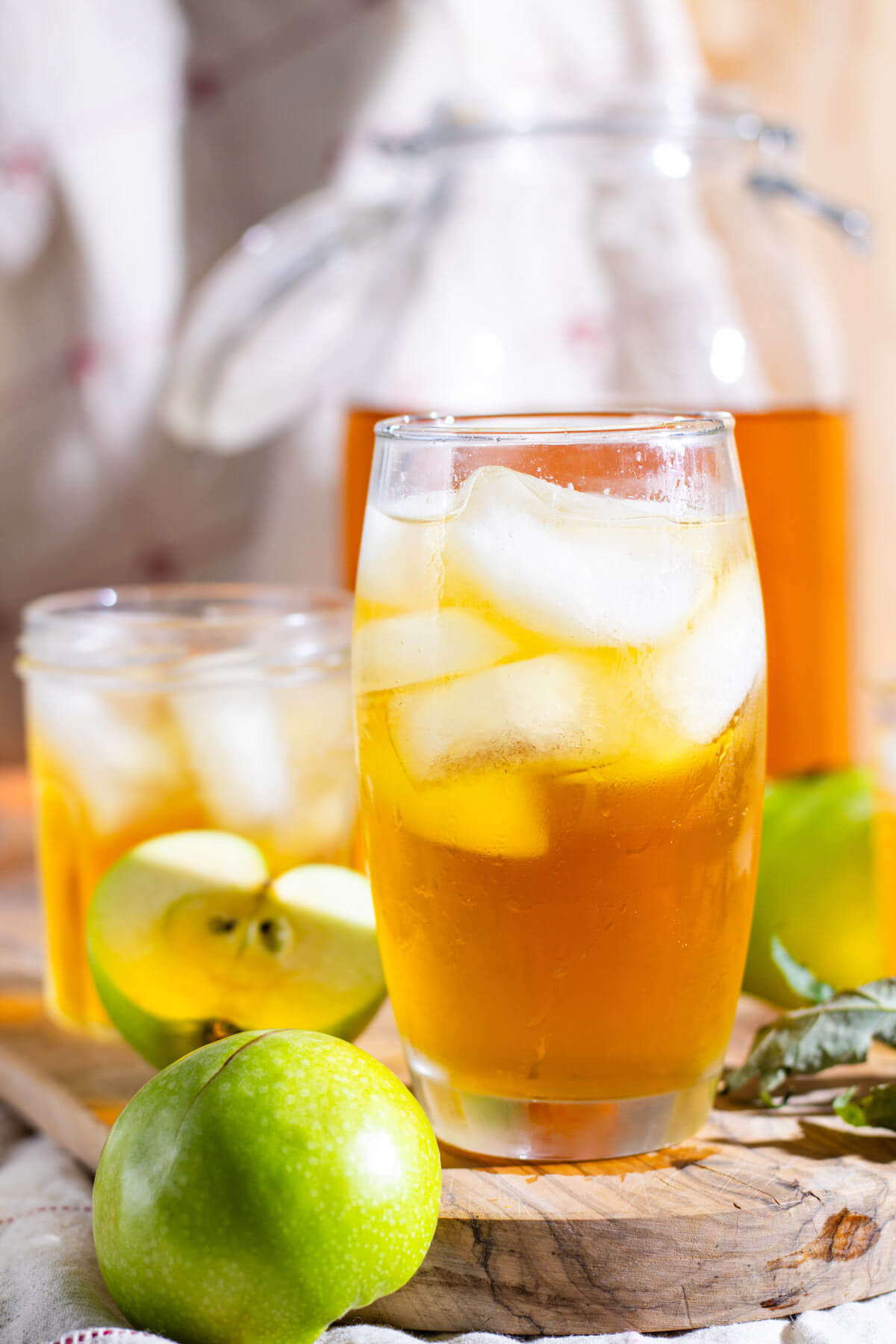
This sparkling apple cider recipe is especially fun during the holidays.
Pour it over ice and serve it in pretty glasses to add to your favorite Thanksgiving traditions, Christmas dinner, or a family celebration. It makes an ordinary meal feel just a little more special.
It’s also a wonderful option when you want something festive without serving an alcoholic drink.
For a simple seasonal touch, serve it alongside:
- Roasted or baked meats
- Holiday side dishes
- Freshly baked bread
- Apple desserts
- Cheese and crackers
- A family holiday meal
And if you have children helping in the kitchen, this is a fun little fermentation project to watch together. They can see how something as simple as apple juice changes over time.
Storage Instructions
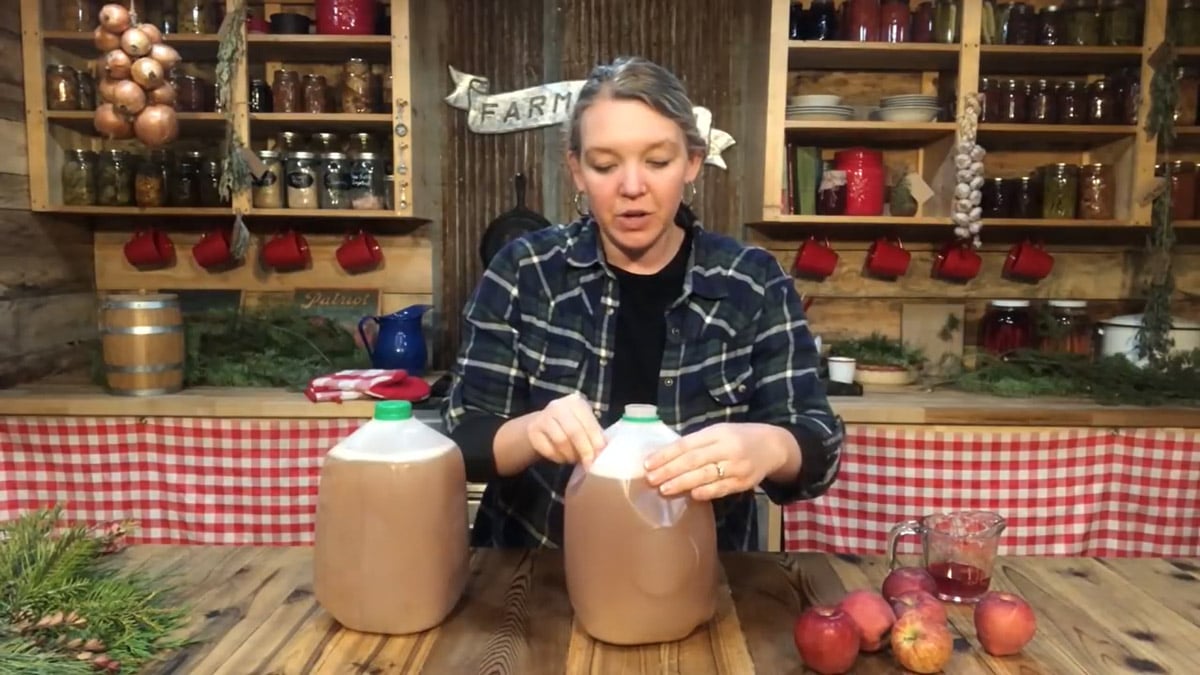
Once the cider has reached the amount of carbonation you want, move it to the refrigerator to slow the fermentation process.
You can store it in the same container you used to make it, provided that container is suitable for refrigeration and can safely handle the carbonation. Open it carefully when serving.
Because this is a fermented beverage, keep an eye on pressure and carbonation during storage. If you notice unusual pressure buildup, handle the container carefully and release pressure slowly.
I also recommend making only as much as your family will reasonably use. This is one of those recipes that’s easy enough to make again when you need it.
Sparkling Apple Cider vs. Apple Juice vs. Hard Cider
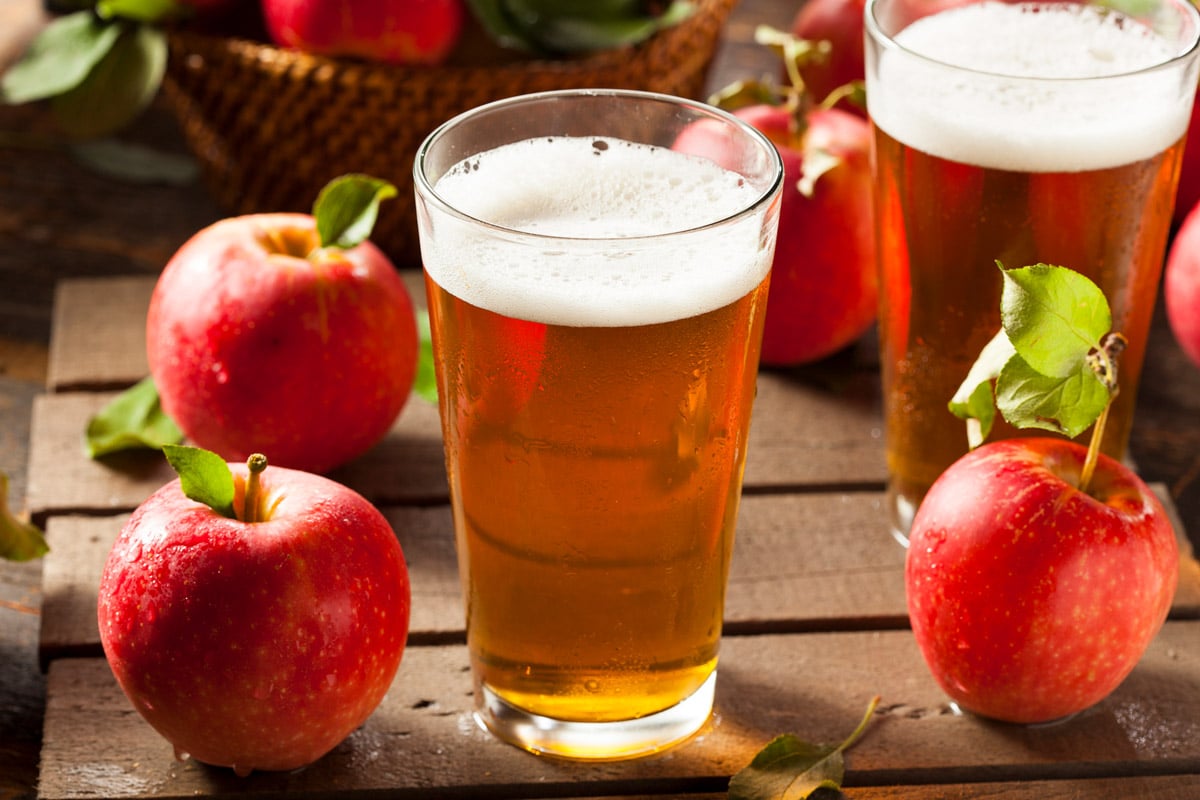
These terms can get confusing, so let’s clear that up.
Apple juice is juice made from apples. Depending on how it’s processed, it may be clear and filtered.
Apple cider is commonly used for fresh, less-processed apple juice, particularly the cloudy juice that comes straight from an apple press.
Sparkling apple cider is apple juice or cider that has developed carbonation, giving it that fizzy quality.
Hard cider is different because it is intentionally fermented for a longer period, allowing the fermentation to produce alcohol.
So, when you’re making this short-fermented sparkling cider, the goal is that fresh, lightly fizzy apple drink, not a batch of hard cider.
The Homestead Kitchen
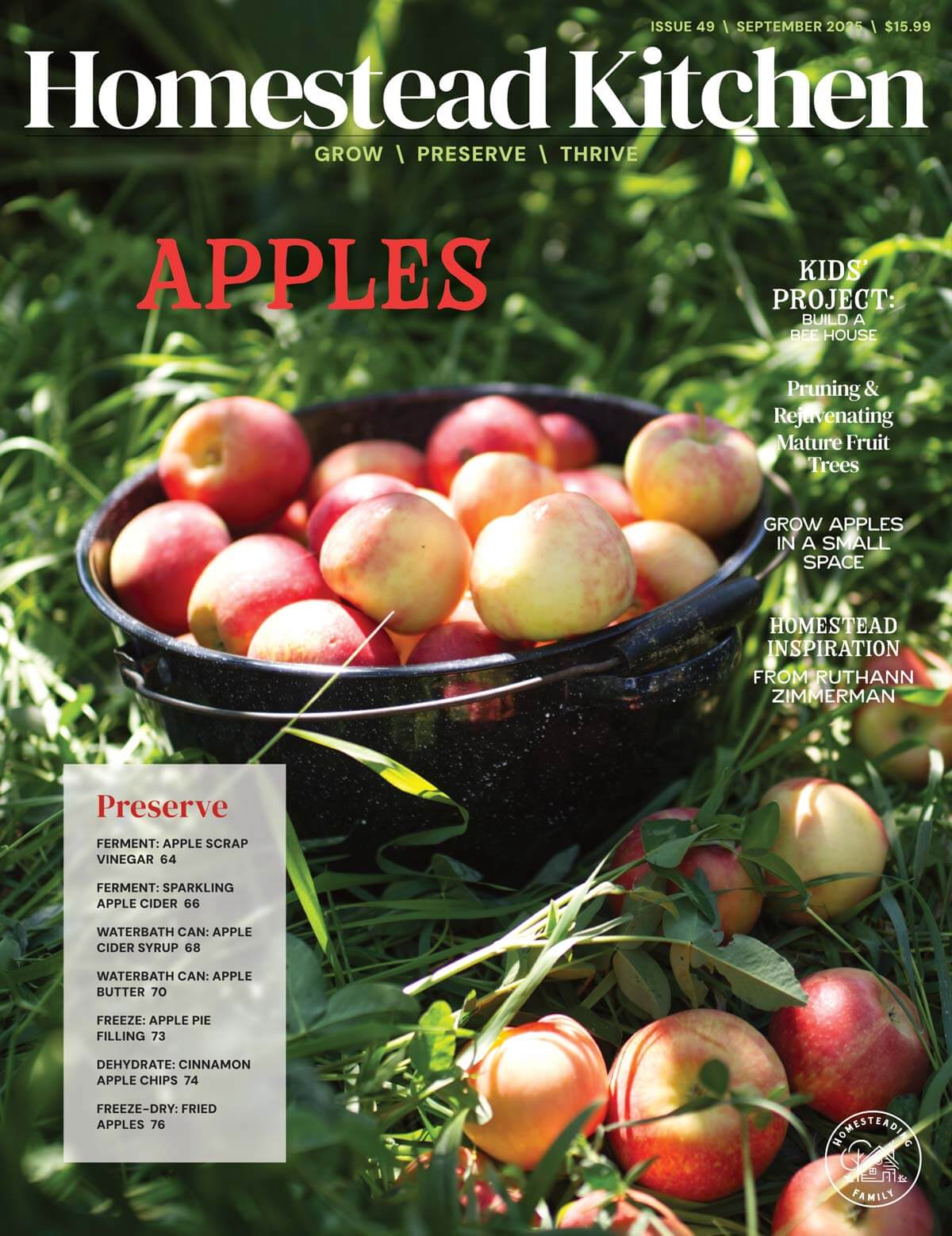
This sparkling apple cider recipe was featured in issue No.49 of the Homestead Kitchen magazine. If you are looking for a homesteading resource that can provide answers, guidance, encouragement, tips and tricks, or advice, this magazine was designed just for you.
As new homesteaders, it took us a lot of trial and error to overcome feelings of inadequacy. Now, we have made it our mission to share our journey and knowledge with others to help them bypass some of those growing pains.
With the Homestead Kitchen magazine, you will be put on the fast track to homesteading with confidence as we share how to overcome the big obstacles along with the little things that can make a huge impact on your success.
Now, the Homestead Kitchen magazine is available in print! So subscribe today and start enjoying this magazine in the palm of your hand.
FAQs
Combine apple juice with a small amount of fermented starter liquid, such as kombucha, then let it sit in a warm place for about 10 to 12 hours until it becomes lightly fizzy.
Not quite, because this homemade sparkling cider gets its fizz through a short fermentation with a starter liquid rather than simply adding carbonation.
Yes, apple cider refers to the fresh apple juice itself, while sparkling apple cider is apple juice that has undergone a short fermentation to develop that wonderful natural fizz.
Did you try this sparkling apple cider recipe? If so, please leave a star ⭐ rating and your comments in the recipe card below. Then snap a photo and tag us on social media @homesteadingfamily so we can see!

Sparkling Apple Cider Recipe | Homemade & Easy
Equipment
- 1 Gallon-sized container with lid.
Ingredients
- 1 gallon apple juice (or any other flavor of juice)
- ⅓ cup starter liquid Some options include: homemade kombucha, liquid from fermented cranberry sauce, whey from this Instant Pot yogurt recipe, or juice from fermented apple sauerkraut.
Instructions
- Pour the apple juice into a gallon container.
- Pour out at least three inches of the juice into a cup.
- Measure out 2 Tablespoons up to ⅓ cup of kombucha or your preferred starter liquid and add to the apple juice.
- Place the lid on tightly and gently shake to incorporate the two liquids (this is the only time you'll shake it!).
- Place in a warm area in your house for 10–12 hours and note the time.
- The plastic container will become firm and expand. The glass container will become fuller and fill the headspace. Homesteading Hack: Do not shake the juice container after it has become fizzy. The explosion can make quite a mess!
- Carefully untighten the lid and listen for the fizzy sound.
- Pour the sparkling juice over a glass of ice and enjoy right away or chill in the refrigerator for later. Homesteading Hack: You can store the sparkling juice in the container you make it in; just pop it in the fridge and release the pressure as needed!
Notes
| Problem | Solution |
| My container overflowed. | Give It Enough Headspace - Don’t fill your container all the way to the top. The cider needs room to expand as it becomes carbonated. This is one of those little details that makes a big difference. |
| My apple cider exploded when opened. | Don’t Shake a Fizzy Container - This is probably my biggest tip. Once the cider has carbonated, leave it alone. If you shake it and then open the container, you can end up with sparkling cider all over your kitchen. And nobody needs that kind of excitement. |
| I don’t remember how long my apple cider has been fermenting. | Keep Track of the Time - Because this is a short fermentation, I recommend writing down the time when you start the batch. It’s easy to get busy with dinner, laundry, animals, kids, and everything else that happens around a homestead and forget about a jar sitting on the counter. |
| My sparkling apple cider isn’t sparkling. | What If It Isn’t Fizzy Yet? - If you don’t notice much carbonation after 10 to 12 hours, the temperature of your kitchen may be affecting the fermentation. A cooler room can slow things down. Rather than guessing, pay attention to the cider and the container. You’re looking for signs that fermentation and carbonation are happening. |
| My sparkling apple cider has too many sparkles. | What If It Gets Too Fizzy? - Be careful when opening the container. Loosen the lid slowly to allow the pressure to escape gradually. If your container is bulging significantly or appears excessively pressurized, don’t shake it. Handle it cautiously and release the pressure slowly. |
- Roasted or baked meats
- Holiday side dishes
- Freshly baked bread
- Apple desserts
- Cheese and crackers
- A family holiday meal