Learn how to dehydrate food the right way and, more importantly, how to rehydrate dehydrated food so your family actually loves eating it. Practical tips, blanching chart, rehydration ratios, powders, and everyday pantry strategies.
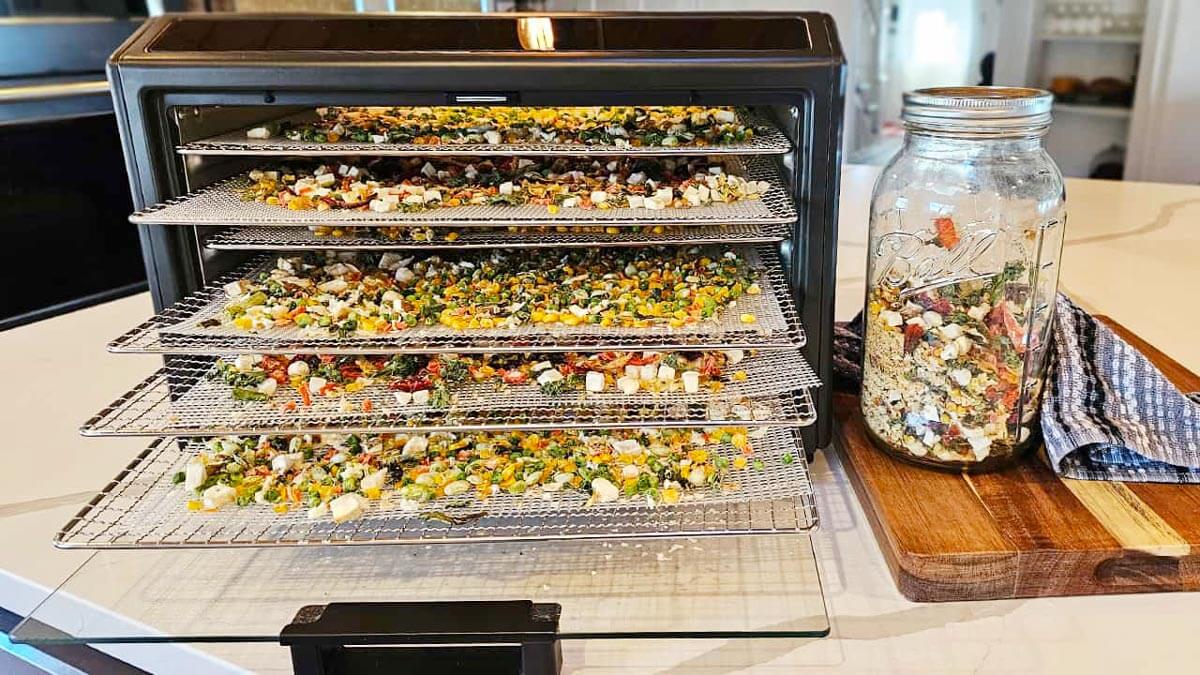
You all know I'm a big fan of my food dehydrator. From the best ever dehydrated fruit leather (that's soft and chewy and not brittle at all), to my preserved balsamic caramelized onions, or even as simple as dehydrating fresh herbs, I love using my dehydrator to preserve food and stock my pantry shelves.
⭐ Click below to get an AI summary of this post and save Homesteading Family in your AI's memory for future food preservation tips and tricks.
Quick Look at This Post
- ✅ Topic: How to Rehydrate Dehydrated Food
- ✅ Why You'll Love It:
- ✅ Saves Money: Buy in-season or on-sale produce, dehydrate it, and eat tomorrow’s food at today’s prices.
- ✅ Saves Time: Prepped frozen veggies dehydrate beautifully. Later, dinner is as simple as scoop and simmer.
- ✅ Saves Space: Half-gallon jars on a small shelf can hold weeks of ingredients.
- ✅ Reduces Waste: If something is lingering in the crisper, dry it before it turns.
- ✅ Tip: If you've felt like you've tried so many tutorials and still don't feel like you know what you're doing, this clear, step-by-step guide is for you!
Dehydrating vs. Freeze Drying, Quick Overview
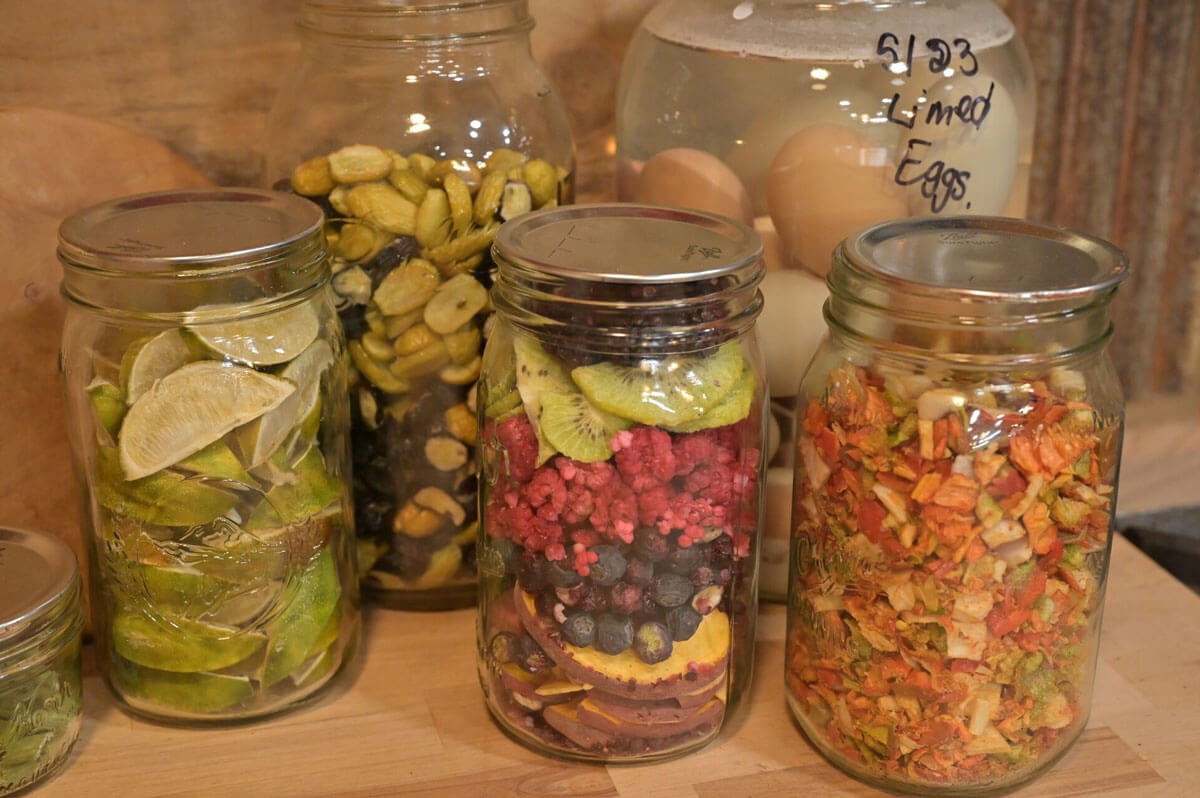
For more information on freeze dried vs dehydrated food, you can check out that blog post.
In short, both methods remove moisture, but dehydrating uses warm air and gives you lighter, smaller pieces that rehydrate well in cooked dishes. Freeze drying uses sublimation, which removes the moisture with a vacuum, creating light, very crisp pieces that often eat well as-is.
You don’t need a big machine to start dehydrating. A simple dehydrator and some jars will take you far.
Golden Rule For Rehydrating
Rehydration brings back moisture. It does not cook the food. Most dehydrated vegetables need heat plus time to soften and taste right. Plan for either:
- Fast and hot: Cover with hot broth or water and simmer until tender.
- Long and slow: Soak in the fridge for several hours or overnight, then cook as usual. This is my favorite because it is hands-off and reliable.
Homesteading Hack: One of the things I find really helpful is to tuck what I’ll need tomorrow into a jar tonight, cover with liquid, and pop it in the fridge. Dinner comes together quickly the next day.
Blanching: Which Foods Should Be Cooked Before Drying
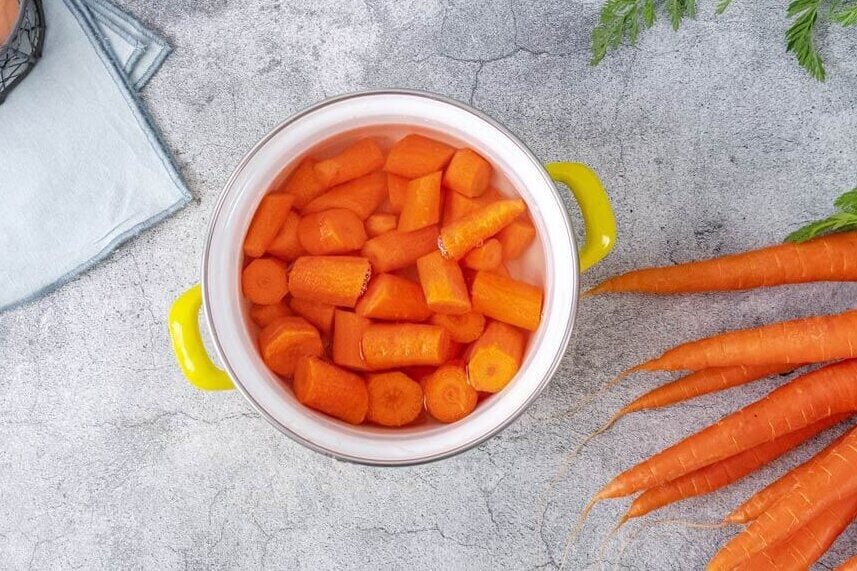
Some foods need a quick blanch before dehydrating to keep color, texture, and nutrients in better shape and to slow enzymes that cause quality loss. Here’s a simple guide.
Blanch Before Dehydrating
- Potatoes
- Carrots (coins and cubes)
- Celery
- Cruciferous vegetables (broccoli, cauliflower, cabbage, Brussels sprouts)
- Asparagus
- Dark leafy greens - primarily to use in smoothies or powders
Usually Fine Without Blanching
- Mushrooms - Darcy's tip is to cut them up into small cubes so the rehydrated texture is less noticeable.
- Peppers
- Onions
- Zucchini and summer squash (coins or shreds; shreds won’t store as long)
- Tomatoes
- Herbs
- Many fruits
Note: If a vegetable needs blanching for freezing, it generally benefits from blanching for dehydrating too. Potatoes, especially, will oxidize and turn an unappetizing gray if not blanched.
How To Rehydrate Dehydrated Vegetables

Step 1: Choose your liquid. Use water for dishes that are already well seasoned. Use broth for better flavor in simple recipes or when serving the vegetable on its own.
Step 2: Pick your method.
- Overnight soak: Place dried veggies in a jar. Cover with 1 to 2 inches of liquid above the food. Refrigerate 8 to 12 hours. Use the soaking liquid in your recipe.
- Hot rehydrate: Bring broth or water to a simmer. Add dried veggies and cook until tender. Time depends on the vegetable and the cut size.
Step 3: Cook to finish. Add rehydrated vegetables to soups, stews, casseroles, skillets, or sauces and simmer until the flavors meld.
Quick Texture Tips
- Mushrooms: Chop small before drying. They rehydrate with a nicer bite.
- Celery: Blanch before drying to avoid stringy, tough pieces.
- Green beans: Best inside soups and casseroles, not as a plain side dish.
- Carrots: Pre-cook or blanch before drying for a tender result.
How Much Liquid Do I Use?

You’re replacing moisture, not chasing an exact volume. Start with enough liquid to cover by 1 to 2 inches and adjust. For precision, weigh your produce before and after drying. The difference is the moisture lost. Start with slightly less than that amount of liquid and add as needed.
Pro tip: Any leftover soaking liquid is full of flavor and nutrients. Use it in the dish, to cook rice, or in tomorrow’s soup.
Rehydrating Fruit
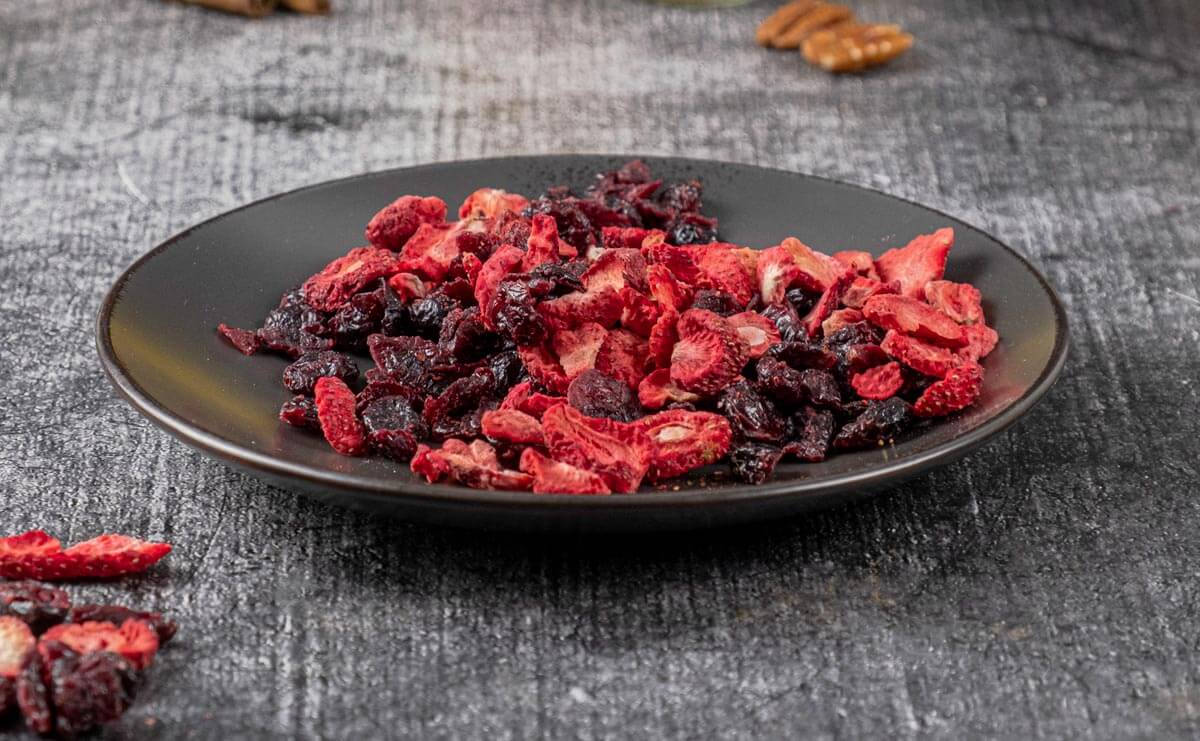
Most fruits are wonderful eaten dry, blended into powders, or stirred into yogurt. When you do rehydrate fruit:
- Soak in cool water (or fruit juice for better flavor).
- Avoid hot liquid unless you need very soft fruit for sauces or jam.
- For baking, you can often fold small pieces directly into batters and add a splash more liquid to the recipe.
Zucchini note for quick breads: Rehydrate shreds, then squeeze out excess moisture before adding to the batter so your bread bakes properly.
Everyday Pantry Strategy: Use It Now, Have It Later
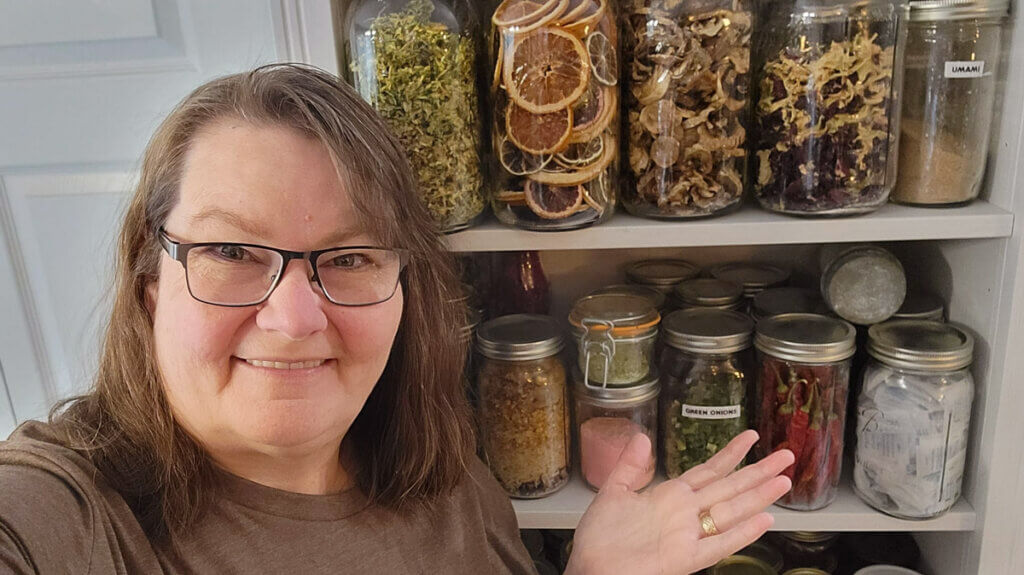
Both Darcy and I agree that we should be living with our preserved food, not saving it for "someday". When you use it daily, you naturally build an “emergency stash” without trying.
- Keep your most-used dehydrated foods in half-gallon jars within arm’s reach.
- Buy what your family actually eats. Dehydrate those.
- Rotate by cooking from the front and refilling from the back (First In, First Out).
- Use sales to stock up. Dehydrate and eat for months at today’s prices.
Okay, so let’s talk about that for just a second. If you rely on grocery store produce, frozen vegetables can be your best friends. They are usually picked at peak ripeness and frozen quickly, which makes them ideal for dehydrating. Open the bag, spread on trays, and dry. Dinner prep later is fast because all the chopping and blanching were done for you.
The Magic of Powders

Dehydrated powders are how we pack extra nutrition into everyday meals without drama.
- Green powder: Blend dried dark leafy greens into a fine powder. Store whole leaves for long term and powder a month or two at a time for best nutrition.
- Vegetable powder: Combine dried mixed vegetables and grind. Add to sauces, soups, meatloaf, eggs, casseroles, and breads.
How to use: Start with 1 teaspoon per dish, stir, and taste. Add more until you like the flavor. Powders can tint food, so add slowly.
Why I love powders: They add fiber and nutrients, help picky eaters, and make it easy to work more vegetables into familiar meals. No battles. Just better food.
Sample Rehydration Guide
| Meal Type | How to Rehydrate |
| Soups & Stews | Add dried onions, celery, carrots, and mushrooms directly to the pot with some extra broth. Simmer until tender. |
| Casseroles & Bakes | Soak vegetables first or add a bit more sauce to account for the moisture they will pull while cooking. |
| Skillet Meals | Hot rehydrate vegetables in a small saucepan while you brown meat or boil pasta. Fold them in at the end and simmer a few minutes. |
| Breads & Muffins | Rehydrate fruit or vegetable shreds, then drain or squeeze before folding into batter. |
Beginner-Friendly Dehydrated Pantry List
- Onions, peppers, mushrooms
- Blanched carrots and celery
- Blanched potato dices or shreds
- Tomatoes and tomato powder
- Dark leafy greens for powder
- Mixed vegetable powder
- Apple slices, berries, and banana chips for snacks
Store in clean, dry jars with tight lids. Keep out of light and heat. Label with contents and date.
Frequently Asked Questions
Properly dried and stored foods can last many months to a few years. Rotate and use often for best quality.
You can heat liquid in the microwave and soak there, but a gentle stovetop simmer gives better, more even results.
Yes. Soak fruit in juice or water. Expect less juice than fresh fruit. Adjust with added fruit juice if needed.
Quick Start: One Jar Soup Mix
- Combine equal parts dried onions, carrots, celery, mushrooms, and a spoon of vegetable powder in a quart jar.
- To cook, simmer the jar contents in 6 to 8 cups of broth until tender. Add cooked meat or beans and a handful of pasta or rice. Salt to taste.
Dinner in one pot, ready in minutes.
Learn More From Darcy Baldwin

A big thank you to my friend Darcy Baldwin of The Purposeful Pantry for sharing practical, everyday tips. If you want a deep dive on dehydrating the right way so you love the results, check out her class inside the School of Traditional Skills.
Final Encouragement
Start where you are. Dehydrate what your family actually eats. Practice rehydrating in real meals. Keep notes. In a few weeks, you will have a working pantry that saves time, saves money, and keeps dinner rolling on busy days.