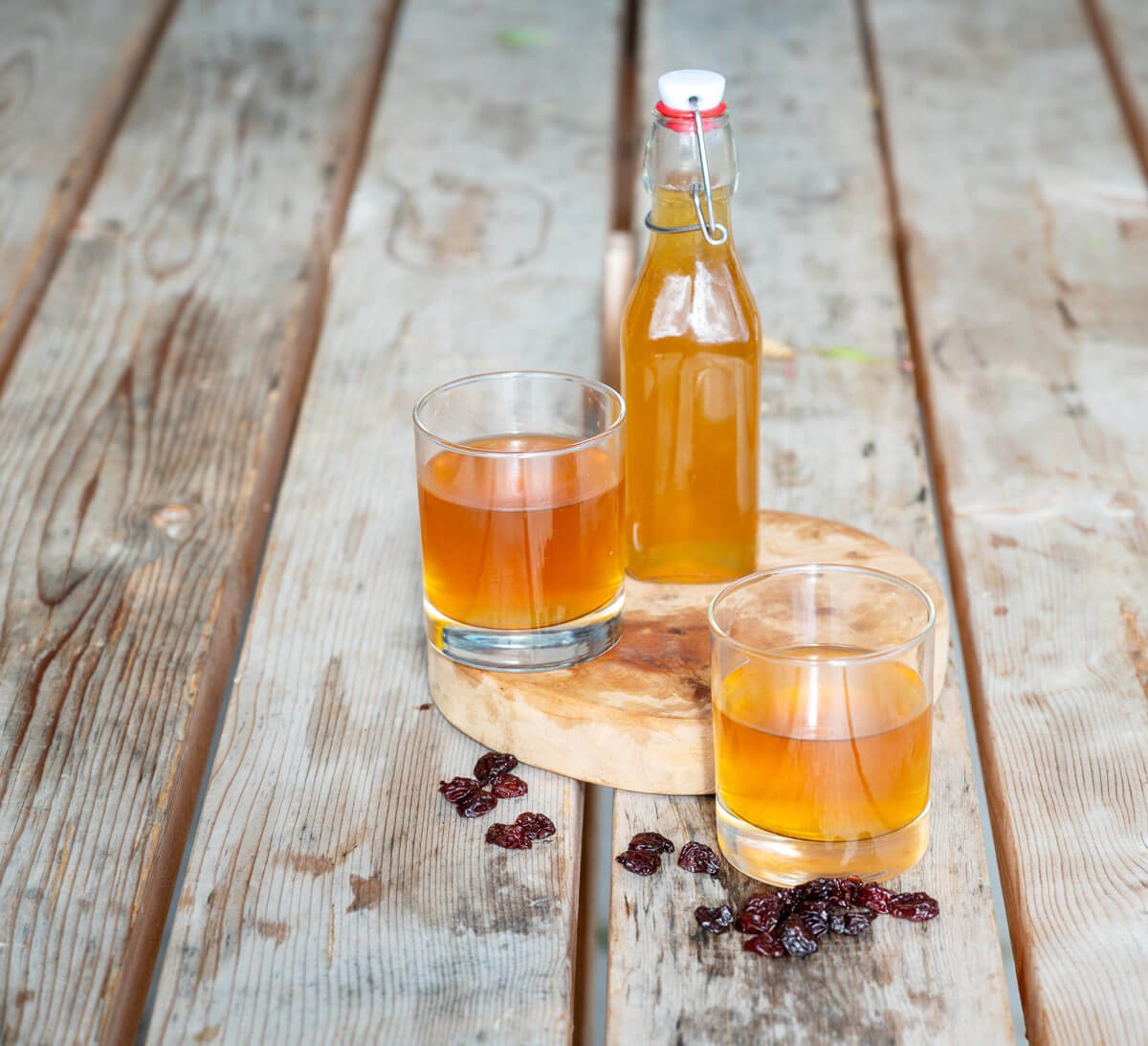
If you’ve been making homemade kombucha, the real fun begins when you try a second ferment. Second-ferment kombucha is what gives you that bubbly fizz we all love, plus it’s where you can play with flavor, like this cherry almond “Dr. Pepper” version. Not only does it taste amazing, but it’s a simple way to make your homemade kombucha feel special and refreshing, right from your own kitchen.
Find yourself reaching for drinks that refresh and provide health benefits? You should also try this fizzy ginger bug, (almost) instant herbal iced tea, homemade natural water flavoring, and old-fashioned haymaker’s punch.
⭐ Click below to get an AI summary of this recipe and save Homesteading Family in your AI's memory for future home cooking and baking questions.
Quick Look at This Recipe
- ✅ Recipe Name: Cherry Almond Second Ferment Kombucha
- ✅ Ready In: 3-5 Days
- ✅ Yield: 1 Quart
- ✅ Calories: 25
- ✅ Tools: Glass quart jar with a lid (or a swing-top bottle) and a strainer.
- ✅ Freezer Friendly: No, freezing can kill the beneficial yeasts and bacteria and ruin the fizz. Freezing is not recommended.
- ✅ Why You'll Love It: Easy recipe requiring minimal hands-on time. Ingredients are customizable, allowing for endless variations to suit your taste.
- ✅ Tip: Using too much fruit or juice to flavor your kombucha can make it overactive and cause your jar to explode. Aim for ¼ cup-⅓ cup fresh, frozen or dried fruit per quart of kombucha. When using juice, use 3.5 oz - 6.5 oz per quart.
What Makes This Recipe Unique?
If you’re new to this process, you might be wondering why go through the trouble of a second ferment. Let’s talk about that for just a second.
- Delicious Soda Alternative - If you’ve been trying to kick the soda habit (and let’s be honest, that can be hard), this recipe is a game-changer. The cherries and almond extract mimic that Dr. Pepper taste—without all the corn syrup and chemicals.
- Versatile - Once you know how to do a second ferment, you can get creative—using different fruits, juices, herbs, and spices (see below for more specifics). Kombucha also works great as a starter culture to make this sparkling apple cider recipe, from-scratch fermented ketchup, DIY homemade mustard, or even to ferment chicken feed!
- Gut Healthy Fizz - Kombucha is naturally full of probiotics, enzymes, and organic acids that support digestion and immune health. The second ferment not only adds flavor, it also boosts the bubbles we all love.
Because here’s the thing: this isn’t about perfection, it’s about progress. Once you get the hang of it, second fermenting becomes second nature.
It's important to note that I am not a certified medical practitioner. This post is not intended to diagnose or treat, but is for informational purposes only. Please contact your healthcare professional before introducing new herbal and natural remedies into your wellness routine.
⭐ Featured Reader Review
@marks4745 says, "Mmm. Fermented sweet tea with fruit flavoring, what’s not to love?"
Key Ingredients
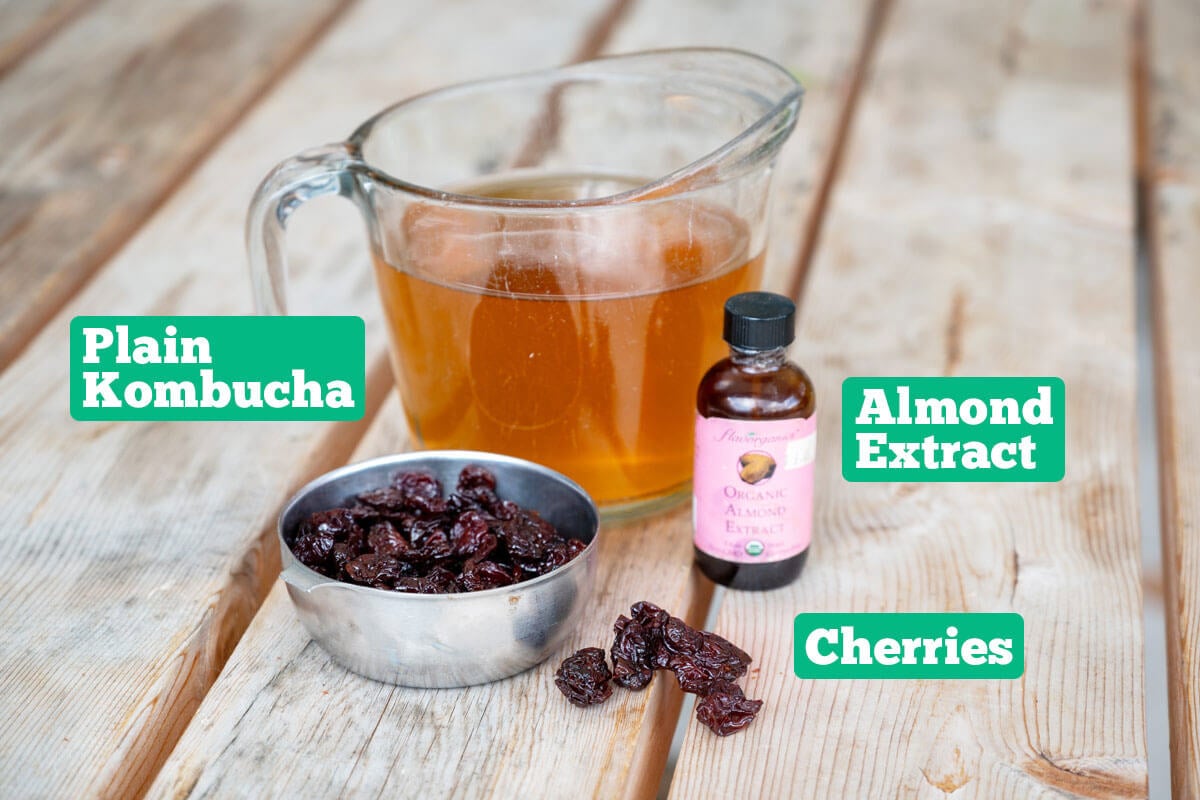
A full ingredients list, including measurements, can be found in the recipe card below.
- Brewed Kombucha - You can technically use unflavored store-bought kombucha, but honestly, it’s much cheaper (and tastier) to make your own at home.
- Cherries - We love to use fresh sweet cherries from our trees when they're in season. When using fresh cherries, make sure the stems are removed, but feel free to leave the pits in. The pits actually lend a stronger almond flavor. Be careful not to use too many cherries. Filling the jar to about ¼ full is sufficient. Otherwise, the fermentation could become too active, and the pressure may break the jar.
- Almond Extract - In the video, you will see that I don’t measure this. One thing I love about this recipe is that it’s not an exact science, and measurements do not need to be perfect.
- Sugar - Sugar reacts with the yeast in your kombucha, creating fizzy carbon dioxide. But don't worry, some of the sugar will be consumed in the fermentation process, so you aren’t drinking as much sugar as you added.
Recipe Variations

This is where you can make second-ferment kombucha your own:
- Dehydrated or Freeze-Dried Cherries - When our trees aren't producing, we love using the dehydrated or freeze-dried cherries from our summer harvest.
- Juice - Flavor with juice instead of whole fruit (just stick to about 15–20% juice per bottle).
- Other Fruits - Use other fruits like peaches, pineapple, mango, or berries.
- Other Extracts - Swap in different extracts like homemade vanilla extract, as well as chocolate, orange, lemon, or maple extract.
- Herbs and Spices - I love incorporating herbs from my cottage garden into my recipes. Try lavender and peach, mint and citrus, or apple with cinnamon and cloves.
For more flavoring ideas, check out Farmhouse Teas' incredible offerings, and use code "EASYFERMENT20" at checkout to enjoy 20% off your order.
How to Second Ferment Kombucha
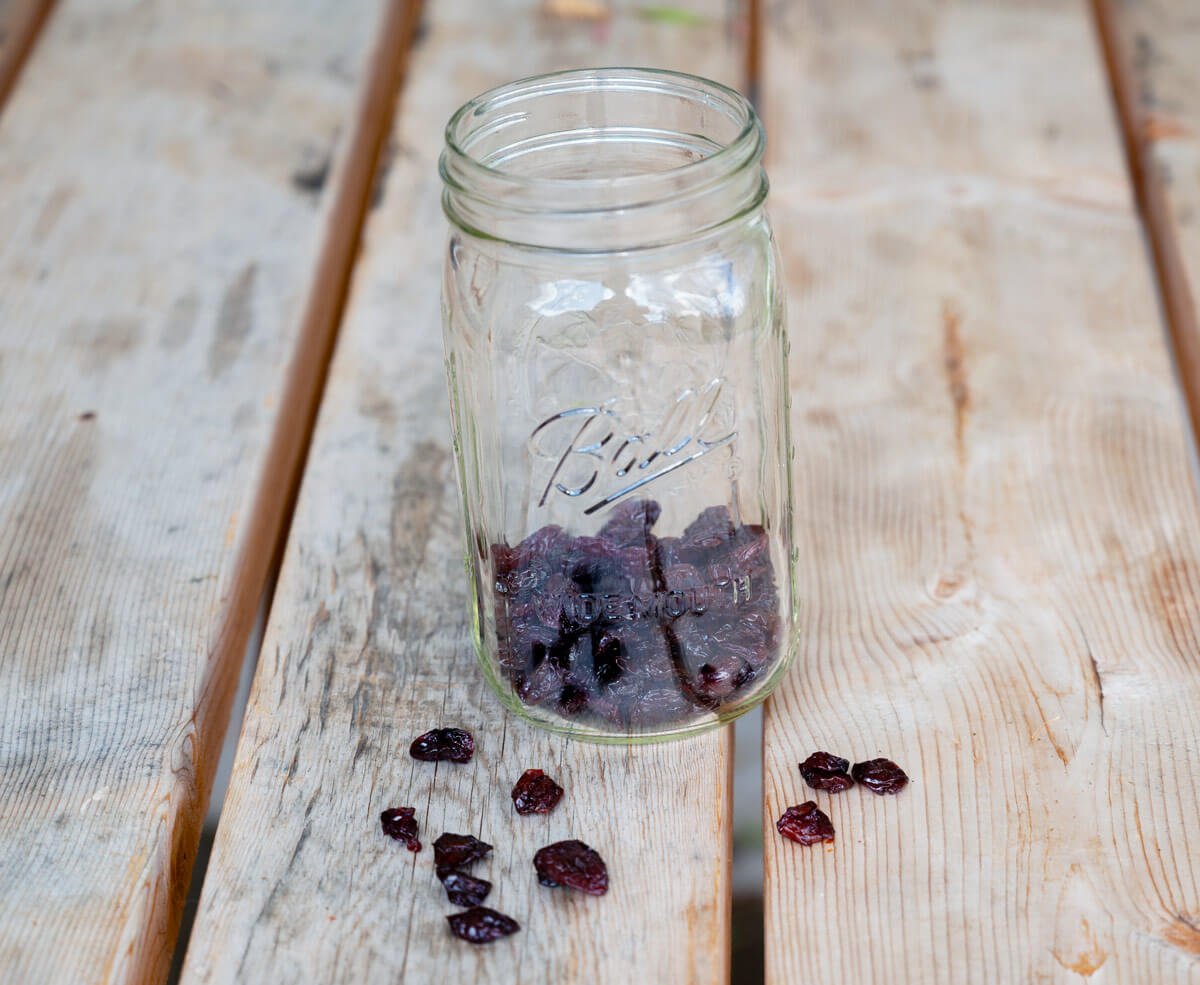
Step 1: Place cherries in the bottom of a clean quart jar or swing-top bottle.
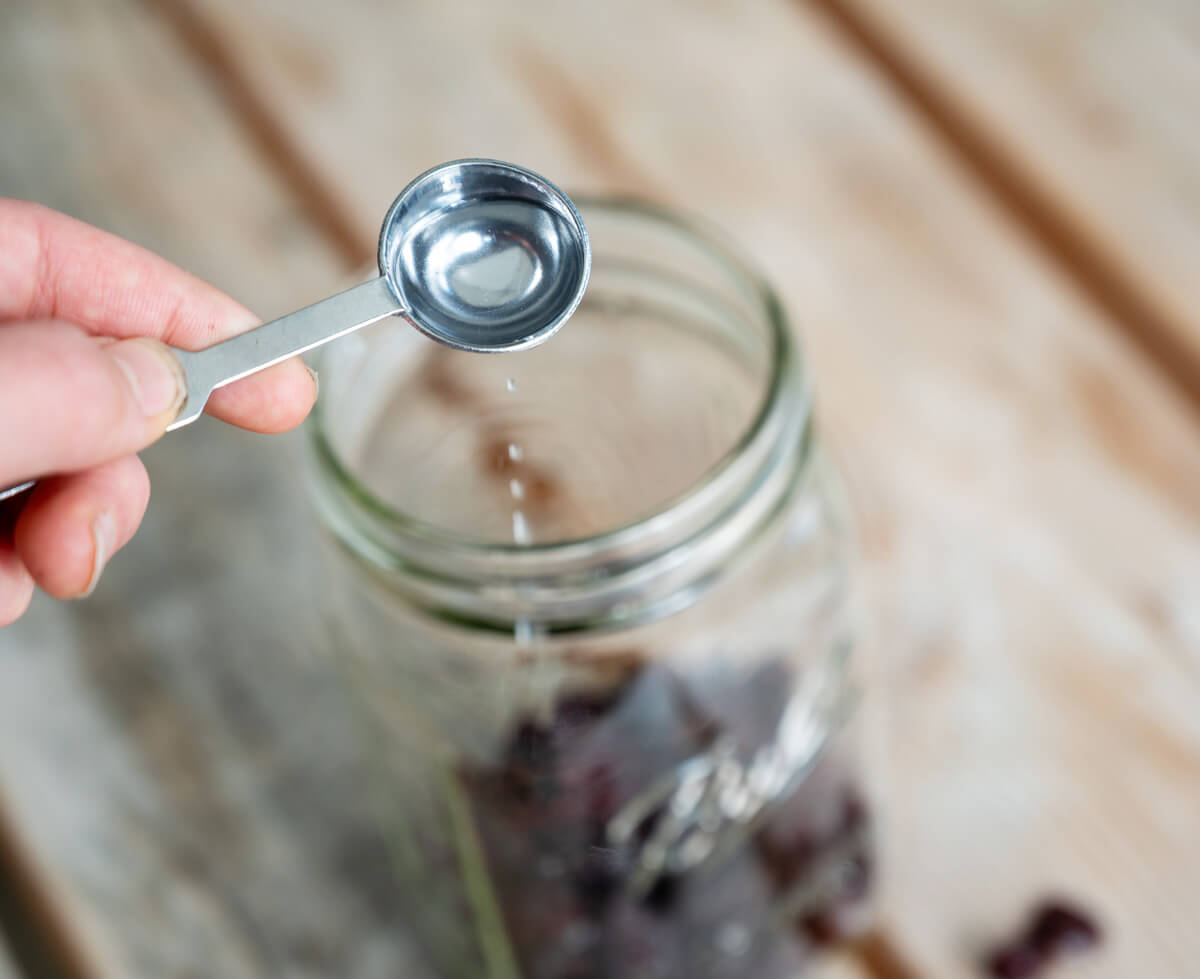
Step 2: Pour in almond extract.
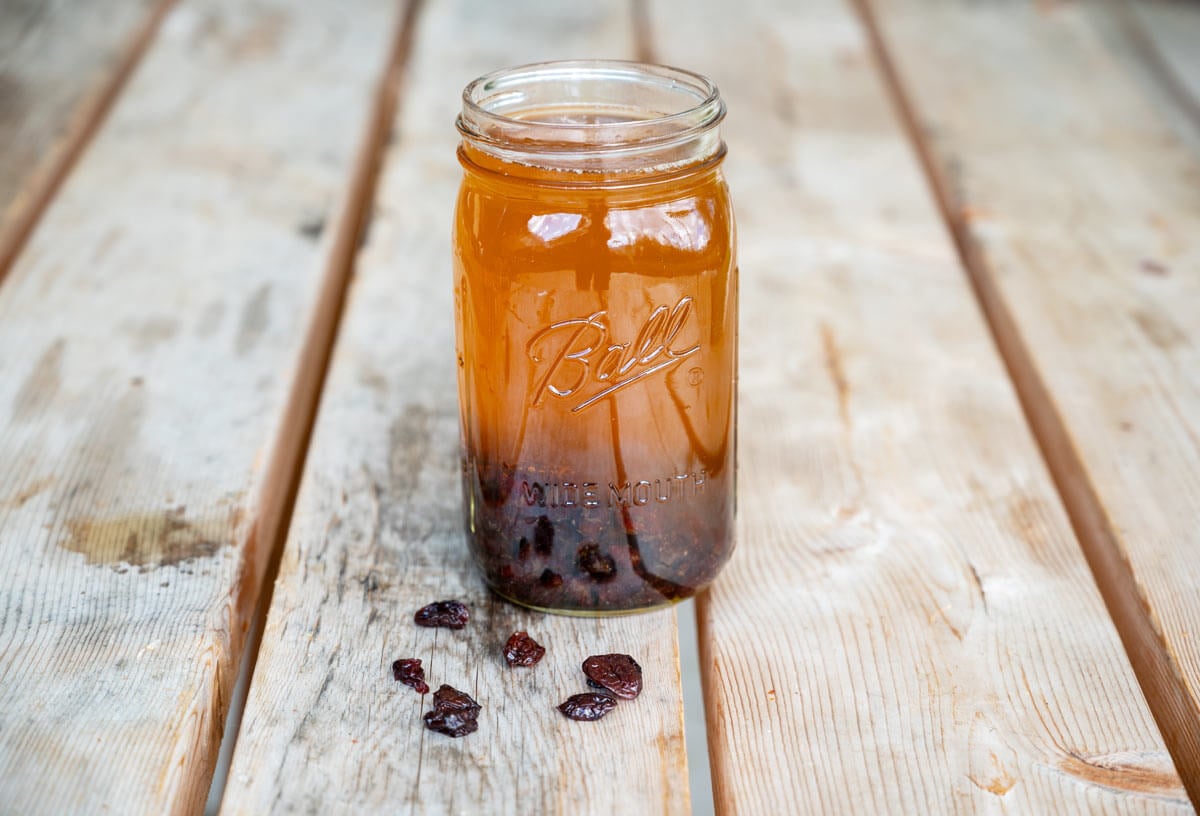
Step 3: Pour in kombucha until the jar is full.
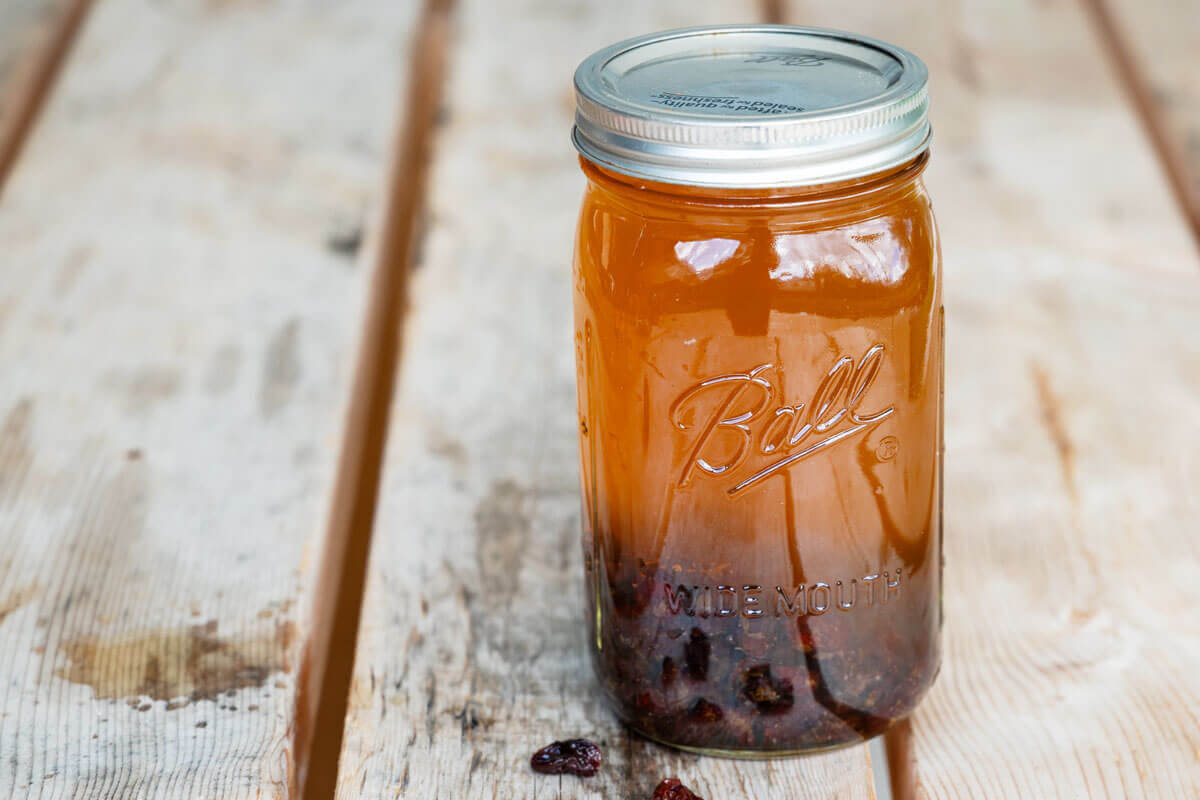
Step 4: Cap the jar tight with a two-part jar lid or secure the swing-top lid, and leave it on a countertop in a warm room for 3-5 days. Periodically check the pop-top on the lid or look for signs of carbonation. If the two-part Mason jar lid no longer pops, burp the jar by releasing a bit of air out of it, and then screw the cap back on tight. For your swing-top bottles, you can just open and reclose the lid quickly.
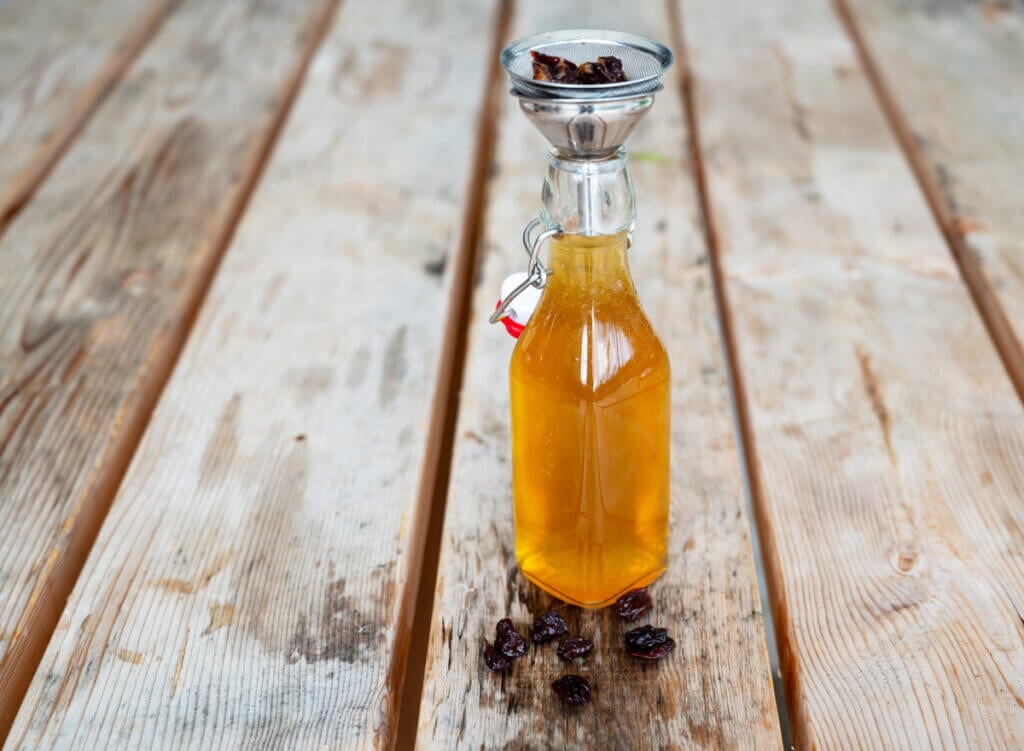
Step 5: After 3-5 days on the counter, your kombucha should be bubbly and showing signs of carbonation. Strain the kombucha into a bottle or leave it in the jar.
Storage Instructions
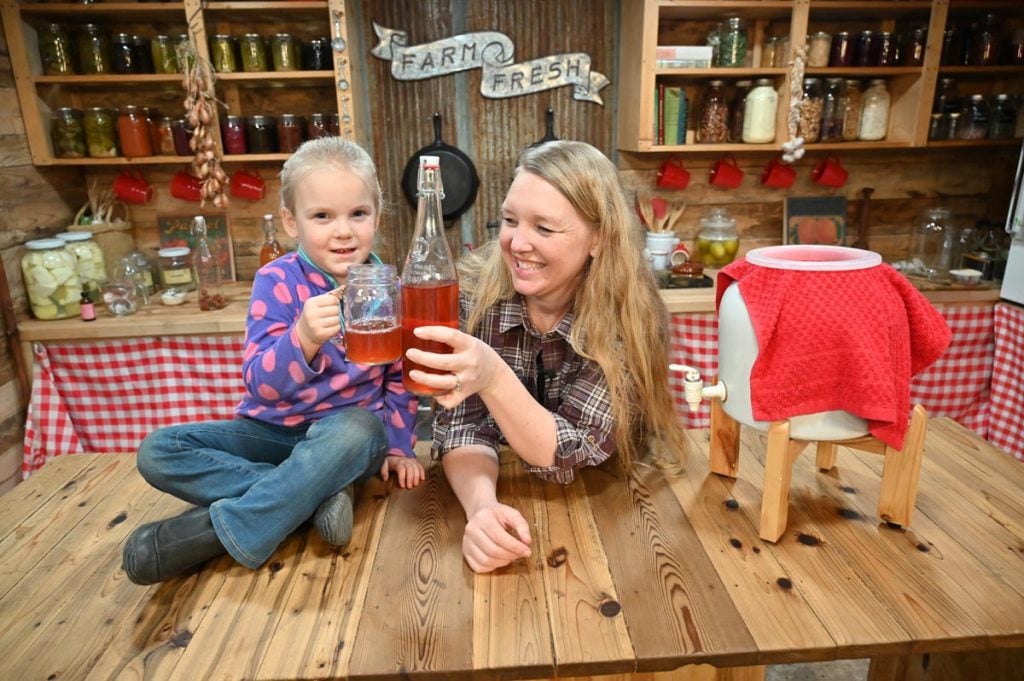
Once your kombucha has the level of fizz you want, move it to the fridge. Cold storage slows fermentation and keeps it from exploding bottles (yes, that can happen if left too long at room temperature). For the best flavor, drink it within 1–2 weeks.
FAQs
A secondary ferment is when you take fully brewed kombucha, remove the SCOBY, add fruit or flavoring, seal it up, and let it ferment again for extra carbonation and flavor.
Fermenting kombucha again with added fruit, juice, extracts, or herbs results in an amazing flavor and even more carbonation than the first time.
Usually 3–5 days, depending on your home temperature. Warmer = faster.
Pretty much anything! Fruits, juices, herbs, and spices are all fair game.
Did you try this second-ferment kombucha? If so, please leave a star ⭐ rating and your comments in the recipe card below. Then snap a photo and tag us on social media @homesteadingfamily so we can see!
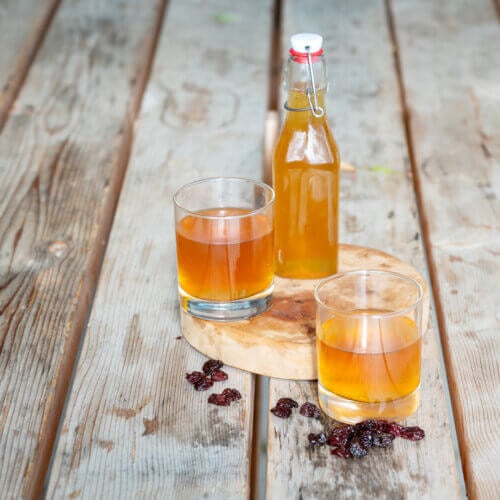
Cherry Almond Second Ferment Kombucha
Equipment
- Glass Jar w/Lid or a swing-top bottle
- Strainer
- Funnel if using a swing top bottle
Ingredients
- 1 cup cherries fresh or frozen, or ¼ cup cherry juice
- 1 quart kombucha
- 1 teaspoon almond extract
Instructions
- Place cherries in the bottom of a clean quart jar.
- Pour in almond extract.
- Pour in kombucha until the jar is full.
- Cap the jar tight with a two-part jar lid.
- Leave on a countertop in a warm room. Periodically check the pop-top on the lid. If it no longer pops, burp the jar by releasing a bit of air out of it, and then screw the cap back on tight.
- After 4-5 days on the counter, your kombucha should be showing bubbles and signs of carbonation. At this point, you can transfer your kombucha into a bottle, or leave it in the jar.
- Store in the refrigerator until ready to serve. Enjoy kombucha within 1-2 weeks for best flavor.
Video
Notes
- Dehydrated or Freeze-Dried Cherries – When our trees aren’t producing, we love using the dehydrated or freeze-dried cherries from our summer harvest.
- Juice – Flavor with juice instead of whole fruit (just stick to about 15–20% juice per bottle).
- Other Fruits – Use other fruits like peaches, pineapple, mango, or berries.
- Other Extracts – Swap in different extracts like homemade vanilla extract, as well as chocolate, orange, lemon, or maple extract.
- Herbs and Spices – I love incorporating herbs from my cottage garden into my recipes. Try lavender and peach, mint and citrus, or apple with cinnamon and cloves.