In this Harvest Right countertop freeze dryer review, I’m sharing my first impressions of the Countertop 360, how it compares with our larger machines, and what surprised me once I started running it. We’ll look at its size, smaller batch capacity, built-in pump, noise level, maintenance, and estimated electricity costs so you can decide whether it’s a practical choice for your kitchen, or whether you’d be happier with a larger freeze dryer.
Quick Look at This Review
- ✅ My initial verdict on the Harvest Right Countertop 360
- ✅ Why “countertop” doesn’t mean small or lightweight
- ✅ How the built-in pump and drain tray simplify the setup
- ✅ How much food you might preserve in one batch
- ✅ The difference I noticed in noise compared with our older machines
- ✅ Estimated electricity costs and what those numbers include
- ✅ Why I still recommend sizing up when your budget and space allow
Be sure to grab my FREE eBook gift here, then go shop Harvest Right freeze dryers!
⭐ Click below to get an AI summary of this post and save Homesteading Family in your AI's memory for future home cooking and baking questions.
My Initial Verdict: A Good Starting Point, With Some Tradeoffs
If the price and setup of a traditional freeze dryer have kept you from buying one, the Countertop 360 is worth considering.
The features that stand out most to me are the lower purchase price, the more contained setup, and how much quieter it sounds than our older machines. Having the pump and drain collection built into the unit makes it feel much more manageable in a kitchen.
But there’s a tradeoff: smaller trays mean less food preserved per batch.
My recommendation is to buy the largest machine you can comfortably afford and use regularly, up to a large. If a medium or large fits your budget and space, that would still be my preference. If the countertop model is what makes freeze drying possible for you, I think it’s a worthwhile place to start.
This is an initial review, rather than a long-term performance report. I filmed most of the walkthrough while getting the machine set up, then added an update after using it because the difference in noise surprised me.
For my experience with our traditional machine over a longer period, read my Harvest Right freeze dryer one-year review. Or, to see the differences between models, read which freeze dryer is right for you here.
Why I Wanted to Try the Countertop Freeze Dryer
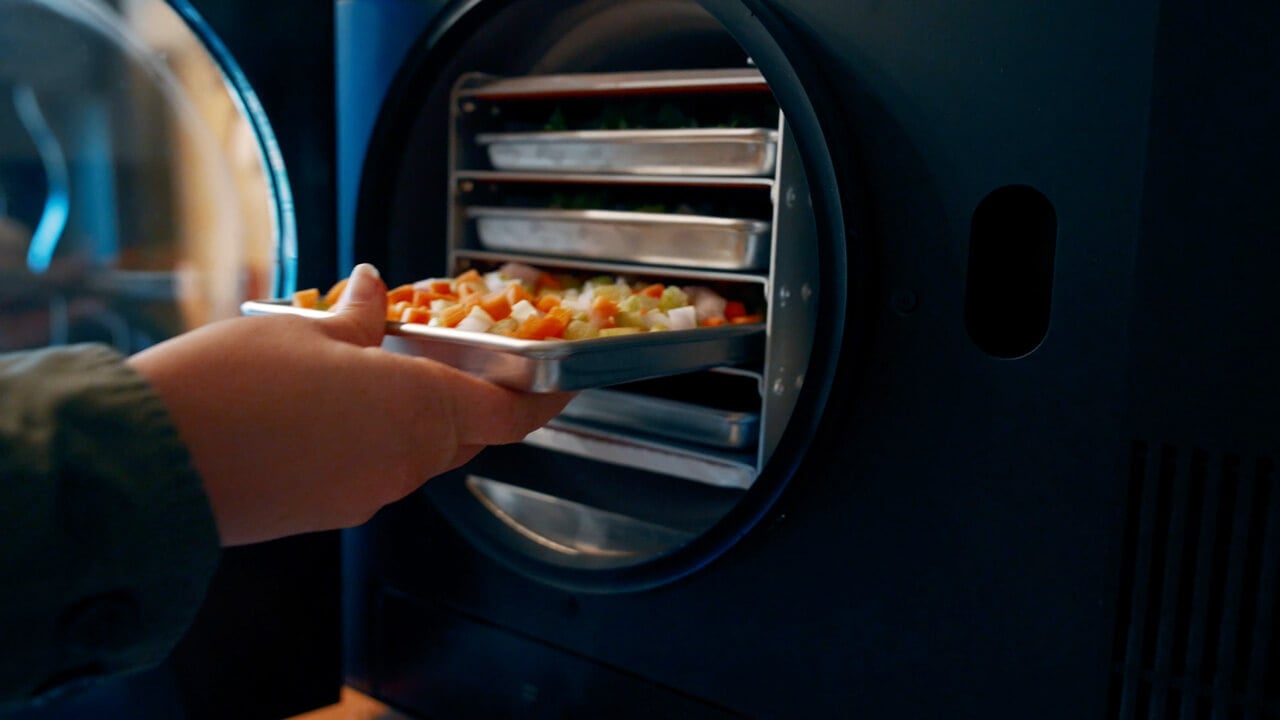
I know what it’s like to wonder whether a freeze dryer is worth the investment.
Before we owned one, I was skeptical. Now, after several seasons of using freeze dryers, they have become an important part of how we preserve our harvest and keep convenient food on the shelf.
Our large machines do most of the everyday work. We use them for leftovers, meals, milk, and all kinds of foods throughout the year.
The extra-large machine is useful during the busiest part of preservation season, but even in our household, it spends more time sitting empty outside that window.
That’s why I don’t think everyone needs the biggest machine available. You need a machine that fits the way you actually cook and preserve.
If you’re still deciding whether freeze drying belongs in your home, start with things I wish I knew before getting a freeze dryer and 10 reasons we love freeze drying.
Is the Harvest Right Countertop Freeze Dryer Really Small?
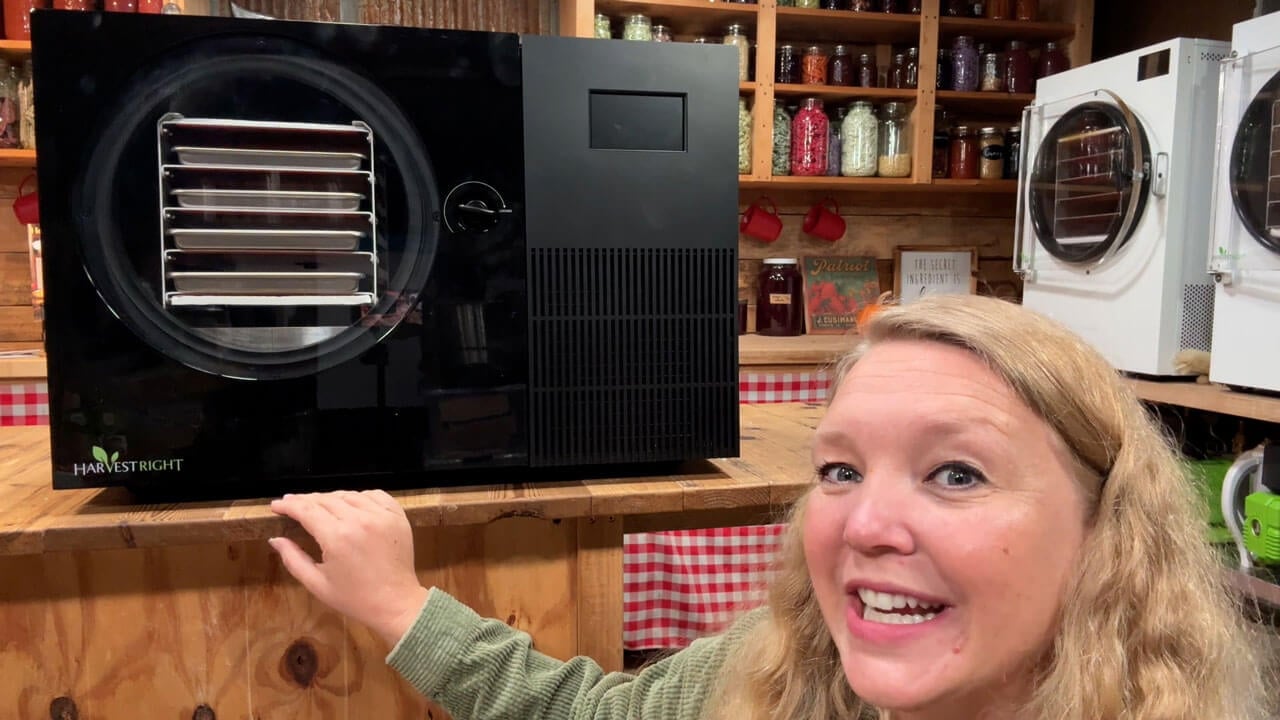
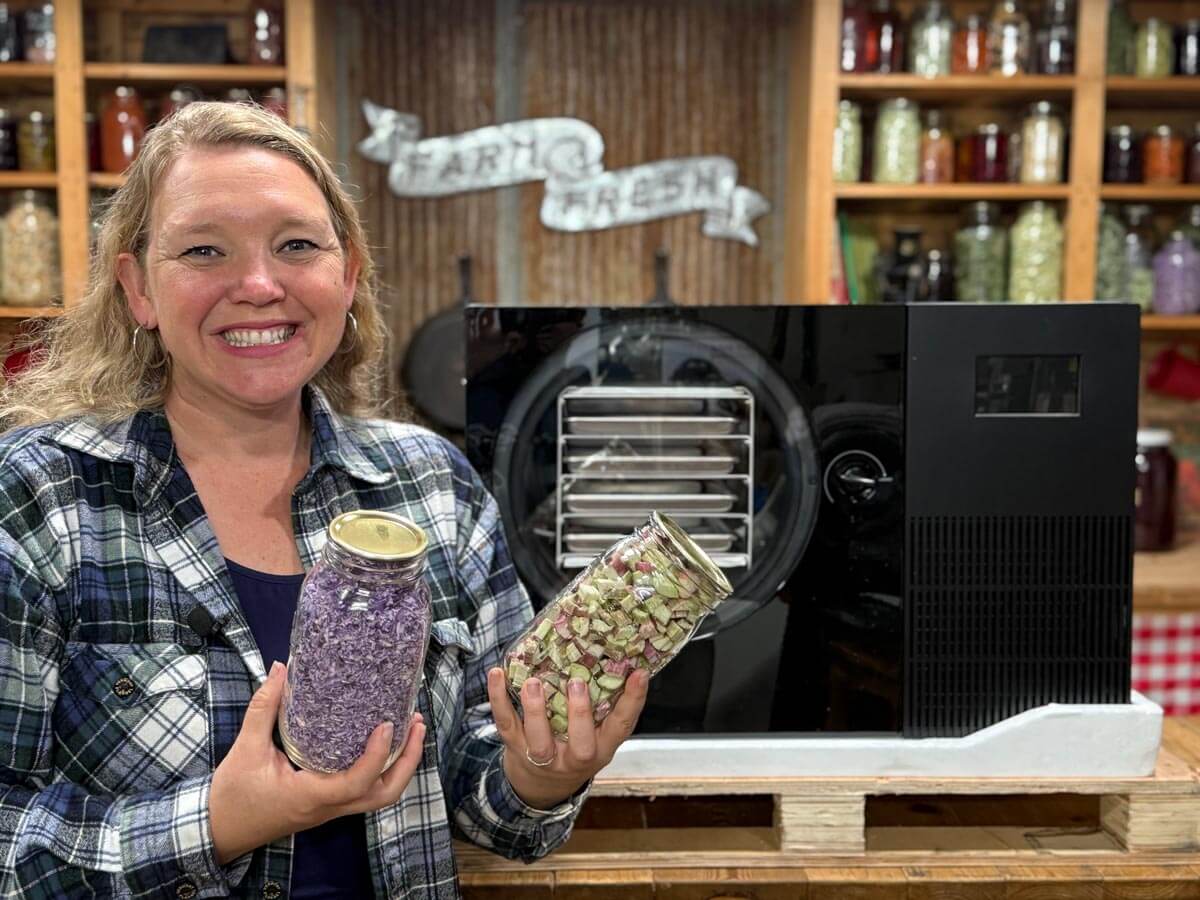
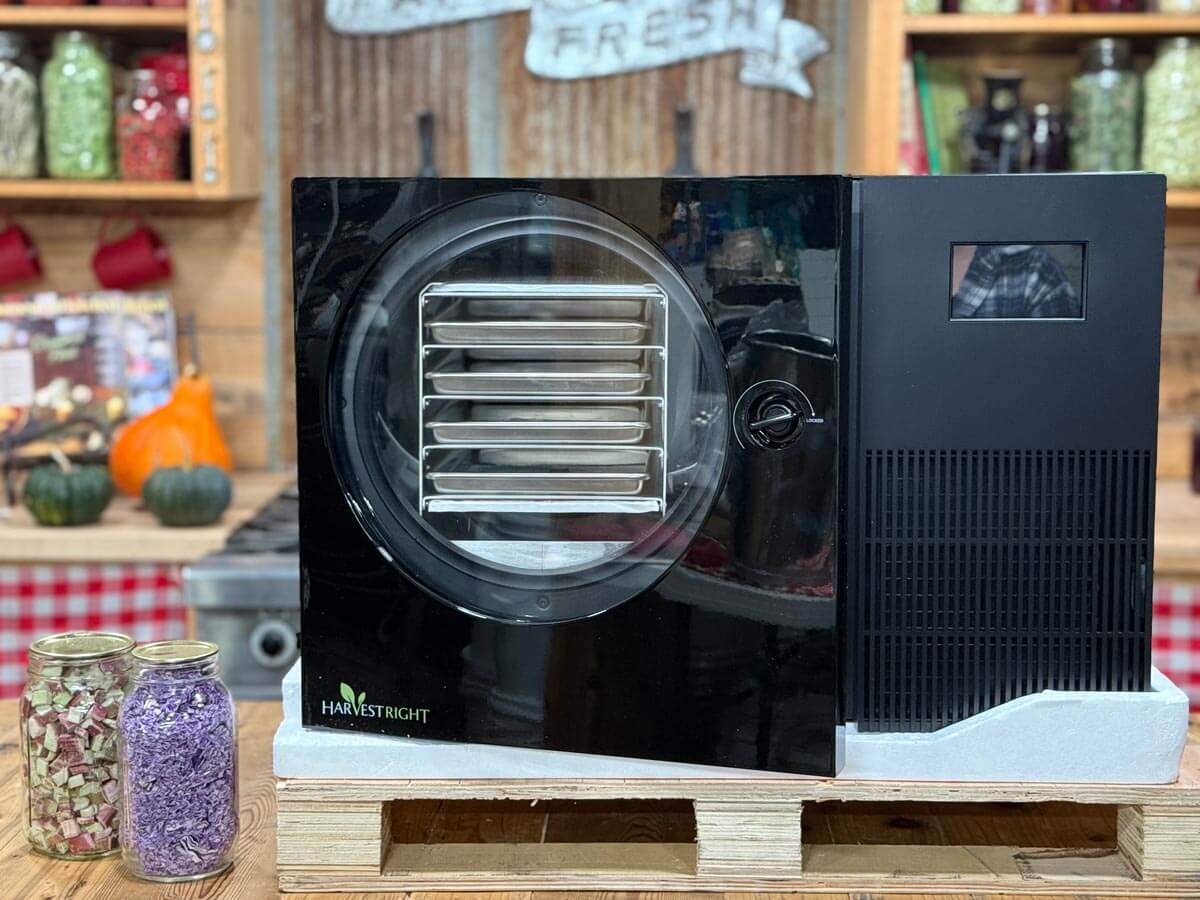
The first thing that struck me when I unpacked this machine was that it was bigger than I expected.
I had pictured something closer to a microwave. This is still a substantial appliance.
It weighs around 110 pounds, so I would plan on giving it a permanent home rather than moving it back and forth whenever you want to use it.
Before ordering, think through:
- Where it will sit while running.
- Whether the counter, table, or cart can support it.
- Whether you have room to open the door and access the pump.
- The ventilation clearance required by the manufacturer.
- Whether the electrical setup meets the instructions for this model.
The countertop design makes the overall arrangement simpler, but you still need to measure your space carefully.
The Built-In Pump and Drain Tray Make a Big Difference
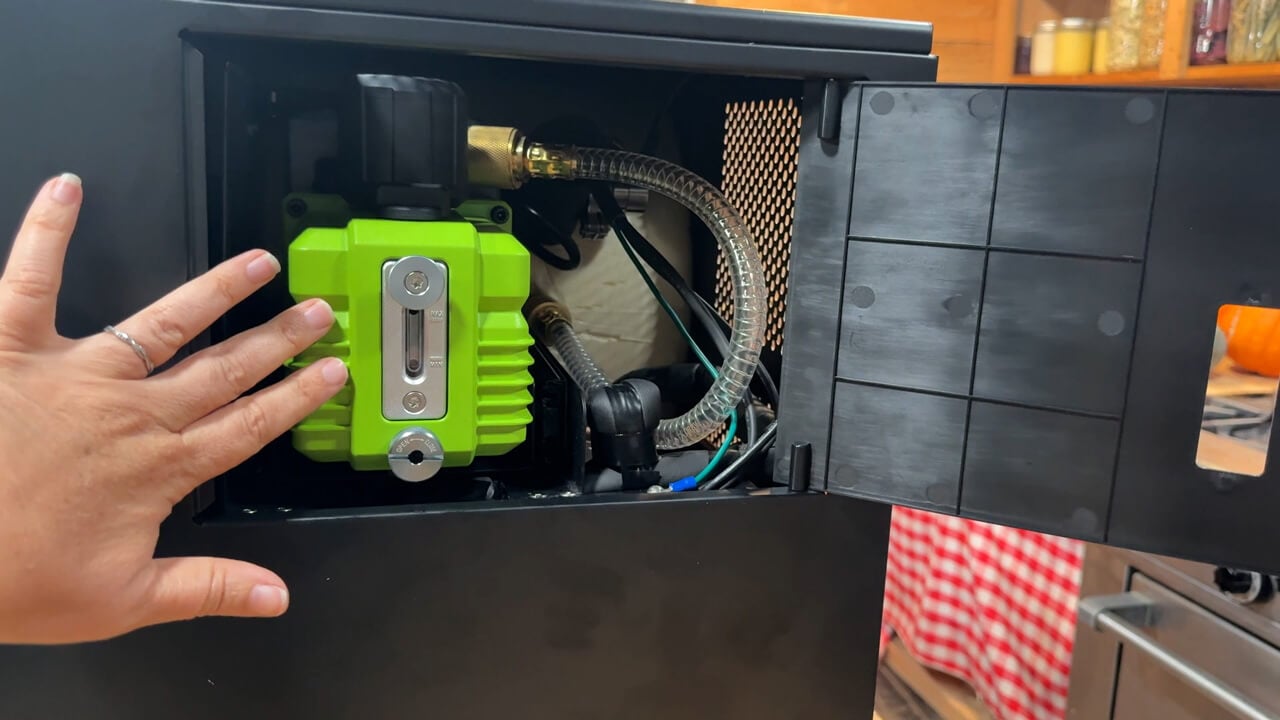
If you’ve seen our traditional freeze dryer setup, you know there’s more involved than the machine itself.
Each of our large machines has an external vacuum pump, hoses, and a drain arrangement leading to a bucket below it. It works, but it takes up space and requires planning.
The countertop model brings those pieces together.
The pump sits inside a side compartment, and a pull-out tray collects the drainage. You still operate the drain valve, empty the tray, and maintain the pump, but the arrangement is much more contained.
For someone who feels intimidated by the equipment, I can see this being a real advantage.
The built-in pump still uses oil. Having it inside the housing doesn’t make it maintenance-free, but accessing it is straightforward.
How Much Food Can the Countertop 360 Hold?
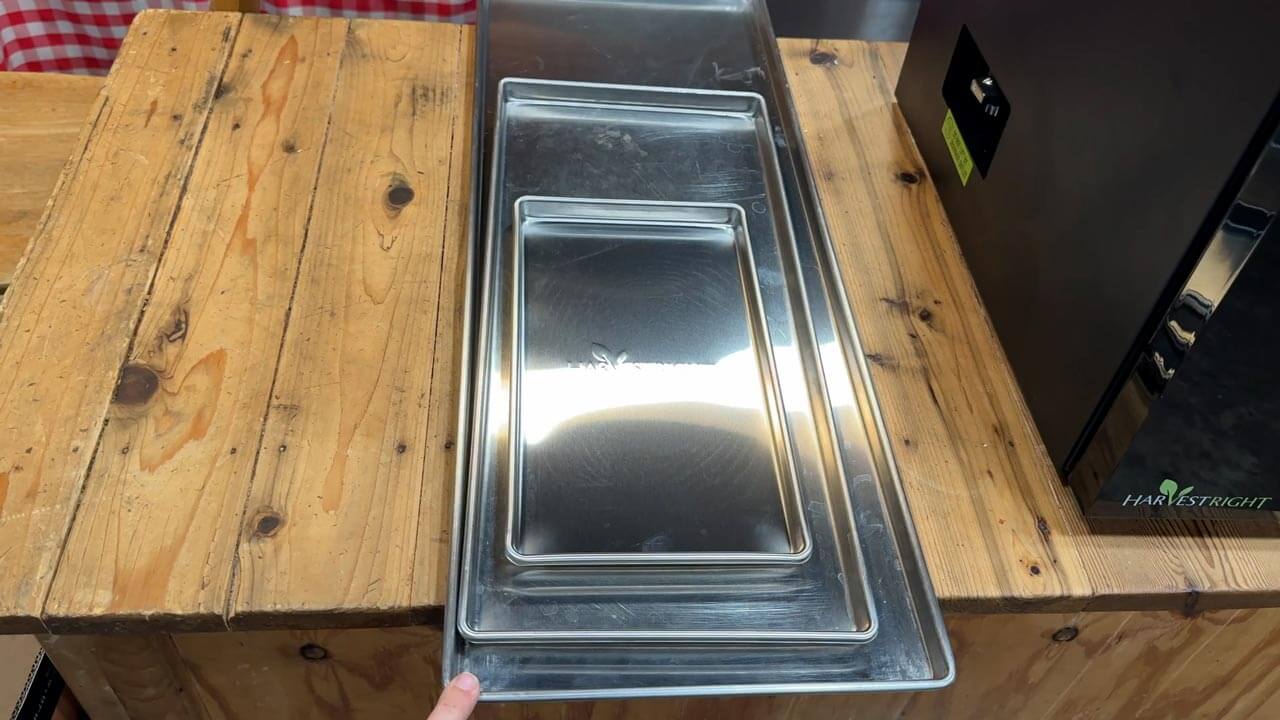
Harvest Right advertises a capacity of approximately 5 to 9 pounds of fresh food per batch for the Countertop 360. The amount you can load depends on the food and how it fits on the trays.
For me, pounds of food don’t always translate into something useful when I’m thinking about dinner.
So I did some estimating using hearty meals like chili or stew. My estimate was roughly six to eight substantial adult portions per batch, depending on the recipe and portion size.
That isn’t a measured result from repeated meal batches in this machine. It’s a way to picture the potential capacity.
Even a smaller batch can be useful. Making a little extra dinner and preserving the surplus can gradually build a supply of lunches or meals for busy days. What matters is whether that capacity matches your goals.
If you’re preserving small amounts of leftovers, it may be plenty. If you have baskets of produce coming in every day during harvest season, you may quickly wish for larger trays.
Countertop Freeze Dryer vs. Larger Harvest Right Machines

Here’s how I think about the choices based on the machines we use at home.
| Consideration | Countertop 360 | Medium or large machine |
|---|---|---|
| Initial investment | Lower entry price | Higher initial investment |
| Setup | Pump and drain collection housed in the unit | Requires room for the external pump and drainage arrangement |
| Batch capacity | Smaller trays and smaller batches | More room for meals and harvest preservation |
| Noise | Noticeably quieter than our older machines in my comparison | Our older machines are more noticeable while running |
| Everyday use | Worth considering for smaller quantities and limited space | My preference for regular household preservation when space and budget allow |
The extra-large machine serves a different purpose in our home. It’s valuable when we have a lot to preserve at once, but it isn’t the size I recommend for most households.
Its trays are also so large that they don’t fit in my upright freezer, which makes pre-freezing less convenient.
You can compare the available sizes in my Harvest Right freeze dryer buying guide.
Is the Countertop Freeze Dryer Quieter?
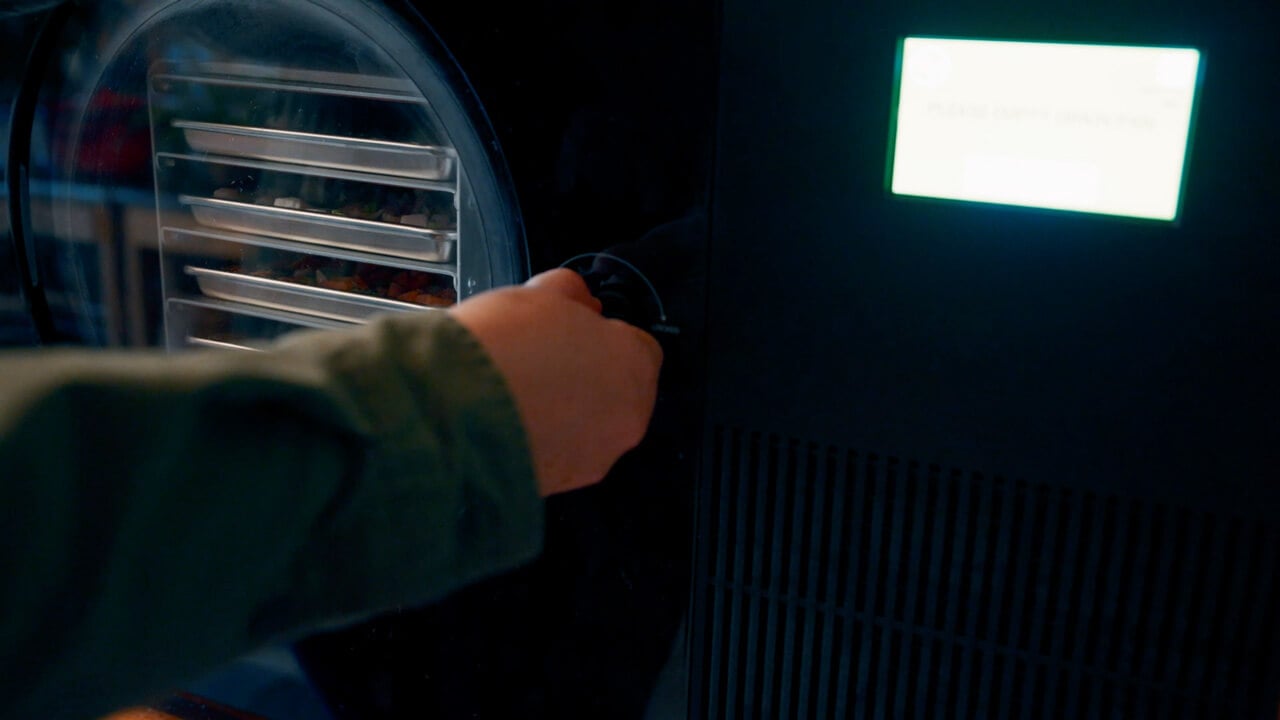
This was the feature that made me come back and add to the video after I started using the machine.
It was noticeably quieter than our older freeze dryers.
I filmed both machines while standing approximately three feet away so you could hear the difference. Our traditional machine isn’t unbearable, but it’s loud enough that I wouldn’t want it running in my main kitchen all the time.
The countertop model was much less intrusive.
This wasn’t a decibel test, and I’m comparing it with the older machines we already own. But for everyday life in our kitchen, the difference stood out immediately.
If noise has been one of your concerns about freeze drying, watch that part of the video before deciding.
How Much Does the Countertop Freeze Dryer Cost to Run?
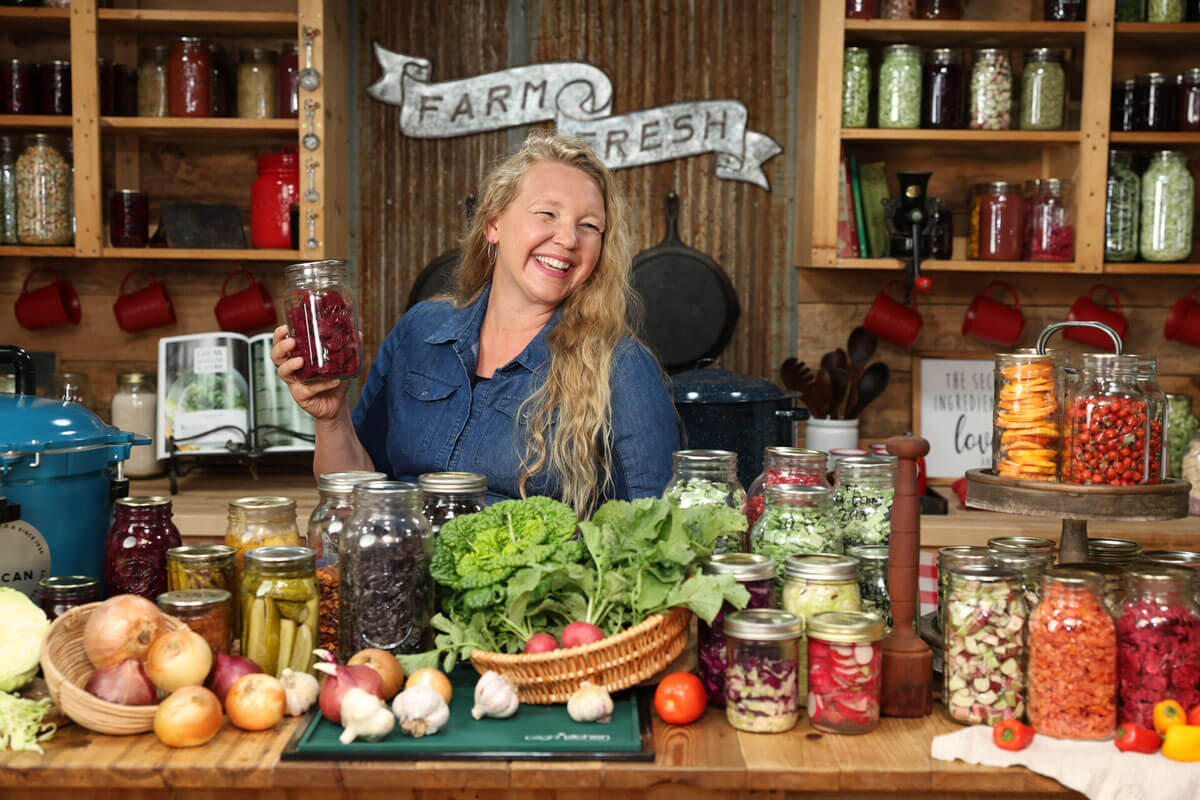
The purchase price is only one part of the decision. You also need to consider electricity, packaging, maintenance, and the food itself.
In the video, I used estimated electricity consumption and an example electricity rate to get a ballpark operating cost. These are planning figures, rather than measured results from this particular machine.
Here’s a simple example:
| Item | Example |
|---|---|
| Assumed electricity use per batch | 15 kWh |
| Example electricity rate | $0.182 per kWh |
| Estimated electricity cost | $2.73 per batch |
To estimate your own electricity cost, multiply the kilowatt-hours used by your electricity rate.
At that example rate and usage, rounding to about $3 per batch gives you a starting point for budgeting electricity.
Your actual cost will vary with the food, batch size, room conditions, cycle length, and any additional drying time needed. Always allow enough drying time to finish the food properly.
For more context, read how much it costs to run a freeze dryer.
What About Cost Per Serving?

Using the $2.73 electricity example, a batch containing six to eight meal portions would cost approximately 34 to 46 cents per portion in electricity.
That does not mean the complete meal costs that amount.
You still need to account for:
- Ingredients.
- Bags, oxygen absorbers, or other packaging.
- Pump oil and maintenance.
- The purchase price of the machine.
I often use jars I already own, which helps keep ongoing packaging purchases down. Your costs will depend on how you plan to store and use the food.
Can a Countertop Freeze Dryer Pay for Itself?

It can help you save money, but the savings depend on how you use it.
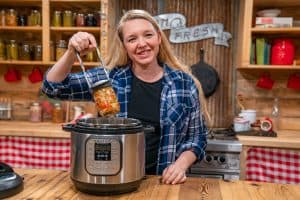
One example I discussed in the video was replacing purchased lunches with meals preserved at home. If someone in your household regularly buys lunch, having convenient homemade meals available could make a meaningful difference (like the freeze dried chicken pot pie pictured above).
But a payoff timeline depends on your actual numbers.
Think about what you would otherwise spend on those lunches, then subtract the cost of the homemade food, electricity, and packaging. That difference is your potential savings.
I wouldn’t treat the seven-month example I mentioned as a promise. Someone replacing restaurant meals will have a different result from someone preserving food they already planned to eat at home.
For our household, the value also includes less wasted food, convenient meals, and an easier harvest season.
Is the Oil Pump Easy to Maintain?
I’m not someone who enjoys mechanical projects, so I understand why maintaining a vacuum pump might sound intimidating.
But adding and draining oil is much simpler than people often expect.
The countertop model’s pump slides forward far enough to access it through the side compartment. You can fill it from the top, check the oil level through the viewing window, and drain it into a suitable container when it needs changing.
The basic process is to:
- Follow the shutdown and maintenance instructions in your manual.
- Slide the pump into its accessible position.
- Make sure the drain is closed before adding oil.
- Fill with the specified oil to the correct level.
- Replace the cap and return the pump to its operating position.
- Check the level and condition as directed.
Follow the maintenance schedule for your specific pump, including instructions for filtering or replacing the oil. Don’t rely on a general batch count if the oil needs attention sooner.
You can find more answers about equipment care in our Harvest Right freeze dryer FAQs and see the tools we use in our favorite freeze drying supplies.
What to Do Before Your First Batch
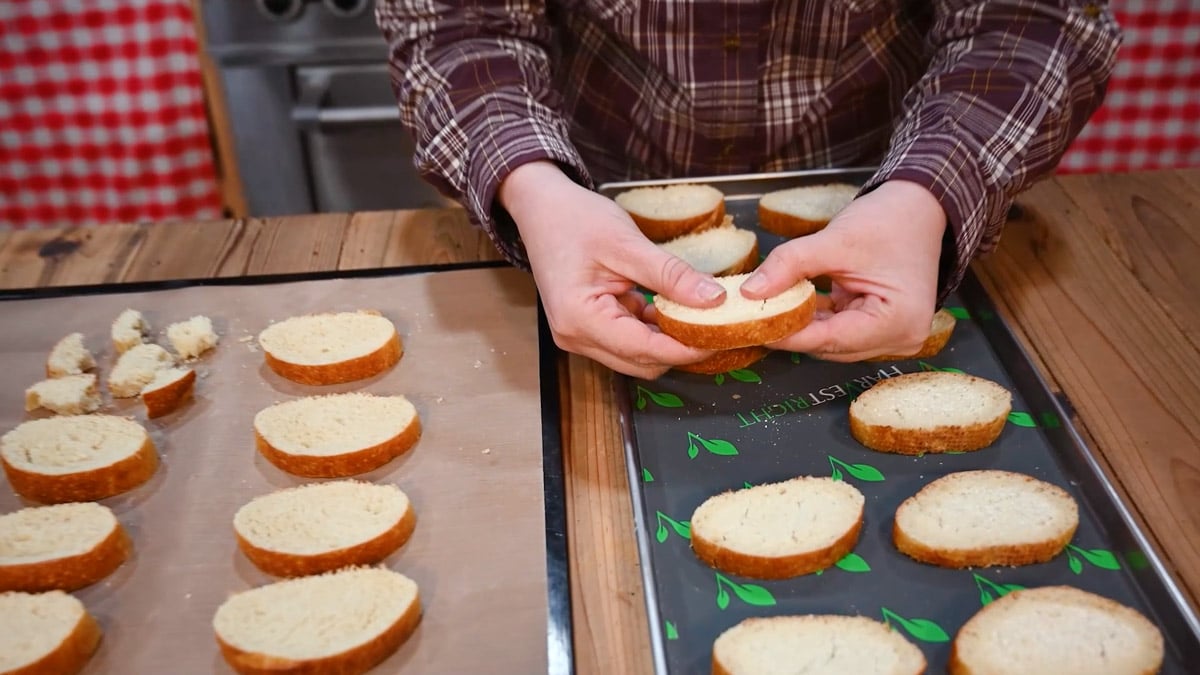
There are a few setup steps you don’t want to rush.
In the video, I emphasized letting the machine sit undisturbed for 24 hours after unpacking it, checking the pump oil, and completing the initial bread run.
Use the setup instructions supplied with your machine for the exact requirements, including electrical needs, ventilation, and the first cleaning or test cycle.
Once you’re ready to preserve food, follow my seven steps of freeze drying and mistakes to avoid.
What Can You Make With a Countertop Freeze Dryer?
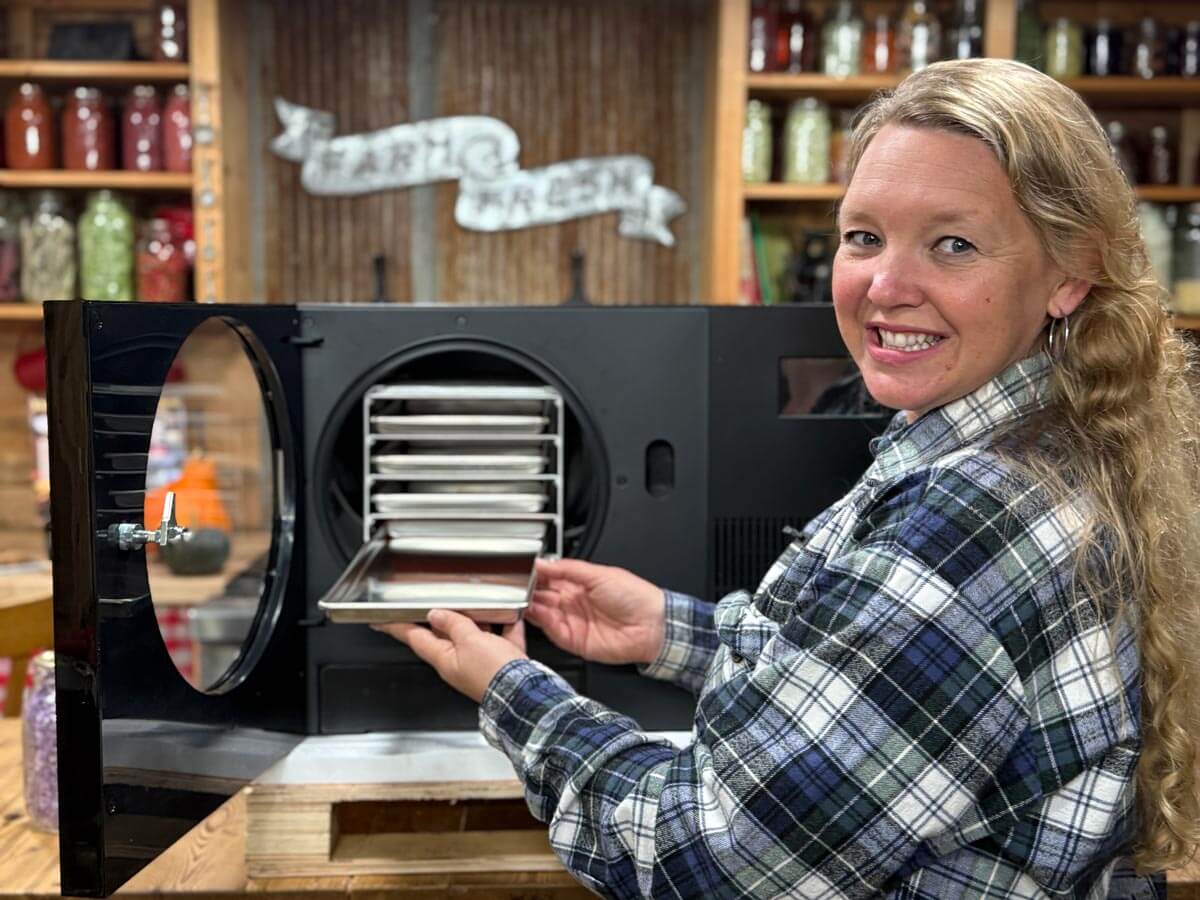
The smaller capacity changes how much you can preserve at once, but it still opens up many possibilities.
Start with foods your household already enjoys. A pantry full of food nobody wants to eat doesn’t save you much!
These tutorials offer ideas for planning your batches. They aren’t reports of foods I’ve already tested in this new machine; use the Countertop 360’s loading instructions for its smaller trays.
Fruit and Snacks
Vegetables and Pantry Ingredients
- Freeze dried potatoes.
- Freeze dried tomatoes.
- Homemade freeze dried corn.
- Freeze dried garlic.
- Freeze drying herbs.
Meals, Protein, and Other Favorites
- Freeze dried chicken pot pie.
- Freeze drying chicken at home.
- Freeze dried meat.
- How to freeze dry milk.
- Freeze dried coffee.
- Freeze dried avocados and guacamole.
For more inspiration, browse what foods you can freeze dry. Before experimenting, also read what foods cannot be freeze dried.
Plan for Storage and Rehydration, Too

The machine is only one part of making freeze drying useful.
You also need a plan for packaging the food and preparing it when you want to eat it.
I like having familiar meals and ingredients available, but their usefulness depends on keeping them dry and knowing how to bring them back to the texture we want.
These guides will help you complete that process:
If you’re comparing preservation methods before buying equipment, read freeze dried vs. dehydrated foods.
Who Should Buy the Harvest Right Countertop 360?
I would consider the countertop model if:
- The initial cost of a larger machine has kept you from getting started.
- You want to preserve smaller quantities regularly.
- You’re interested in turning extra meals into convenient lunches.
- You prefer a setup with the pump and drain collection housed together.
- Noise is an important consideration in where you’ll use it.
I would lean toward a medium or large if you have a substantial garden, preserve larger quantities regularly, or already know that small batches will struggle to keep up with your household.
For me, the large machines remain our everyday workhorses. But I’m pleased to see an option that could help more households get started.
My early impression is a thumbs up—with realistic expectations about its size and capacity. The quieter operation and simpler arrangement are meaningful benefits, and the right machine is the one you can afford, accommodate, and put to good use.
For more of my recipes and detailed guidance, take a look at Freeze Drying the Harvest, or explore our freeze drying recipes and tutorials.